
Scarlet fever
Conditions
By Mayo Clinic Staff
Overview
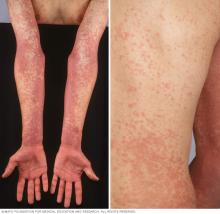
Scarlet fever is a rash that affects some people who have strep throat. The bacteria that cause the sore throat and fever of strep throat can also cause a rash that covers most of the body. The tongue may become red and bumpy.
Scarlet fever, also known as scarlatina, is most common in children 5 to 15 years of age. As with all cases of strep throat, scarlet fever requires treatment with an antibiotic. If scarlet fever is not treated, it can lead to serious conditions that affect the heart, kidneys or other parts of the body.
Symptoms
Scarlet fever symptoms begin about 2 to 4 days after exposure. The symptoms that give scarlet fever its name include:
- Rash. The rash feels like sandpaper. It may be a shade of red, purple or brown depending on your skin color. It tends to begin on the face or neck and then spread to the trunk, arms and legs. Pushing on the skin where the rash is makes the color fade and return.
- Faint skin lines. The folds of skin around the groin, armpits, elbows, knees and neck often become a deeper shade than the other areas with the rash. On white skin it may look red. On Black or brown skin, the lines may be a darker color than the skin around them.
- Flushed face. The face may appear flushed with a pale ring around the mouth.
- Strawberry tongue. The tongue gets a bumpy texture that mimics the surface of a strawberry. The tongue may be white or red.
The rash on the face and tongue lasts about a week. After symptoms have gone away, the skin affected by the rash often peels.
When to see a doctor
Contact a healthcare professional if your child has a sore throat with:
- A fever of 100.4 degrees Fahrenheit (38.0 Celsius) or higher.
- Swollen or tender glands in the neck.
- A rash.
It is particularly important to talk with a healthcare professional when these symptoms occur without a cough, congestion or runny nose.
Get emergency help for children and teens who have:
- Trouble breathing; or noisy, wheezy or raspy breathing.
- Trouble swallowing liquids or saliva, muffled voice or not able to open the mouth all the way.
- Confusion, lack of energy or trouble staying awake or alert.
- Drooling in children age 3 or older.
- Dehydration.
- Rash that looks like a tiny bruise and doesn't go away when pressed with a finger.
Causes
Scarlet fever is caused by group A streptococcus (strep-toe-KOK-us), also called group A strep. It is the same type of bacteria that causes strep throat. In scarlet fever, the bacteria release toxins that cause the rash and red tongue. The bacteria spread through the saliva of a person with group A strep in their throat. Common ways it spreads are through shared cups and utensils, or shared food or drink. If a person with group A strep sneezes or coughs, tiny droplets from their mouth can carry bacteria into the air. People near them may breathe in the droplets. Crowded places, such as schools, allow group A strep to spread more easily.
Risk factors
Scarlet fever most often affects children 5 to 15 years of age. Scarlet fever germs spread more easily among people in close contact, such as family members, child care groups or classmates.
Complications
Rarely, if scarlet fever goes untreated, the bacteria may spread to other parts of the body. This may cause:
- Bloodstream infection, called sepsis.
- Lung infection, called pneumonia.
- Ear infections, called otitis media, or infections in the bone around the ear, called mastoiditis.
Rarely, scarlet fever can lead to the immune system attacking parts of the body. This can lead to kidney damage that gets better over time. Scarlet fever also can lead to a condition called rheumatic fever. This is a serious inflammatory disease that can affect the heart, joints, nervous system and skin. Damage to the heart may not go away and may cause disease later in life.
Prevention
Prevent scarlet fever by following good hygiene practices and lowering your chance of infection with group A strep bacteria. To lower the risk of strep, make sure to:
- Wash your hands. Wash your hands well and often with soap and water for at least 20 seconds. Or use a hand sanitizer with at least 60% alcohol.
- Cover your mouth. Cough or sneeze into a tissue or your elbow. Then wash your hands.
- Don't share personal items. Don't share drinking glasses or eating utensils. Wash dishes in hot, soapy water or in a dishwasher.
Children with scarlet fever can lower the risk of spreading the illness by staying home from school or child care. Often it's safe to return after:
- 24 hours of taking antibiotics.
- 24 hours without a fever, with no fever-reducing medicine during that time.
- Symptoms are getting better.
But follow the advice of your healthcare professional.
Diagnosis
To diagnose scarlet fever, a healthcare professional will look at the skin, throat, tonsils and tongue. The physical exam may include feeling the neck to check if lymph nodes are larger than usual. The healthcare professional may use a swab to collect material from the tonsils and back of the throat.
A rapid strep test can identify the presence of strep bacteria quickly, often during your child's appointment. If the rapid test is negative but the healthcare professional still thinks strep bacteria is causing the illness, a strep throat culture can be done. The results for this test can take longer.
Tests for the strep bacteria are important because a number of conditions can cause the symptoms of scarlet fever. These illnesses may require different treatments. If there are no strep bacteria, then some other factor is causing the illness.
Treatment
Scarlet fever is treated with an antibiotic. Make sure your child takes all of the medicine as directed. Otherwise, the treatment may not fully get rid of the infection, which can raise the risk of complications.
Use ibuprofen (Advil, Children's Motrin, others) or acetaminophen (Tylenol, others) to control the fever and lessen throat pain. Check with your child's healthcare team about the right dose.
Self-care
To reduce pain and discomfort during scarlet fever, your child can:
- Get plenty of rest. Sleep helps the body fight infection. Have your child rest until feeling better. Also, keep your child at home until there's no sign of fever and antibiotics have been taken for at least 24 hours.
- Drink plenty of water. Keeping a sore throat moist eases swallowing and helps prevent dehydration.
- Gargle with warm salt water. For older children and adults, gargling several times a day can help relieve throat pain. Mix 1/4 teaspoon (1.5 grams) of table salt in 8 ounces (237 milliliters) of warm water. Be sure to tell your child to spit out the liquid after gargling.
- Eat soothing foods. Easy-to-swallow foods include soups, applesauce, cooked cereal, mashed potatoes, soft fruits, yogurt and soft-cooked eggs. You can puree foods in a blender to make them easier to swallow. Cold foods, such as sherbet, frozen yogurt or frozen fruit pops, may be soothing. Warm liquids, such as broth, may be soothing too. Stay away from spicy foods or acidic foods such as orange juice.
- Stay away from irritants. Cigarette smoke can irritate a sore throat. Also avoid fumes from substances that can irritate the throat and lungs. These substances can include paint, cleaning products, incense and essential oils.
Other steps you can take include:
- Humidify the air. Adding moisture to the air can help ease discomfort. Choose a cool-mist humidifier and clean it daily to prevent bacteria and mold. Saline nasal sprays also help keep mucous membranes moist.
- Offer honey. Honey can be used to soothe sore throats. Don't give honey to children younger than 12 months.
Preparing for your appointment
You're likely to first see a family healthcare professional or pediatrician. But when you call to set up the appointment, you may be urged to seek immediate medical care.
What you can do
Preparing a list of questions will help you make the most of your time with the healthcare professional. Some questions you might want to ask include:
- How soon after starting treatment will my child begin to feel better?
- Is my child at risk of any long-term complications related to scarlet fever?
- Is there anything I can do to help soothe my child's skin while it heals?
- When can my child return to school?
- Is my child contagious? How can I reduce my child's risk of spreading the illness to others?
- Is there a generic alternative to the medicine you're prescribing? What if my child is allergic to penicillin?
Don't hesitate to ask other questions during your appointment.
What to expect from your doctor
Some questions the healthcare professional may ask include:
- When did your child begin having symptoms?
- Has your child had a sore throat or trouble swallowing?
- Has your child had a fever? How high was the fever, and how long did it last?
- Has your child had belly pain or vomiting?
- How is your child's eating?
- Has your child complained of headache?
- Has your child recently had a strep infection?
- Has your child recently been around anyone with a strep infection?
- Has your child been diagnosed with any other medical conditions?
- Is your child currently taking any medicines?
- Does your child have allergies to any medicines?
© 1998-2026 Mayo Foundation for Medical Education and Research(MFMER). All rights reserved. Terms of Use