
Aortic valve regurgitation
Conditions
Overview
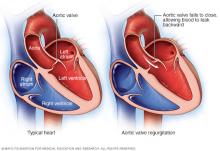
Aortic valve regurgitation — also called aortic regurgitation — is a type of heart valve disease. The valve between the lower left heart chamber and the body's main artery doesn't close tightly. As a result, some of the blood pumped out of the heart's main pumping chamber, called the left ventricle, leaks backward.
The leakage may prevent the heart from doing a good enough job of pumping blood to the rest of the body. You may feel tired and short of breath.
Aortic valve regurgitation can develop suddenly or over many years. Once the condition becomes severe, surgery often is needed to repair or replace the valve.
Symptoms
Most often, aortic valve regurgitation develops over time. You may have no symptoms for years. You might not realize that you have the condition. But sometimes, aortic valve regurgitation happens suddenly. Usually, this is caused by an infection of the valve.
As aortic valve regurgitation becomes worse, symptoms may include:
- Shortness of breath with exercise or when lying down.
- Tiredness and weakness, especially when being more active than usual.
- Irregular heartbeat.
- Lightheaded feeling or fainting.
- Pain, discomfort or tightness in the chest that often gets worse during exercise.
- Feelings of a rapid, fluttering heartbeat, called palpitations.
- Swollen ankles and feet.
When to see a doctor
Call a member of your healthcare team right away if you have symptoms of aortic valve regurgitation.
Sometimes the first symptoms of aortic valve regurgitation are related to heart failure. Heart failure is a condition in which the heart can't pump blood as well as it should. Make an appointment with your healthcare team if you have:
- Tiredness, also called fatigue, that doesn't get better with rest.
- Shortness of breath.
- Swollen ankles and feet.
These are common symptoms of heart failure.
Causes
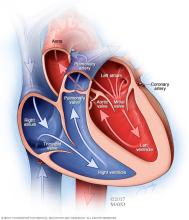
The aortic valve is one of four valves that control blood flow through the heart. It separates the heart's main pumping chamber, called the left ventricle, and the body's main artery, called the aorta. The aortic valve has flaps, also called cusps or leaflets, that open and close once during each heartbeat.
In aortic valve regurgitation, the valve doesn't close properly. This causes blood to leak back into the lower left heart chamber, called the left ventricle. As a result, the chamber holds more blood. This could cause it to get larger and thicken.
At first, the larger left ventricle helps maintain good blood flow with more force. But over time, the heart becomes weak.
Any condition that damages the aortic valve can cause aortic valve regurgitation. Causes may include:
-
Heart valve disease present at birth. Some people are born with an aortic valve that has only two cusps or with connected cusps, rather than the typical three separate ones. In either situation, the condition is called a bicuspid valve. Sometimes the valve may have only one cusp, called a unicuspid valve. Other times, there are four cusps, called a quadricuspid valve.
Having a parent or sibling with a bicuspid valve raises your risk of the condition. But you can have a bicuspid valve even if you don't have a family history of the condition.
- Narrowing of the aortic valve, called aortic stenosis. Calcium deposits can build up on the aortic valve as you age. The buildup causes the aortic valve to stiffen and become narrow. It prevents the valve from opening properly. Aortic stenosis also may prevent the valve from closing properly.
- Inflammation of the inner lining of the heart's chambers and valves. This life-threatening condition also is called endocarditis. It's usually caused by an infection. It can damage the aortic valve.
- Rheumatic fever. This condition was once a common childhood illness in the United States. Strep throat can cause it. Rheumatic fever can cause the aortic valve to become stiff and narrow. That in turn causes blood to leak. If you have an irregular heart valve due to rheumatic fever, it's called rheumatic heart disease.
- Other health conditions. Other rare conditions can cause the aorta to get bigger and damage the aortic valve. These include a connective tissue disease called Marfan syndrome that is present at birth. Some immune system conditions, such as lupus, also can lead to aortic valve regurgitation.
- Tear or injury of the body's main artery. The body's main artery is the aorta. A traumatic chest injury may damage the aorta and cause aortic regurgitation. So might a tear in the inner layer of the aorta, called an aortic dissection.
Risk factors
Things that raise the risk of aortic valve regurgitation include:
- Older age.
- Heart conditions present at birth, also called congenital heart defects.
- History of infections that can affect the heart.
- Some conditions passed down through families that can affect the heart, such as Marfan syndrome.
- Other types of heart valve disease, such as aortic valve stenosis.
- High blood pressure.
Aortic valve regurgitation also can happen without any known risk factors.
Complications
Complications of aortic valve regurgitation can include:
- Fainting or feeling lightheaded.
- Heart failure.
- Some heart infections, such as endocarditis.
- Heart rhythm conditions, called arrhythmias.
- Death.
Prevention
If you have any type of heart disease, get regular health checkups to help prevent complications.
If you have a parent, child or sibling with a bicuspid aortic valve, you should have an imaging test called an echocardiogram. This can check for bicuspid aortic valve or valve regurgitation. It's important for healthcare professionals to find heart valve disease, such as aortic valve regurgitation, as early as possible. Doing so may make the condition easier to treat.
Also, take steps to prevent conditions that can raise the risk of aortic valve regurgitation. For example:
- Get a health checkup if you have a severe sore throat. Strep throat that is not treated can lead to rheumatic fever. Strep throat is treated with medicines that fight bacteria, called antibiotics.
- Check your blood pressure regularly. Have your blood pressure checked at least every two years starting at age 18. Some people need more-frequent checks.
Diagnosis
To diagnose aortic valve regurgitation, a member of your healthcare team examines you. You usually are asked questions about your symptoms and health history. You also might be asked about your family's health history.
Your blood pressure is checked using a cuff, usually placed around your arm. A device called a stethoscope is used to listen to your heart. Your healthcare professional may hear a whooshing or swishing sound called a heart murmur. This type of sound is made by rapid, choppy blood flow through the heart.
You may be referred to a doctor called a cardiologist who is trained in heart diseases.
Treatment
Treatment of aortic valve regurgitation depends on:
- How serious the condition is.
- The symptoms, if any.
- Whether the condition is getting worse.
The goals of aortic valve regurgitation treatment are to ease symptoms and prevent complications.
If your symptoms are mild or you don't have symptoms, you may only need regular health checkups. You may need regular echocardiograms to check the health of the aortic valve. Heart-healthy lifestyle changes also are usually recommended.
Medications
If you have aortic valve regurgitation, you may be given medicines to:
- Treat symptoms.
- Lower the risk of complications.
- Lower blood pressure.
Surgery or other procedures
Surgery may be needed to repair or replace the diseased valve, especially if the condition and symptoms are severe. Heart valve surgery may be needed even if aortic regurgitation isn't severe or when there are no symptoms.
The decision to repair or replace a damaged aortic valve depends on:
- Your symptoms.
- Your age and overall health.
- Whether you need heart surgery to correct another heart condition.
If you're having another heart surgery, surgeons may do aortic valve surgery at the same time.
Surgery to repair or replace an aortic valve may be done as open-heart surgery. This involves a cut, also called an incision, in the chest. Sometimes surgeons can replace the aortic valve through smaller cuts. This is known as minimally invasive heart surgery.
Surgery for aortic valve regurgitation includes:
- Aortic valve repair. To repair an aortic valve, surgeons may separate valve flaps that have connected. These flaps also are called cusps. The surgeons might reshape or remove excess valve tissue so that the cusps can close tightly. Or they might patch holes in a valve. A catheter treatment may be done to place a plug or device in a leaking replacement aortic valve.
-
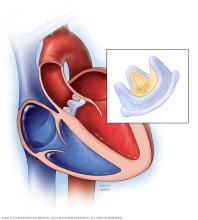
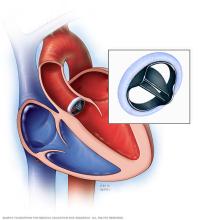
Aortic valve replacement. The surgeon removes the damaged valve and replaces it. The replacement might be a mechanical valve or one made from cow, pig or human heart tissue. A tissue valve also is called a biological tissue valve.
Sometimes, surgeons can do minimally invasive heart surgery to place a tissue valve inside a damaged valve. This treatment is called transcatheter aortic valve replacement, also known as TAVR. It uses smaller incisions than those used in open-heart surgery. This treatment also may be called transcatheter aortic valve implantation, also called TAVI for short.
Sometimes the aortic valve is replaced with your own lung valve, also called the pulmonary valve. Your pulmonary valve is replaced with a biological lung tissue valve from a deceased donor. This more complicated surgery is called the Ross procedure.
Biological tissue valves break down over time. Someday, they may need to be replaced. People with mechanical valves need blood thinners for life to prevent blood clots. Ask your healthcare team about the benefits and risks of each type of valve.
Lifestyle and home remedies
While lifestyle changes can't prevent or treat your condition, your healthcare team might suggest that you practice some heart-healthy habits. These may include:
- Eat a heart-healthy diet. Enjoy a variety of fruits and vegetables, low-fat or fat-free dairy products, poultry, fish, and whole grains. Stay away from saturated and trans fats and excess salt and sugar.
- Stay at a healthy weight. Aim to keep a healthy weight. If you're overweight or have obesity, your healthcare team may recommend that you lose weight. Ask what goal weight is healthy for you.
- Get regular exercise. Aim to include about 30 minutes of physical activity, such as brisk walks, into your daily fitness routine. Ask your care team for advice before you start to exercise, especially if you're thinking about playing competitive sports.
- Don't smoke or use tobacco. If you smoke, quit. Ask your care team about resources to help you quit smoking. Joining a support group may be helpful.
- Control high blood pressure. High blood pressure that's not controlled with treatment raises the risk of serious health problems. Get your blood pressure checked at least every two years if you're 18 or older. If you have risk factors for heart disease or are over age 40, you may need more-frequent checks.
- Get a cholesterol test. The American Heart Association recommends getting a cholesterol test between the ages of 9 and 11, and another between 17 and 21. After that, get another test at least every 4 to 6 years. Some people may need to start testing earlier or have more-frequent checks.
- Manage diabetes. If you have diabetes, tight blood sugar control can help keep your heart healthy.
- Practice good sleep habits. Poor sleep may raise the risk of heart disease. Adults should aim to get 7 to 9 hours of sleep daily. Go to bed and wake at the same time every day, including on weekends. If you have trouble sleeping, talk with your healthcare team about a plan that might help.
Pregnancy and aortic valve regurgitation
Careful and regular checkups are needed for those who have heart valve disease, including aortic valve regurgitation, during pregnancy. If you have a severe heart valve condition, you might be told not to get pregnant, to lower the risk of complications.
Preparing for an appointment
If you think you might have symptoms of heart valve disease, make an appointment for a health checkup. You may be referred to a doctor trained in heart diseases. This doctor is called a cardiologist.
If you have aortic valve regurgitation, consider being cared for by a medical team that specializes in heart valve disease.
Here's some information to help you prepare for your appointment.
What you can do
- Be aware of pre-appointment restrictions. When you make the appointment, ask if there's anything you need to do in advance. For example, you may be told not to eat or drink for a short time before a cholesterol test.
- Write down your symptoms and how long you've had them. Include any that don't seem related to heart valve disease.
- Write down important medical information, including any family history of heart valve disease, and any major stresses or recent life changes.
- Make a list of all medicines, vitamins and supplements you take. Include the amounts you take and how often you take them, also called the dosages.
- Take a family member or friend with you to the appointment, if possible. Someone who joins you can help remember what your healthcare team says.
- Write down questions to ask your healthcare team.
For aortic valve regurgitation, questions to ask your healthcare team include:
- What is the likely cause of my symptoms?
- Are there any other possible causes?
- What tests do I need?
- What treatment do you recommend?
- Are there any other treatment options?
- Will I need surgery? If so, what surgeon do you recommend for aortic valve surgery?
- I have other health conditions. How can I best manage them together?
- Are there restrictions I need to follow?
- Should I see a specialist?
Don't hesitate to ask any other questions.
What to expect from your doctor
Your healthcare professional usually asks many questions, including:
- When did your symptoms begin?
- How often do you notice your symptoms?
- How bad are your symptoms?
- What, if anything, seems to improve your symptoms?
- What, if anything, appears to make your symptoms worse?
- Do you have heart disease in your family?
© 1998-2026 Mayo Foundation for Medical Education and Research(MFMER). All rights reserved. Terms of Use