Atrioventricular septal defect (AVSD)
Conditions
By Mayo Clinic Staff
Overview
Atrioventricular septal defect (AVSD) is a heart condition that is present at birth. That means it's a congenital heart defect. Children born with this condition have a hole in the wall between the heart's chambers and changes to the mitral and tricuspid heart valves.
Other names for this condition are:
- Atrioventricular canal defect.
- Endocardial cushion defect.
With atrioventricular septal defect, extra blood flows to the lungs. The extra blood forces the heart to work too hard.
For every 10,000 live births in the U.S., 3 or 4 babies are born with atrioventricular septal defect. If not treated, the condition can cause high blood pressure in the lungs and heart failure. Treatment may involve surgery early in life to close the hole in the heart and to repair the valves.
Types
Types of atrioventricular septal defect include:
-
Complete AVSD. This causes a hole between the right and left sides of the heart and between the upper and lower chambers. The upper chambers are called the atria. The lower chambers are called the ventricles. Complete AVSD affects all four chambers.
Complete AVSD also affects the heart valves. The tricuspid and mitral valves form as one common valve. As a result, the valve may not close fully, causing blood to flow back into the chambers.
A complete AVSD may be balanced or unbalanced. In a balanced AVSD, the left and right ventricles are big enough and close enough in size. Unbalanced means that one ventricle is less developed than the other.
- Partial or incomplete AVSD. This causes a hole only in the upper chambers of the heart. It also involves the heart valves. The mitral and tricuspid valves are separate, but they do not form typically. The mitral valve may have an opening, called a cleft, that can allow blood to leak backward.
- Transitional AVSD. This type involves a large hole in the upper heart chambers and a smaller hole in the lower chambers. The large hole lets extra blood flow into the lungs. The heart valves do not form typically.
Symptoms
Atrioventricular septal defect symptoms depend on whether the defect is partial or complete.
Complete AVSD
The condition affects all of the heart's chambers. Symptoms of a complete atrioventricular canal defect usually develop in the first weeks of life. Symptoms are generally similar to those of heart failure. They may include:
- Trouble breathing or fast breathing.
- Heavy sweating, especially when feeding.
- Tiredness.
- Trouble feeding.
- Poor weight gain.
- Wheezing.
Partial AVSD
The condition affects only the two upper heart chambers. Symptoms of a partial atrioventricular septal defect may not appear until late childhood or early adulthood. The symptoms may be due to complications such as heart valve disease, high blood pressure in the lungs or heart failure. Symptoms may include:
- Tiredness and weakness.
- Fast or irregular heartbeat, also called an arrhythmia.
- Not being able to exercise as much.
- Shortness of breath.
- Swelling in the legs, ankles and feet.
Causes
Atrioventricular septal defect, also called atrioventricular canal defect, happens before birth when a baby's heart is forming. Experts aren't sure of the exact cause. But atrioventricular septal defect is linked with some genetic syndromes, such as Down syndrome, also called trisomy 21.
How the heart works
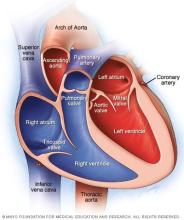
To understand congenital heart defects, it may help to know how the heart works.
The heart is divided into four chambers.
- The two upper chambers are called the atria.
- The two lower chambers are called the ventricles.
The right side of the heart moves blood into vessels that lead to the lungs, where the blood receives oxygen. The oxygen-rich blood flows back to the heart's left side and into the body's main artery, called the aorta. From there, the blood flows to the rest of the body.
Valves control blood flow into and out of the heart chambers. These heart valves open to let blood in. They close to keep blood from flowing backward.
What happens in atrioventricular septal defect
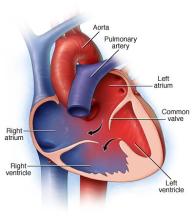
In a partial atrioventricular septal defect:
- There's a hole in the heart's wall between the upper chambers.
- The valve between the left chambers, called the mitral valve, has an unusual opening. The opening is called a cleft.
- Blood can leak backward through the opening.
In a complete atrioventricular septal defect:
- There's a large hole in the center of the heart. The hole is where the walls between the upper and the lower chambers meet.
- Oxygen-rich and oxygen-poor blood mix through the hole.
- There's one large valve between the heart's upper and lower chambers, instead of the typical separate valves.
- The heart must work harder to pump blood. The heart becomes larger.
Risk factors
There's a strong link between Down syndrome, also called trisomy 21, and atrioventricular septal defect. If prenatal testing detects AVSD, the baby has higher risk of having Down syndrome. A baby with Down syndrome has a higher risk of having an AVSD.
Complications
Possible complications of atrioventricular septal defect include:
- Enlarged heart. More blood flow through the heart forces it to work harder than usual. This can make it larger.
- High blood pressure in the lungs. This condition also is called pulmonary hypertension. A hole in the heart lets oxygen-rich blood mix with oxygen-poor blood. The lungs get too much blood. Pressure builds up in the lungs.
- Heart failure. If atrioventricular septal defect is not treated, the heart can't pump enough blood to meet the body's needs.
Pregnancy
Many people who have atrioventricular septal defect surgery can have a pregnancy. But they should see a doctor trained in congenital heart disease. This type of doctor is called an adult congenital cardiologist. Together you can discuss and plan for any special care needed during pregnancy.
Diagnosis
Atrioventricular septal defect may be diagnosed in a baby before birth during a pregnancy ultrasound or special heart imaging.
Tests
Tests to diagnose atrioventricular septal defect may include:
- Echocardiogram. Sound waves are used to make pictures of the heart in motion. An echocardiogram can reveal a hole in the heart or heart valve issues. It also shows how blood flows through the heart.
- Electrocardiogram. Also called an ECG or EKG, this noninvasive test records the electrical activity of the heart. Sticky patches with sensors are placed on the chest. Wires connect the patches to a computer, which shows results.
- Chest X-ray. A chest X-ray shows the condition of the heart and lungs. It can show if the heart is enlarged or if the lungs hold extra blood or other fluid. These could be signs of heart failure.
- Cardiac catheterization. A thin, flexible tube called a catheter goes into a blood vessel in the groin and up to the heart. A contrast material injected through the catheter makes the heart structures show up more clearly on X-rays. During the procedure, a healthcare professional can measure pressure in different parts of the heart.
This test also may be done later in life to measure pressure in the heart to guide treatment.
Treatment
Open-heart surgery is needed to treat a complete or partial atrioventricular septal defect. More than one surgery may be needed. Surgery involves using one or two patches to close the hole in the heart wall. The patches become part of the heart's wall as the heart's lining grows over them.
Other parts of the surgery depend on whether the defect is partial or complete and what other heart conditions there are.
For a partial atrioventricular septal defect, surgery is needed to repair the mitral valve so it can close tightly. If the valve can't be fixed, it may need to be replaced.
For a complete atrioventricular septal defect, surgeons separate the large single valve between the upper and lower heart chambers into two valves.
Many people who have surgery to correct an atrioventricular septal defect don't need more surgery. But some complications, such as heart valve leaks, may need treatment. This may include more surgery.
Follow-up care
After congenital heart defect surgery, you need regular checkups for life with a doctor trained in heart disease. This type of doctor is called a cardiologist. Your cardiologist tells you how often you need an appointment or imaging tests.
If you're an adult with a congenital heart defect treated in childhood, you may need care from an adult congenital cardiologist. You may need special care around the time of future surgeries, even those that do not involve the heart.
Preventive antibiotics
Sometimes, a congenital heart defect can increase the risk of infection in the lining of the heart or heart valves. This infection is called infective endocarditis. You or your child may need to take antibiotics before certain dental procedures. Ask your or your child's healthcare professional whether preventive antibiotics are needed.
Prognosis
Treatment greatly improves the outlook for children with atrioventricular septal defect. But they may still have challenges later in life, including:
- Irregular heartbeats, also called arrhythmias.
- Leaky heart valves, also called valve regurgitation. Leaky heart valves may need surgery.
- Narrowing of the heart valves, also called valve stenosis.
Self-care
Many people with successful repair of a congenital heart defect have no activity restrictions. But some people may need to limit exercise or sports activities. Your healthcare professional can tell you which sports and types of exercise are safe for you or your child.
Coping and support
Many children with heart conditions present at birth, called congenital heart defects, grow up to lead active lives.
If you have a congenital heart defect or if you have a child with one, these tips may be helpful.
- Seek support. You may find talking with other people who've been in the same situation helpful. Ask your healthcare team if there are any support groups in your area.
-
Record your or your child's health history. Write down medicines. Write down surgeries and other procedures, and the dates they were done. Include the medical report from the surgeon and other important information about your or your child's care.
This information is useful for healthcare professionals who don't know you or your child. It also may help your child move from pediatric to adult care professionals.
Prevention
There is no known prevention for atrioventricular septal defect.
Some heart conditions are passed down in families, which means they are inherited. If you have a family or personal history of congenital heart defects, talk with a genetic counselor and a heart doctor before you get pregnant.
Preparing for your appointment
You or your child might be sent to a doctor trained in heart conditions, called a cardiologist.
What you can do
- Write down all symptoms, including any that may seem unrelated to the reason for the appointment.
- Make a list of all your medicines, vitamins and supplements, including doses.
- Write down important medical information, including other health conditions you have or your child has.
- Write down questions to ask your healthcare professional.
- Find out if your family has a history of heart disease.
What to expect from your doctor
Your healthcare professional is likely to ask many questions, such as:
- When did you notice symptoms?
- Do your symptoms come and go, or do you have them all the time?
- What, if anything, makes the symptoms worse or better?
Questions to ask your doctor
For atrioventricular septal defect, some questions might include:
- What's the most likely cause of these symptoms?
- What tests are needed? How do we prepare for them?
- What treatment do you suggest?
- How can we manage other health conditions together with atrioventricular septal defect?
Be sure to ask all the questions you have.
© 1998-2026 Mayo Foundation for Medical Education and Research(MFMER). All rights reserved. Terms of Use