
Broken collarbone
Conditions
Overview
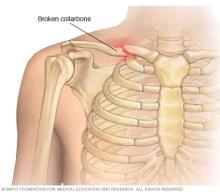
A broken collarbone is a common injury. The collarbone, also known as the clavicle, connects the shoulder blade to the breastbone. Common causes of a broken collarbone include falls, sports injuries and traffic accidents. Infants sometimes break their collarbones during birth.
Seek medical help quickly for a broken collarbone. Most breaks heal well with ice, pain relievers, a sling, physical therapy and time. Some might require surgery to put plates, screws or rods into the bone to hold the pieces in place during healing.
Symptoms
Symptoms of a broken collarbone include:
- Pain that increases when moving the shoulder.
- Swelling, tenderness or bruising.
- Skin over the break that might look like a tent when gently pinched.
- A bump on or near the shoulder.
- A grinding or crackling sound when moving the shoulder.
- Stiffness or not being able to move the shoulder.
Newborns who break a collarbone during birth often will not move the arm for days and will cry if someone moves the arm.
When to see a doctor
If you notice symptoms of a broken collarbone or have enough pain to prevent using your arm as usual, see a healthcare professional right away. Waiting to be treated can lead to poor healing.
Causes
Common causes of a broken collarbone include:
- Falls, such as falling onto the shoulder or an outstretched arm.
- Sports injuries, such as a direct blow to the shoulder on the field, rink or court.
- Traffic accidents, from a car, motorcycle or bike crash.
- Birth injury, usually from a difficult vaginal birth.
Risk factors
Teenagers and children are at higher risk of a broken collarbone than adults. The risk goes down after age 20. Then it rises again in older people as they lose bone strength with age.
Complications
Most broken collarbones heal without difficulty. Complications, when they occur, might include:
- Nerve or blood vessel injury. Rarely, the jagged ends of a broken collarbone may injure nearby nerves and blood vessels. Seek immediate medical attention for numbness or coldness in an arm or hand.
- Poor or slow healing. A badly broken collarbone might heal slowly or might not fully heal. Poor joining of the bones during healing can shorten the bone.
- A lump in the bone. As part of the healing process, the place where the bone knits together forms a bony lump. The lump is easy to see because it is close to the skin. Most lumps disappear over time, but not all do.
- Osteoarthritis. A fracture that involves the joints that connect the collarbone to the shoulder blade or the breastbone might increase the risk of developing arthritis in that joint.
Diagnosis
During the physical exam, a healthcare professional inspects the area for tenderness, swelling or an open wound. X-rays show where the break is, how bad it is and whether the joints are injured. A CT scan might give more-detailed images.
Treatment
To heal, any broken bone must be kept still. People who have a broken collarbone usually need to wear a sling. Bone healing often takes 3 to 6 weeks for children and 6 to 12 weeks for adults.
A newborn's collarbone that breaks during birth typically heals in about two weeks with only pain control and careful handling of the baby.
Medicines
A pain medicine that you can buy without a prescription might be all that is needed to ease pain. Some people who have intense pain might need a prescription medicine with narcotics for a few days. Because narcotics can be habit-forming, it is important to use them for only a short time and only as directed by a healthcare professional.
Therapy
Exercises to restore movement begin soon after treatment starts. It is usually important to begin moving to lessen stiffness. Later, other exercises or physical therapy can help the joint move better and build muscle strength.
Surgery
Surgery might be needed if the collarbone has broken through the skin, is out of place or is in several pieces. Broken collarbone surgery usually includes using plates, screws or rods to hold the bone in place while it heals. Surgical complications are rare but can include infection.
Children and teenagers younger than 16 rarely need surgery because they heal more quickly than adults do.
Lifestyle and home remedies
Applying ice to the area for 20 to 30 minutes every few hours during the first 2 to 3 days after a collarbone break can help control pain and swelling.
Preparing for an appointment
Depending on how bad the break is, your healthcare professional or the emergency room care team might recommend a surgeon who treats bone injuries, called an orthopedic surgeon.
What you can do
It might be helpful to write a list that includes:
- Details about symptoms, what caused the injury and when it happened.
- Information about past medical issues.
- All medicines, vitamins and dietary supplements you take, including doses.
- Questions to ask the healthcare team.
What to expect from your doctor
Your care team might ask:
- Have you broken a bone before?
- Have you been told you have weakened bones?
© 1998-2026 Mayo Foundation for Medical Education and Research(MFMER). All rights reserved. Terms of Use