
Broken ribs
Conditions
Overview
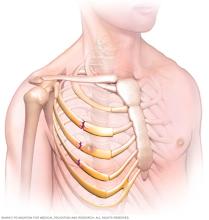
A broken rib is a common injury. It happens when one of the bones in the rib cage cracks or breaks. The most common causes are falls, car accidents and contact sports.
Many broken ribs are simple cracks. These are painful but not typically dangerous. More-serious breaks can cause a rib to split into pieces. Sharp bone edges can injure the lungs, blood vessels or other organs.
If two or more ribs that are next to each other break, this can create a free-floating part of the chest wall called a "flail chest." This serious condition can make it hard to breathe. It typically is caused by severe trauma and requires urgent medical attention.
Most broken ribs heal on their own in about six weeks. Good pain control is important. It helps you breathe deeply. When you breathe deeply, you lower the risk of lung conditions, such as pneumonia.
Symptoms
A broken rib can cause pain. The pain may get worse when you:
- Take a deep breath.
- Press on the injured area.
- Bend or twist your body.
When to see a doctor
See a healthcare professional if your rib area is sore after an injury or accident, or if you have trouble breathing or pain when you take a deep breath.
Get medical help right away if you feel pressure, fullness or squeezing pain in the center of your chest that lasts more than a few minutes, or if pain spreads to your shoulder or arm. These can be signs of a heart attack.
Causes
Broken ribs are most often caused by a direct hit to the chest. This can happen during a car accident, a fall or contact sports. Broken ribs may be a sign of child abuse. Ribs also can break from repeated stress, such as during sports like golf or rowing. In rare cases, severe coughing over a long time can cause a rib to break.
Risk factors
The following can raise the risk of breaking a rib:
- Osteoporosis. This condition weakens bones, making them easier to break.
- Sports. Playing contact sports, such as football or hockey, increases the risk of rib injuries.
- Cancer in a rib. Cancer can weaken the bone and make it more likely to break.
Complications
A broken rib can harm blood vessels or internal organs. Having more than one broken rib raises this risk.
Possible complications depend on which ribs are broken:
- Injury to the aorta. A sharp edge from a broken upper rib can tear a major blood vessel, including the aorta. The aorta is the main artery and largest artery in the human body.
- Lung injury. A broken middle rib can puncture a lung and cause it to collapse.
- Injury to internal organs. Broken lower ribs can damage the spleen, liver, or kidneys.
- Injury to multiple ribs. This can cause flail chest, which can make breathing hard. This condition requires emergency medical care.
Prevention
You can lower the risk of breaking a rib by:
- Preventing sports injuries. Wear protective gear when playing contact sports.
- Reducing the risk of falls at home. Keep floors clear of clutter, clean up spills right away, use a rubber mat in the shower, keep rooms well lit, and secure rugs so they do not slip.
- Keeping bones strong. Get enough calcium and vitamin D each day. Adults typically need about 1,200 milligrams of calcium and 600 international units of vitamin D daily from food or supplements.
Diagnosis
During a physical exam, a healthcare professional may gently press on your ribs to check for pain or tenderness. The exam also may include listening to your lungs and watching how your rib cage moves when you breathe.
One or more imaging tests may be used to help find a broken rib:
- X-ray. X-rays use a small amount of radiation to show the bones. The images may not show a new break, especially if the rib is only cracked. X-rays also can show if a lung has collapsed.
- CT scan. A CT scan can find rib breaks that an X-ray may miss. It also shows injuries to soft tissues and blood vessels more clearly.
- MRI. An MRI can show damage to soft tissues and organs around the ribs. It also can help find small rib breaks.
- Bone scan. A bone scan is useful for finding small cracks, also called stress fractures. These can happen after repeated strain, such as long periods of hard coughing. A small amount of contrast material is injected into a vein. It collects in areas where the bone is healing and shows on the scan.
Treatment
Most broken ribs heal on their own in about six weeks. Resting and avoiding heavy activity can help. Putting ice on the injured area can reduce pain and swelling. Always put a thin towel between ice and your skin. Surgery may be needed to repair serious rib breaks.
Medicines
Pain control is very important. If pain keeps you from breathing deeply, this can raise the risk of pneumonia. Pain medicines taken by mouth are often used first. If these do not help enough, injections may be used to numb the nerves around the ribs.
Therapy
After pain is better controlled, your healthcare professional may suggest breathing exercises. These exercises help you take deeper breaths. Shallow breathing can increase the risk of pneumonia.
Preparing for an appointment
Car accidents are a common cause of broken ribs. Many people find out they have a broken rib in an emergency room, where there is no time to prepare. If a rib breaks from repeated stress over time, you may see your primary healthcare professional instead.
Here's information to help you get ready for your appointment.
What you can do
Before your appointment, make a list of:
- Your symptoms and when they started.
- Recent injuries or accidents.
- All medicines, vitamins, and supplements you take, including doses.
- Questions you want to ask your healthcare professional.
If possible, bring a family member or friend to the appointment. They can help you remember the information you're given.
Questions to ask
- How long will I be in pain?
- What treatments are available, and which do you recommend?
- How can I best manage this with my other health conditions?
- Do I need to limit my activities?
Don't hesitate to ask other questions.
What to expect from your doctor
Your healthcare professional may ask:
- Where is your pain?
- Does the pain stay the same, or does it come and go?
- How bad is the pain?
- Did an injury or event cause the pain?
- What makes the pain better or worse?
© 1998-2026 Mayo Foundation for Medical Education and Research(MFMER). All rights reserved. Terms of Use