
Crohn's disease
Conditions
Overview
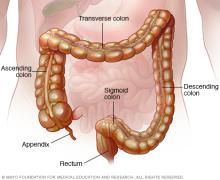
Crohn's disease is a type of inflammatory bowel disease (IBD). It causes irritation and swelling, called inflammation, most often in the digestive tract. This can lead to belly pain, severe diarrhea, fatigue, weight loss and malnutrition. Crohn's disease can be painful and make it hard to go about daily life. Sometimes, it may lead to serious or life-threatening complications.
Symptoms of Crohn's disease often happen in cycles, with periods of active disease and periods with fewer symptoms.
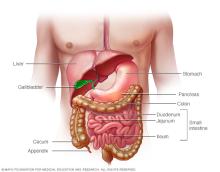
Inflammation caused by Crohn's disease can affect different areas of the digestive tract. It most commonly affects the end of the small intestine and the beginning of the large intestine.
As of yet, there is no cure for Crohn's disease. But therapies can greatly reduce its symptoms and even bring about long-term healing of inflammation. With treatment, most people with Crohn's disease can function well and do the activities that they enjoy.
Symptoms
Symptoms of Crohn's disease can range from mild to severe. They usually develop over time, but they sometimes come on suddenly, without warning. Symptoms include:
- Diarrhea.
- Fever.
- Fatigue.
- Abdominal pain and cramping.
- Blood in the stool.
- Mouth sores.
- Reduced appetite and weight loss.
- Pain or drainage near or around the anus due to inflammation from a tunnel into the skin, called a fistula.
Crohn's disease can affect any part of the small or large intestine. It may involve multiple segments, skipping sections of the intestine. Or it may be continuous. It most commonly involves the last part of the small intestine, called the terminal ileum. In some people, the disease is only in the colon or the large intestine.
Other symptoms
People with Crohn's disease also may experience symptoms outside of the intestinal tract. These conditions are often referred to as extraintestinal manifestations. They include:
- Inflammation of skin, eyes and joints.
- Inflammation of the liver or bile ducts.
- Kidney stones.
- Low iron, called iron deficiency anemia.
- Delayed growth or sexual development, in children.
Flares and remission
Crohn's disease often follows a pattern of flares and remission. During a flare, symptoms become more active or more severe as inflammation increases.
Certain factors — such as smoking, stress, some medicines and specific foods — may be linked to worsening symptoms or flares in some people. However, these factors do not cause Crohn's disease.
Flares may last for days or weeks and can range from mild to severe. Symptoms such as diarrhea, abdominal pain, fatigue and weight loss may worsen during this time.
Between flares, many people have periods of remission when symptoms are lessened or not present. These cycles can vary over time.
When to see a doctor
See a healthcare professional if you have ongoing changes in your bowel habits or if you have any symptoms of Crohn's disease, such as:
- Belly pain.
- Blood in the stool.
- Nausea and vomiting.
- Diarrhea lasting more than 1 to 2 weeks.
- Weight loss that happens without trying.
- Fever in addition to any of the above symptoms.
Causes
The exact cause of Crohn's disease remains unknown. Several factors likely play a role in its development.
- Genes. More than 200 genes have been associated with Crohn's disease. However, researchers aren't exactly sure what role they play in the condition. Having one or more of these genes may make someone more likely to get Crohn's disease.
- Immune system. It is suspected that a yet unidentified exposure, infection or environmental factor may trigger an immune response that manifests as Crohn's disease. This may happen in people who are genetically susceptible.
Risk factors
Several factors are associated with an increased risk of developing Crohn's disease, including:
- Family history. People with a first-degree relative, such as a parent, sibling or child, are at higher risk of having the disease. As many as 1 in 5 people with Crohn's disease have a family member with the disease.
- Age. Crohn's disease can happen at any age, but it's more common to develop the condition when you're young. Most people who develop Crohn's disease are diagnosed before the age of 30.
- Race and ethnicity. Although Crohn's disease can affect any ethnic group, white people have the highest risk, especially people of Eastern European Jewish descent, also called Ashkenazi Jewish descent. However, the incidence of Crohn's disease is increasing among Black people who live in North America and the United Kingdom. Crohn's disease also is happening more often in the Middle Eastern population and among migrants to the United States.
- Cigarette smoking. People who smoke cigarettes are more likely to develop Crohn's disease. Smoking also leads to more-serious disease and a greater risk of needing surgery. If you smoke, it's important to stop.
- Use of nonsteroidal anti-inflammatory medicines. These include ibuprofen (Advil, Motrin IB, others), naproxen sodium (Aleve), diclofenac sodium and others. They do not cause Crohn's disease. However, they can lead to inflammation of the bowel that makes Crohn's disease worse. They also can lead to symptoms that mimic Crohn's disease inflammation.
Complications
Crohn's disease may lead to one or more of the following complications:
Digestive tract complications
- Bowel blockage or obstruction. Crohn's disease can affect the entire thickness of the intestinal wall. Over time, parts of the bowel can scar and narrow, which may block the flow of digestive contents. This is often known as a stricture. Surgery to widen the stricture or to remove the diseased portion of the bowel may be needed.
- Ulcers. Ongoing inflammation can lead to open sores called ulcers anywhere in the digestive tract. This can include the mouth, anus and genital area.
-
Fistulas. Sometimes ulcers can extend completely through the intestinal wall, creating a connection between different body parts that is not typical. This is known as a fistula. Fistulas can develop between the intestine and the skin or between the intestine and another organ. Fistulas near or around the anal area are the most common kind.
When fistulas develop inside the abdomen, they may cause infections and collections of pus called abscesses. These can be life-threatening if not treated. Fistulas may form between loops of bowel, in the bladder or vagina, or through the skin, causing continuous drainage of bowel contents to the skin.
- Anal fissure. This is a small tear in the tissue that lines the anus or in the skin around the anus where infections can occur. It's often linked to painful passage of stool and may lead to a fistula.
-
Colon cancer. Having Crohn's disease that affects more than one-third of the colon increases the risk of colon cancer after approximately eight years of disease.
If Crohn's disease affects your large intestine, screening often starts 8 to 10 years after diagnosis. It may be repeated every 1 to 5 years depending on the findings. If you also have primary sclerosing cholangitis and colonic disease, screening is recommended every year starting at diagnosis. This is due to an elevated risk of colon cancer. Ask a healthcare professional whether you need to have this test done sooner and more often.
Complications outside the digestive tract
- Skin conditions. People with Crohn's disease can develop skin issues. The most common are tender bumps, called erythema nodosum, and painful skin ulcers, called pyoderma gangrenosum. Some people also may develop a condition called hidradenitis suppurativa (HS). HS causes deep lumps, tunnels and abscesses in areas such as the armpits and groin, under the breasts, or around the genital or anal area.
- Other health issues. Crohn's disease also can cause issues in other parts of the body. Among these are low iron, called iron deficiency anemia, osteoporosis, arthritis, kidney stones, eye issues, and gallbladder or liver disease.
Nutrition and medicine-related risks
- Malnutrition. Diarrhea, belly pain and cramping may make it difficult to eat or for the intestine to absorb enough nutrients. It's also common to develop anemia due to low iron or vitamin B-12 caused by the disease.
- Medicine risks. Certain Crohn's disease medicines that block functions of the immune system are associated with a small risk of getting cancers, including lymphoma, cervical cancer and skin cancers. They also might increase the risk of infections. Work with a healthcare professional to determine risks and benefits of medicines.
Diagnosis
A combination of tests may be used to confirm a diagnosis of Crohn's disease, including:
Lab tests
- Blood tests. Blood tests can check for signs of anemia — a condition in which there is a low number of red blood cells.
- Stool studies. A stool sample may be used to test for blood, inflammation or organisms such as infection-causing bacteria or, rarely, parasites in the stool. Sometimes, looking for stool markers of inflammation, such as calprotectin, can be helpful.
Procedures
- Colonoscopy. A colonoscopy uses a tiny camera on the end of a flexible tube to visually examine the entire colon and the very end of the ileum. During the procedure, a small sample of tissue, called a biopsy, may be taken for laboratory analysis. This is helpful to make a diagnosis.
Imaging tests
-
CT scan. A CT scan is a special X-ray technique that provides more detail than a standard X-ray does. This test looks at the entire bowel as well as at tissues outside the bowel.
CT enterography is a special CT scan that involves drinking an oral contrast material and getting intravenous contrast images of the intestines. This test provides better images of the small bowel and has replaced barium X-rays in many medical centers.
-
MRI. An MRI scan uses a magnetic field and radio waves to create detailed images of organs and tissues. MRI used with a contrast fluid, called magnetic resonance (MR) enterography, is particularly useful for evaluating a fistula around the anal area or the small intestine.
Sometimes, MR enterography can check for disease status or progression. This test may be used instead of CT enterography to reduce the risk of radiation, especially in younger people.
- Ultrasound. Similar to CT or MRI, an ultrasound of your intestines can assess inflammation and complications related to Crohn's disease.
-
Capsule endoscopy. This test involves swallowing a capsule with a camera in it. The camera takes pictures of the small intestine and sends them to a recorder worn on a belt. The images are then downloaded to a computer, displayed on a monitor and checked for signs of Crohn's disease. The camera exits the body painlessly in stool.
You may still need endoscopy with biopsy to confirm a diagnosis of Crohn's disease. Those with Crohn's disease of the small intestine may be at a higher risk of the capsule getting stuck in the intestine, especially if there is a history of narrowing or surgery of the small intestine. Capsule endoscopy should not be done if there is a suspected stricture or blockage, also called an obstruction, in the bowel.
Treatment
There are many treatment options available for Crohn's disease. Treatment aims to reduce inflammation that causes symptoms and to prevent complications. Sometimes, treatment can lead to long-term healing of inflammation. Treatment may include medicines, surgery and nutrition therapy. It is important to work with your healthcare team to develop a treatment plan that is right for you.
Medicines
Medicines used to treat Crohn's disease may include:
- Corticosteroids. Corticosteroids such as prednisone and budesonide (Entocort EC) can help reduce inflammation. However, they do not work for everyone. These medicines are typically used for short-term symptom relief and to induce remission. Sometimes, intravenous steroids may be used in the hospital for a short time.
- Immune system suppressors. These medicines lower immune system activity that contributes to inflammation. Some examples of immunosuppressant medicines include azathioprine (Azasan, Imuran), mercaptopurine (Purinethol, Purixan) and methotrexate (Trexall).
-
Biologics. These medicines target proteins in the body that cause inflammation. Some are given by infusion, and some are given by shot. Examples include infliximab (Remicade), adalimumab (Humira), certolizumab pegol (Cimzia), vedolizumab (Entyvio), ustekinumab (Stelara), risankizumab (Skyrizi), mirikizumab (Omvoh) and guselkumab (Tremfya).
Synthetic versions of biologics, called biosimilars, are available to treat Crohn's disease. These medicines work like the original versions of biologics but may cost less.
- Small-molecule medicines. Janus kinase (JAK) inhibitors are a type of small molecule medicine taken by mouth. They reduce inflammation by targeting parts of the immune system. These medicines may be used when other treatments have not worked. The U.S. Food and Drug Administration has approved the JAK inhibitor upadacitinib to treat Crohn's disease. JAK inhibitors should not be used during pregnancy.
- Antibiotics. Antibiotics are mainly used to treat complications such as infections, abscesses and fistulas rather than Crohn's disease affecting the intestine alone. Antibiotics can reduce the amount of drainage from fistulas and abscesses and sometimes heal them in people with Crohn's disease. Commonly prescribed antibiotics include ciprofloxacin (Cipro) and metronidazole (Flagyl).
Nutrition therapy
A health professional may recommend a special diet given by mouth or a feeding tube, called enteral nutrition. Nutrients also can be given in a vein, called parenteral nutrition. This can improve overall health and allow the bowel to rest. Bowel rest may reduce inflammation in the short term.
Your healthcare professional may use nutrition therapy short-term and combine it with medicines. Enteral and parenteral nutrition are typically used to get people healthier before surgery or when other medicines fail to control symptoms.
Your care professional also may recommend a low-fiber diet to reduce the risk of intestinal blockage if you have a narrowed bowel, called a stricture. A low residue diet is designed to reduce the size and number of your stools.
If you're not absorbing enough nutrients, your health professional also may recommend vitamins and nutritional supplements.
Surgery
If diet and lifestyle changes, medicines, or other treatments don't relieve symptoms, a healthcare professional may recommend surgery. Nearly half of those with Crohn's disease might require at least one surgery.
During surgery, the surgeon removes a damaged portion of your digestive tract and then reconnects the healthy sections. Surgery also may be used to close fistulas and drain abscesses.
The benefits of surgery for Crohn's disease are usually temporary. The disease frequently recurs, often near the reconnected tissue.
Lifestyle and home remedies
Sometimes you may feel helpless when facing Crohn's disease. You are not alone. Mental health is extremely important and should be discussed regularly with your team.
Diet
No specific foods are known to cause Crohn's disease, but some foods may worsen symptoms during flares.
It can be helpful to keep a food diary to track what you're eating, as well as how you feel. If you discover that some foods cause your symptoms to flare, you can try taking them out of your diet.
Here are some general dietary suggestions that may help manage your condition:
- Limit trigger foods. Some foods may cause symptoms such as diarrhea, bloating or cramping. Common triggers can include high-fiber foods, high-fat foods, lactose-containing foods, caffeine, alcohol and processed foods.
- Maintain good nutrition. Crohn's disease can affect how your body digests food and absorbs nutrients, which may lead to vitamin deficiencies and malnutrition.
- Drink plenty of liquids. Drink enough fluids to stay hydrated, especially if you have symptoms such as diarrhea or frequent passing of stool.
- Consider multivitamins. Because Crohn's disease can interfere with your ability to absorb nutrients and because your diet may be limited, multivitamin and mineral supplements are often helpful. Check with a healthcare professional before taking any vitamins or supplements.
- Talk with a dietitian. If you begin to lose weight or your diet has become very limited, talk with a registered dietitian.
Smoking
Smoking increases your risk of developing Crohn's disease and its complications. People with Crohn's disease who smoke are more likely to have relapses and need medicines and repeat surgeries. Quitting smoking can improve the overall health of your digestive tract, as well as provide many other health benefits.
Stress
Although stress doesn't cause Crohn's disease, it can make your symptoms worse and may trigger flare-ups. Although it's not always possible to avoid stress, learning ways to manage it may help improve your overall well-being and ability to cope with the condition.
- Exercise. Physical activity may help reduce stress, improve mood, and increase energy and motivation.
- Cognitive behavioral therapy. This type of therapy helps you identify and change negative thought patterns and behaviors and has been shown to improve quality of life in people with inflammatory bowel disease.
- Relaxation and breathing exercises. Techniques such as deep breathing, also called diaphragmatic breathing, can help reduce stress, lower heart rate and muscle tension, and improve concentration and overall well-being.
Alternative medicine
Many people with Crohn's disease use complementary and alternative medicine along with standard treatments. These approaches may include supplements, mind-body practices or other therapies.
Some complementary therapies may help improve symptoms, quality of life or overall well-being. But there are relatively few well-designed studies showing that these therapies are safe and effective.
Complementary and alternative therapies should not replace standard medical treatment. Talk with your healthcare team before using supplements or alternative therapies, especially if you take medicines that affect the immune system.
Coping and support
Crohn's disease doesn't just affect you physically — it takes an emotional toll as well. If symptoms are severe, your life may revolve around a constant need to run to the toilet. Even if your symptoms are mild, gas and belly pain can make it difficult to be out in public. All of these factors can alter your life and may lead to depression. Here are some things you can do:
- Be informed. One of the best ways to be more in control is to find out as much as possible about Crohn's disease. Look for information from the Crohn's & Colitis Foundation.
- Join a support group. Although support groups aren't for everyone, they can provide valuable information about your condition as well as emotional support. Group members frequently know about the latest medical treatments or integrative therapies. You also may find it reassuring to be among others with Crohn's disease.
- Talk with a therapist. Some people find it helpful to consult a mental health professional who's familiar with inflammatory bowel disease and the emotional challenges it can cause.
Although living with Crohn's disease can be challenging, research is ongoing and the outlook is improving.
Preparing for an appointment
Symptoms of Crohn's disease may first prompt you to visit your primary healthcare professional. Your health professional may recommend that you see a specialist who treats digestive diseases, called a gastroenterologist.
Because appointments can be brief, and there's often a lot of information to talk about, it's a good idea to be well prepared. Here's some information to help you get ready, and what to expect from your visit.
What you can do
- Be aware of anything you need to do ahead of time. At the time you make the appointment, be sure to ask if there's anything you need to do in advance, such as restrict your diet.
- Write down your symptoms, including any that may seem unrelated to the reason for the appointment.
- Write down key personal information, including any major stresses or recent life changes.
- Make a list of all medicines, vitamins and supplements that you're taking.
- Ask a family member or friend to come with you to your appointment. Sometimes it can be hard to take in all the information you get during an appointment. Someone who goes with you may remember something that you missed or forgot.
Preparing a list of questions before you go can help you make the most of your visit. List your questions from most important to least important in case time runs out. For Crohn's disease, some basic questions to ask include:
- What's causing these symptoms?
- Are there other possible causes for my symptoms?
- What kinds of tests do I need? Do these tests require any special preparation?
- Is this condition short-term or long lasting?
- What treatments are available, and which do you recommend?
- Are there any medicines that I should avoid?
- What types of side effects can I expect from treatment?
- Are there any alternatives to the approach that you're suggesting?
- I have other health conditions. How can I best manage them together?
- Do I need to change my diet?
- Is there a generic alternative to the medicine you're prescribing me?
- Are there any brochures or other printed material that I can take with me? What websites do you recommend?
- If I have Crohn's disease, what is the risk that my child will develop it?
- What kind of follow-up testing do I need?
Don't hesitate to ask other questions that come up during your appointment.
What to expect from your doctor
Your healthcare professional will likely asked number of questions, including:
- When did you first begin having symptoms?
- Have your symptoms been continuous or do they come and go?
- How bad are your symptoms?
- Do your symptoms affect your ability to work or do other activities?
- Does anything seem to improve your symptoms?
- Is there anything that seems to make your symptoms worse?
- Do you smoke?
- Do you take nonprescription or prescription nonsteroidal anti-inflammatory medicines (NSAIDs) — for example, ibuprofen (Advil, Motrin IB, others), naproxen sodium (Aleve) or diclofenac sodium?
© 1998-2026 Mayo Foundation for Medical Education and Research(MFMER). All rights reserved. Terms of Use