
Cutaneous B-cell lymphoma
Conditions
Overview
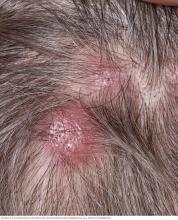
Cutaneous B-cell lymphoma is a rare type of cancer that begins in the white blood cells. This cancer affects the skin.
Cutaneous B-cell lymphoma refers to B-cell lymphoma that is only in the skin. Cutaneous B-cell lymphoma gets its name from the fact that it affects one type of germ-fighting white blood cells called B cells. These cells also are called B lymphocytes.
Cutaneous B-cell lymphoma is a type of non-Hodgkin lymphoma. Another type of non-Hodgkin lymphoma that affects the skin is called cutaneous T-cell lymphoma. This type starts in cells called T lymphocytes. Cutaneous T-cell lymphoma is more common than cutaneous B-cell lymphoma.
Treatment for cutaneous B-cell lymphoma may include observation, radiation therapy and surgery to remove the cancer. Other treatment options may include skin-directed medicines, chemotherapy and immunotherapy. Cutaneous B-cell lymphoma may be curable. However, it often comes back, known as a relapse.
Types
The types of cutaneous B-cell lymphoma include:
- Primary cutaneous follicle center lymphoma. This is the most common type of cutaneous B-cell lymphoma. It appears mostly on the scalp, face, forehead and torso. Primary cutaneous follicle center lymphoma usually grows slowly and has an excellent prognosis.
- Primary cutaneous marginal zone B-cell lymphoma. This is the second most common type of cutaneous B-cell lymphoma. It appears mostly on the torso, arms and head. Primary cutaneous marginal zone B-cell lymphoma usually grows slowly and has an excellent prognosis. However, this type comes back in about half the people.
- Primary cutaneous diffuse large B-cell lymphoma, leg type. This is the rarest type of cutaneous B-cell lymphoma. It appears mostly on one or both legs but can be found elsewhere. Primary cutaneous diffuse large B-cell lymphoma, leg type usually grows fast and has a poor prognosis. This type has a high relapse rate and may spread beyond the skin when it comes back.
- Intravascular diffuse large B-cell lymphoma. This type is different from the other types of cutaneous B-cell lymphoma. It is not limited to the skin but forms in small blood vessels of the skin and elsewhere in the body. Because of this, it can affect any organ. The skin and central nervous system are the most common sites. When in the skin, it appears most often on the legs or torso. Some people may have a fever or have symptoms in the brain before having skin symptoms. Intravascular diffuse large B-cell lymphoma usually grows fast and has a poor prognosis.
Symptoms
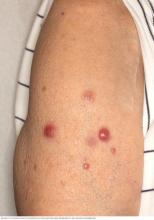
Symptoms of cutaneous B-cell lymphoma depend on the type you have.
Primary cutaneous follicle center lymphoma
Symptoms of primary cutaneous follicle center lymphoma may include firm, painless bumps or lesions. They may appear red, pink or another color depending on your skin color. These bumps or lesions most often happen on the head, especially the scalp, the neck and the upper torso. You may have one bump or lesion or a few grouped together. These often grow slowly.
Primary cutaneous marginal zone B-cell lymphoma
Symptoms of primary cutaneous marginal zone B-cell lymphoma may include bumps or lesions that are often soft. They may appear red, purple or another color depending on your skin color. This type happens most often on the torso or upper arms. It is common to have multiple bumps at once.
Primary cutaneous diffuse large B-cell lymphoma, leg type
Symptoms of primary cutaneous diffuse large B-cell lymphoma, leg type may include nodules or tumors on one or both lower legs. These bumps may appear red, blue or another color depending on your skin color. This type tends to grow quickly and can spread beyond the skin more easily than other types. Symptoms of spread may include swollen lymph nodes, drenching night sweats, fever, fatigue and losing weight without trying.
Intravascular diffuse large B-cell lymphoma
Symptoms of intravascular diffuse large B-cell lymphoma are often different from other types of cutaneous B-cell lymphoma. This type may appear as a bump or patchy area of skin or look similar to spider veins. The skin may be hard. It also may look purple or another color depending on your skin color. This type is often aggressive and can appear on the torso or thighs. It also can involve the brain or other organs and cause symptoms such as confusion, weakness, fever and fatigue.
When to see a doctor
Make an appointment with a healthcare professional if you have any symptoms that worry you.
Causes
It's not clear what causes cutaneous B-cell lymphoma. Cancer happens when cells develop changes in their DNA. A cell's DNA holds the instructions that tell the cell what to do. In healthy cells, the DNA gives instructions to grow and multiply at a set rate. The instructions tell the cells to die at a set time. In cancer cells, the DNA changes give different instructions. The changes tell the cancer cells to make many more cells quickly. Cancer cells can keep living when healthy cells would die. This causes too many cells. In cutaneous B-cell lymphoma, the cancer cells build up in the skin. The cancer cells rarely spread to other areas of the body.
Cutaneous B-cell lymphoma gets its name from the kind of cell that makes up this cancer. This cancer starts in germ-fighting white blood cells called lymphocytes. Cutaneous B-cell lymphoma affects specific lymphocytes called B lymphocytes.
Risk factors
Risk factors for cutaneous B-cell lymphoma include:
- Older age. Cutaneous B-cell lymphoma can happen at any age. However, it is most common in adults age 50 and older.
- Weakened immune system. There may be a higher risk of cutaneous B-cell lymphoma if the body's germ-fighting immune system is weakened by medicine or illness. People with weakened immune systems might include those taking medicine to control the immune system, such as after an organ transplant. Certain health conditions also can weaken the immune system, including human immunodeficiency virus (HIV) infection.
- Bacteria transmitted by ticks. Some ticks can transmit bacteria called Borrelia burgdorferi. Primary cutaneous marginal zone B-cell lymphoma has been linked to Borrelia burgdorferi infection in some European countries.
- Exposure to foreign substances in the skin. Primary cutaneous marginal zone B-cell lymphoma has been linked to tattoo ink and certain injections. This may be from the ongoing skin irritation.
There is no way to prevent cutaneous B-cell lymphoma.
Complications
Cutaneous B-cell lymphoma may cause complications such as:
- Relapse. Even after successful treatment, cutaneous B-cell lymphoma may come back. This is called a relapse. The risk of relapse is highest in people with primary cutaneous diffuse large B-cell lymphoma, leg type.
- Spread beyond the skin. Primary cutaneous diffuse large B-cell lymphoma, leg type may spread to areas beyond the skin. It may spread to the lymph nodes, bone marrow, or organs such as the liver or lungs. Cancer that spreads beyond the skin is called systemic lymphoma.
Diagnosis
Diagnosis of cutaneous B-cell lymphoma often begins with a physical exam. During the exam, a healthcare professional checks the skin for nodules, lesions or patches. The healthcare professional also may check for swollen lymph nodes in the neck, underarms and groin and check for an enlarged spleen or liver. Other tests and procedures include blood tests, imaging tests and taking a sample of tissue for lab testing. Cutaneous B-cell lymphoma can closely mimic systemic lymphoma. Because of this, thorough testing is needed to confirm that the cancer is limited to the skin.
Skin biopsy
A biopsy is a procedure to remove a sample of tissue for testing in a lab. Your healthcare professional may remove a small piece of the affected skin. The sample is tested in a lab to look for lymphoma cells.
Blood tests
Blood tests can sometimes show whether lymphoma cells are present. Blood tests may be used to test for viruses, including HIV, hepatitis B virus and hepatitis C virus. The presence of a virus may affect treatment options. Blood tests also measure levels of lactate dehydrogenase (LDH), which is often higher in people with systemic lymphoma.
Bone marrow biopsy and aspiration
Bone marrow biopsy and aspiration are procedures that involve collecting cells from the bone marrow. The cells are sent for testing.
In a bone marrow aspiration, a needle is used to draw a sample of the fluid. In a bone marrow biopsy, a needle is used to collect a small amount of the solid tissue. The samples most often come from the hip bone. Your bone marrow may be tested to look for lymphoma cells.
Imaging tests
Imaging tests make pictures of the body. They can show if the lymphoma is only in the skin. Tests might include CT and positron emission tomography (PET) scans.
Testing lymphoma cells in the lab
Lymphoma cells collected from a biopsy or a bone marrow aspiration and biopsy go to a lab for testing. In the lab, specialized tests look for specific things about the cells. The healthcare team uses the results to determine the type of lymphoma that you have.
To decide whether the cells are cutaneous B-cell lymphoma cells, the healthcare professionals in the lab look for:
- Proteins on the surface of the cancer cells. Cutaneous B-cell lymphoma cells have certain proteins on their surfaces that help identify them. These proteins are known as markers. These markers can help identify the type of cutaneous B-cell lymphoma.
- Changes in the cancer cell DNA. Cancer happens when cells have changes in their DNA. Lab tests can show which DNA changes are present in the lymphoma cells.
Treatment
Treatment for cutaneous B-cell lymphoma may include observation, radiation therapy and surgery to remove the cancer. Other treatment options may include skin-directed medicines, chemotherapy and immunotherapy. Which treatment is right for you depends on the type of cutaneous B-cell lymphoma you have, whether you have symptoms, the location of your cancer and the extent of your cancer, called the stage. Your healthcare team also considers how quickly the cancer is growing, your overall health and what you prefer.
Observation
If your cutaneous B-cell lymphoma doesn't cause symptoms, you may not need treatment right away. Instead, you may have checkups every few months. The checkups help your healthcare team watch your condition to see if your cancer progresses.
Radiation therapy
Radiation therapy treats cancer with powerful energy beams. The energy can come from X-rays, protons or other sources. During radiation therapy, you lie on a table while a machine moves around you. The machine directs radiation to precise points in your body.
Radiation therapy may be used alone to treat cutaneous B-cell lymphoma. Sometimes it's used after surgery to kill any cancer cells that might be left. Radiation therapy may be used to treat lymphoma that has come back after treatment, called relapsed cutaneous B-cell lymphoma. It also may be used when other treatments haven't worked, called refractory cutaneous B-cell lymphoma. Radiation therapy also may be used to ease symptoms and improve quality of life in people with ongoing symptoms or lesions.
Surgery to remove the cancer
Your healthcare professional may recommend a procedure to remove the cancer and some of the healthy tissue that surrounds it. This might be an option if you have one or only a few areas of cutaneous B-cell lymphoma. Surgery might be the only treatment needed. Sometimes other treatments are needed after surgery.
Skin-directed medicines
Sometimes medicine can be applied to the skin or injected into the cancer. One example is steroid medicines. This treatment is sometimes used for cutaneous B-cell lymphoma that grows very slowly.
Chemotherapy
Chemotherapy treats cancer with strong medicines. There are many chemotherapy medicines. Chemotherapy medicines can be applied to the skin to treat cutaneous B-cell lymphoma. Chemotherapy also can be given through a vein. You may get a combination of chemotherapy medicines. Chemotherapy also may be combined with immunotherapy. This might be used if the cancer is growing quickly or has spread beyond the skin.
Immunotherapy
Immunotherapy for cancer is a treatment with medicine that helps the body's immune system kill cancer cells. The immune system fights off diseases by attacking germs and other cells that shouldn't be in the body. Cancer cells survive by hiding from the immune system. Immunotherapy helps the immune system cells find and kill the cancer cells.
Immunotherapy may be used to treat cutaneous B-cell lymphoma that is limited to the skin. It is sometimes combined with chemotherapy. Immunotherapy also may be used on relapsed and refractory cutaneous B-cell lymphoma.
Monitoring after treatment
After treatment is complete, you may have frequent follow-up appointments to see if the cancer has come back, known as a relapse. You may have repeat biopsies and blood and imaging tests to check for relapse.
Coping and support
With time, you'll likely find what helps you cope with the uncertainty and worry of a cancer diagnosis. Until then, you may find that it helps to:
Learn enough about cutaneous B-cell lymphoma to make decisions about your care
Ask your healthcare team about your cancer, including your test results, treatment options and, if you want, your prognosis. As you learn more about cutaneous B-cell lymphoma, you may become more confident in making treatment decisions.
Keep friends and family close
Keeping your close relationships strong can help you deal with your cutaneous B-cell lymphoma. Friends and family can provide the practical support you may need, such as helping take care of your home if you're in the hospital. And they can serve as emotional support when you feel overwhelmed by having cancer.
Find someone to talk with
Find someone who is willing to listen to you talk about your hopes and worries. This person may be a friend or family member. The concern and understanding of a counselor, medical social worker, clergy member or cancer support group also may be helpful.
Ask your healthcare team about support groups in your area. Other sources of information include the National Cancer Institute, the American Cancer Society, Blood Cancer United and the Lymphoma Research Foundation. Find support online through Mayo Clinic Connect, which is a community where you can connect with others for support, practical information and answers to everyday questions.
Preparing for an appointment
Make an appointment with a healthcare professional if you have any symptoms that worry you.
If your healthcare professional thinks you might have cutaneous B-cell lymphoma, you may be referred to a doctor who specializes in diseases that affect blood cells, called a hematologist. If a cancer diagnosis is made, you also may be referred to a doctor who specializes in treating cancer, called an oncologist.
Because appointments can be brief, it's a good idea to be prepared. Here's some information to help you get ready.
What you can do
- Be aware of anything you need to do ahead of time. At the time you make the appointment, ask if there's anything you need to do in advance, such as restrict your diet.
- Write down symptoms you have, including any that may not seem related to the reason for which you scheduled the appointment.
- Write down important personal information, including major stresses or recent life changes.
- Make a list of all medicines, vitamins and supplements you're taking and the doses.
- Take a family member or friend along. It can be hard to remember all the information you get during an appointment. Someone who goes with you may remember something that you missed or forgot.
- Write down questions to ask your healthcare team.
For cutaneous B-cell lymphoma, some basic questions include:
- Do I have cutaneous B-cell lymphoma?
- What is the stage of my cutaneous B-cell lymphoma?
- Will I need more tests?
- What are the treatment options?
- How much does each treatment prolong my life?
- What are the potential side effects of each treatment?
- How will each treatment affect my daily life?
- What treatment options have shown the best results?
- What would you recommend to a friend or family member in my situation?
- Should I see a specialist?
- Are there any brochures or other printed material that I can take with me? What websites do you recommend?
- What will determine whether I should plan for a follow-up visit?
Don't hesitate to ask other questions.
What to expect from your doctor
Be prepared to answer questions, such as:
- When did your symptoms begin?
- Do your symptoms happen all the time or do you have them now and then?
- How bad are your symptoms?
- What, if anything, seems to make symptoms better?
- What, if anything, seems to make symptoms worse?
- Have you noticed any lumps, patches or lesions anywhere on your body?
- What are your biggest worries about your diagnosis or treatment?
If you're diagnosed with cutaneous B-cell lymphoma, the next step is to determine the cancer's extent, called the stage. Biopsies, imaging tests and blood tests may be used to determine the stage of a B-cell lymphoma. Your healthcare team uses the cancer stage to help create your treatment plan.
Stages for other types of cancer often have numbers, such as stage 1, 2, 3 and 4. Cutaneous B-cell lymphoma doesn't have those stages. Instead, the stage describes how much of the body is affected by cancer. Cutaneous B-cell lymphoma is staged using the TNM staging system. TNM stands for tumor, node and metastases.
For cutaneous B-cell lymphoma, tumor refers to the number of lesions present on the skin, where they are located and how big they are:
- T0. No lesions are present.
- T1. Only one patch, lesion or nodule is present in one area of the skin.
- T2. Multiple lesions are present. The lesions may be close together in one area of the skin or located in two areas of the skin that are near each other.
- T3. Multiple lesions are present in multiple areas of the skin not near each other.
Node refers to whether the lymph nodes are affected:
- N0. No lymph nodes are affected.
- N1. One lymph node region is affected.
- N2. More than two lymph node regions are affected.
- N3. The cancer has spread to the central lymph nodes.
Metastases refers to whether the cancer has spread to other parts of the body:
- M0. The cancer has not spread beyond the skin.
- M1. The cancer has spread to other organs, such as the liver, lungs, bone marrow or spleen.
For example, an early-stage cutaneous B-cell lymphoma may be labeled as T1N0M0. A late-stage cutaneous B-cell lymphoma that is more aggressive and has spread beyond the skin may be labeled as a T3N3M1. Once it spreads beyond the skin it is no longer treated as a cutaneous lymphoma but rather a systemic lymphoma.
Cutaneous B-cell lymphoma prognosis
The cancer prognosis tells you how likely it is that the cancer can be treated successfully. Your personal prognosis may depend on:
- Your age.
- Your overall health.
- How much of the body is affected by cancer.
- Your blood test results.
Talk with your healthcare team about your prognosis if you want to know what to expect. Members of your healthcare team can explain what they consider when thinking about your prognosis.
Survival rates are different for each type of cutaneous B-cell lymphoma. They also depend on your overall health, the stage of your cancer and which treatments you are getting. To understand cutaneous B-cell lymphoma survival rates, experts study many people with cutaneous B-cell lymphoma to see how many are living five years after their diagnosis.
The survival rates for each type of cutaneous B-cell lymphoma are:
- Primary cutaneous follicle center lymphoma. The five-year survival rate for this type is about 95%.
- Primary cutaneous marginal zone B-cell lymphoma. The five-year survival rate for this type ranges from 98% to 100%.
- Primary cutaneous diffuse large B-cell lymphoma, leg type. The five-year survival rate for this type ranges from 41% to 66%.
- Intravascular diffuse large B-cell lymphoma. Current data for this type shows how many people are living three years after their diagnosis. When only in the skin, the three-year survival rate is 56%. If the cancer is present elsewhere in the body, the three-year survival rate is 22%.
Keep in mind that survival statistics take five years to collect. The most recent survival rates include people who had treatment for cutaneous B-cell lymphoma more than five years ago. These people may not have had access to the latest treatments. Over the last few years, survival rates have increased with the addition of new treatments.
© 1998-2026 Mayo Foundation for Medical Education and Research(MFMER). All rights reserved. Terms of Use