
Ectropion
Conditions
Overview
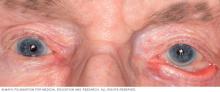
Ectropion (ek-TROH-pee-on) is a condition in which your eyelid turns outward. This leaves the inner lining of the eyelid surface exposed and limits protection of the eye.
Ectropion generally affects only the lower eyelid. The entire length of the eyelid may be turned out, or only one part of the eyelid may sag away from the eye.
The condition is more common in older adults.
Artificial tears and lubricating ointments can help relieve symptoms of ectropion. Surgery is needed to fully correct the condition.
Symptoms
Blinking allows the eyelids to spread tears evenly across the eyes. This keeps the surfaces of the eyes lubricated and clean. The tears drain into small openings on the inner part of the eyelids.
With ectropion, the lower lid pulls away from your eye. The eyelids don't close all the way, causing poor lubrication and cleaning of the eyes. Also, tears don't drain properly. These changes in how the eyelid works can cause the following symptoms:
- Watery eyes.
- Excessive dryness of the eye.
- Burning, gritty or sandy feeling in the eye.
- Redness of the white of the eye and the lining of the eyelid.
- Sensitivity to light.
When to see a doctor
See your healthcare professional if an eyelid is sagging or an eye is constantly watering or irritated.
Seek immediate care if you experience:
- Pain or achiness in the eye.
- Increased pain with exposure to light.
- Decreased vision.
These symptoms could indicate severe injury to the eye, including injury to the clear outer layer at the center of the eye, called the cornea.
Causes
Ectropion can be caused by:
- Muscle weakness. With age, the muscles under the eyes tend to weaken, and tendons stretch out. These muscles and tendons typically hold the eyelid snugly against the eye. When the muscles and tendons weaken, the eyelid can begin to droop.
- Facial paralysis. Certain conditions, such as Bell's palsy, can paralyze facial nerves and muscles that control the eyelids.
- Scar tissue. Ectropion may be caused by scar tissue or tightened tissues after a burn, injury, skin disease or previous eyelid surgery.
- Eyelid growths. A cancerous or noncancerous tumor on the eyelid can cause it to turn outward.
- Glaucoma medicines. Ectropion may be a side effect of long-term use of certain medicines used to treat an optic nerve condition called glaucoma.
- Congenital condition. Rarely, ectropion is related to a condition present at birth, also called a congenital condition.
Risk factors
Factors that increase your risk of developing ectropion include:
- Older age.
- Previous eyelid surgeries.
- Previous cancer, burns or trauma near the eyes.
- Skin conditions near the eyes.
- Frequently rubbing eyes.
- Frequently pulling on eyelids as when putting in contact lenses.
Complications
Ectropion leaves your cornea irritated and exposed. This can lead to:
- Scratching or other damage to the cornea.
- Eye infections.
- Ulcers on the cornea.
- Ongoing inflammation of the cornea.
- Inflammation, thickening or toughening of the inner eyelid.
Diagnosis
Ectropion can usually be diagnosed with a routine eye exam, physical and an exam of the tissues surrounding the affected eye. Also, you'll be asked about any history of eye injury, eyelid surgery or other medical conditions.
Your healthcare professional will likely:
- Examine the eyelid with a magnifying device.
- Pull on your eyelid to see how well it returns to its at-rest state.
- Ask you to open and close your eyes while observing you.
- Ask you to look up and open your mouth, which may reveal more drooping of the eyelid.
- Test the strength of your face muscles.
Treatment
Surgery is usually needed to treat ectropion. Eye ointments available with or without a prescription, as well as artificial tears, can give you short-term relief from symptoms. The eyelids may be temporarily taped closed while you wait for surgery.
Surgery
The type of surgery you have depends on the condition of the tissue surrounding your eyelid and on the cause of your ectropion. In general, surgery may include:
- Shortening the length of the eyelid.
- Removing parts of muscles and tendons to tighten them.
- Using skin grafts from the upper eyelid or behind the ear if tissues of the lower eyelid are scarred or damaged.
Before surgery, you'll receive a local anesthetic to numb your eyelid and the area around it. You may take a medicine to help you relax.
After surgery you may be asked to:
- Wear an eye patch for 24 hours.
- Use an antibiotic and steroid ointment on your eye.
- Use cold compresses to lessen bruising and swelling.
- Limit your activities for the first week.
- Avoid rubbing your eyes.
- Avoid wearing contact lenses for two weeks.
Preparing for an appointment
If you have signs and symptoms of ectropion, you'll start by seeing your primary healthcare professional. You may be referred to a doctor who specializes in treating eye conditions called an ophthalmologist.
Here's some information to help you get ready for your appointment.
What you can do
Before your appointment take these steps:
- List symptoms you've been having, including those that may not be related to your eyes or eyelids.
- Find a photo of yourself before the appearance of your eyelid changed and bring this to your appointment.
- List all medicines, vitamins and supplements you take, as well as the doses and the reason for taking each one.
- List key personal and medical information, including other conditions, recent life changes and stressors.
- List questions to ask your healthcare professional.
Ask a relative or friend to go with you to the appointment to take notes.
Questions you might ask your healthcare professional include:
- What's the most likely cause of my condition?
- Is there a risk to my vision?
- What treatments do you recommend?
- What are the risks of surgery?
- I have these other health conditions. How can I best manage them together?
- Do you have any brochures or other printed material that I can take with me? What websites do you recommend?
What to expect from your doctor
Your healthcare professional is likely to ask you a number of questions, such as:
- When did your symptoms begin?
- Have your symptoms been constant, or do they come and go?
- Have you had any previous surgery or procedures on your eye or eyelid?
- Have you had any other eye problems, such as an eye infection or an injury?
- Have you had skin cancer or other skin conditions on your face?
- Are you using any eyedrops?
© 1998-2026 Mayo Foundation for Medical Education and Research(MFMER). All rights reserved. Terms of Use