
Esophageal cancer
Conditions
Overview
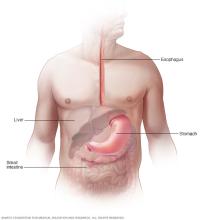
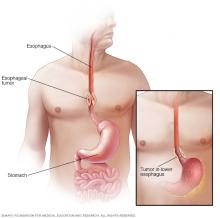
Esophageal cancer is a growth of cells that starts in the esophagus. The esophagus is a long, hollow tube that runs from the throat to the stomach. The esophagus helps move swallowed food from the back of the throat to the stomach to be digested.
Esophageal cancer usually begins in the cells that line the inside of the esophagus. This can happen anywhere along the esophagus.
Esophageal cancer is more common in men. Risk factors include drinking alcohol, smoking and long-lasting acid reflux.
Esophageal cancer can be treated, but it is rarely cured. The chance of cure is better when the cancer is found at an early stage and can be completely removed.
Esophageal cancer treatment often involves surgery to remove the cancer. Other treatments may include chemotherapy, radiation or a combination of the two. Biological therapies, such as targeted therapy and immunotherapy, also may be used. If the disease is found at a very early stage, the cancer may be managed with minimally invasive procedures alone.
Esophageal cancer is classified based on the type of cells that are involved. The type of esophageal cancer you have helps determine your treatment options. Types of esophageal cancer include:
- Adenocarcinoma. Adenocarcinoma begins in the cells of the glands in the esophagus. These glands produce mucus. Adenocarcinoma happens most often in the lower part of the esophagus. Adenocarcinoma is the most common form of esophageal cancer in the United States.
- Squamous cell carcinoma. Squamous cell carcinoma begins in the flat, thin cells that line the surface of the esophagus. Squamous cell carcinoma happens most often in the upper and middle parts of the esophagus. Squamous cell carcinoma is the most common esophageal cancer worldwide.
- Other types. Other types of esophageal cancer are rare. These include small cell carcinoma, sarcoma, lymphoma, melanoma and choriocarcinoma.
Symptoms
Esophageal cancer may not cause symptoms early on. Symptoms of esophageal cancer usually happen when the disease is advanced. Symptoms are similar in women and men.
Symptoms of esophageal cancer include:
- Difficulty swallowing.
- Chest pain, pressure or burning.
- Coughing or hoarseness.
- Unexplained weight loss.
- Worsening indigestion or heartburn.
People with Barrett's esophagus can have the same symptoms that people with esophageal cancer have. Barrett's esophagus is a change in the lining of the lower esophagus, often after long-term acid reflux, and is linked to an increased risk of developing esophageal cancer. Because early esophageal cancer may not cause symptoms, people with Barrett's esophagus need to be checked regularly, often called surveillance.
When to see a doctor
Make an appointment with your doctor or other healthcare professional if you have any symptoms that worry you.
Causes
Most esophageal cancers are not clearly linked to a gene passed down in families. Still, some families have a higher risk of esophageal cancer. Other conditions also can raise the risk of esophageal cancer, including Barrett's esophagus.
Esophageal cancer happens when cells lining the esophagus develop changes in their DNA. A cell's DNA holds the instructions that tell the cell what to do. In healthy cells, the DNA gives instructions to grow and multiply at a set rate. The instructions also tell the cells to die at a set time. In cancer cells, the DNA changes give different instructions. The changes tell the cancer cells to make many more cells quickly. Cancer cells can keep living when healthy cells would die. This causes cells to grow out of control.
The cancer cells might form a mass called a tumor. The tumor can grow to invade and destroy healthy body tissue. In time, cancer cells can break away and spread to other parts of the body. When cancer spreads, it's called metastatic cancer.
Risk factors
Risk factors for esophageal cancer include conditions and habits that cause irritation in the esophagus. Risk factors may include:
- Gastroesophageal reflux disease (GERD). Long-term GERD is linked to a higher risk of esophageal adenocarcinoma.
- Barrett's esophagus, a condition that can develop into adenocarcinoma.
- Difficulty swallowing because a muscle in the esophagus won't relax, a condition called achalasia.
- Not eating enough fruits and vegetables.
- Obesity.
- Radiation treatment to the chest or upper abdomen.
- Drinking alcohol.
- Tobacco use.
- Regularly drinking very hot liquids.
Smoking and drinking alcohol raise the risk of squamous cell carcinoma of the esophagus. The risk is even higher when tobacco and alcohol are used together.
Complications
As esophageal cancer advances, it can cause complications. Complications may include:
- A blockage in the esophagus. Cancer may make it difficult for food and liquid to pass through the esophagus.
- Bleeding in the esophagus. Esophageal cancer can cause bleeding. Though bleeding is usually gradual, it can be sudden and severe at times.
- Pain. Advanced esophageal cancer can cause pain.
Prevention
There's no sure way to prevent esophageal cancer, but you can reduce your risk if you:
Ask about esophageal cancer screening
Screening for esophageal cancer may be an option for people at risk of Barrett's esophagus. Barrett's esophagus is caused by long-lasting acid reflux and can lead to esophageal cancer.
If you have Barrett's esophagus, ask your healthcare professional about screening with upper endoscopy. Screening looks for precancerous changes or cancer before symptoms develop.
Drink alcohol in moderation, if at all
If you choose to drink alcohol, limit how often you drink and keep the amount small. For overall health, drink one or fewer drinks a day. Do not drink every day. The less you drink, the better.
Eat more fruits and vegetables
Choose a healthy diet with a variety of fruits and vegetables. Food sources of vitamins and nutrients are best. Avoid taking large doses of vitamins in pill form, as they may be harmful.
Exercise most days of the week
Aim for at least 30 minutes of exercise on most days of the week. If you haven't been active lately, ask your healthcare professional whether it's OK to exercise, and start slowly.
Maintain a healthy weight
If your weight is healthy, work to keep that weight. If you need to lose weight, ask a healthcare professional about healthy ways to lower your weight. Eat fewer calories and slowly increase the amount of exercise.
Stop smoking
Talk to your healthcare team about strategies and aids that can help you quit. Options include nicotine replacement products, medicines and support groups. If you've never smoked, don't start.
Diagnosis
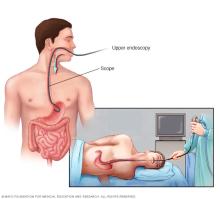
Diagnosing esophageal cancer usually involves tests to find the cancer, confirm the diagnosis and learn how far the cancer has spread. The results help the healthcare team determine the cancer's stage and plan treatment.
Barium swallow study
A barium swallow study is a test that uses X-rays to look at the digestive system. It can show changes in the esophagus, such as a growth that could be cancer. Before the test, you drink a white liquid called barium. The barium coats your esophagus and makes it easier to see on X-rays. If anything worrying is found on the barium swallow study, your healthcare team might recommend having an endoscopy to check it out.
Upper endoscopy
Upper endoscopy is a test to look at the upper digestive system. It is also called an esophagogastroduodenoscopy (EGD). It uses a long, flexible tube with a camera at the end to see inside the body. To see the esophagus, a healthcare professional passes the endoscope down the throat and into the esophagus. The health professional looks for signs of cancer. This procedure is typically done with sedation to make sure you are comfortable.
During upper endoscopy, early esophageal cancers may look like flat or raised areas, small lumps or open sores. More advanced cancers may look like a narrowing or a mass. A biopsy is needed to confirm cancer.
Biopsy
A biopsy is a procedure to remove a sample of tissue for testing in a lab. To get the tissue sample, a healthcare professional passes special cutting tools through an endoscope. The health professional uses the tools to remove a very small amount of tissue from the inside of the esophagus. The tissue sample is sent to a lab to look for cancer cells.
Determining the extent of the cancer
After an esophageal cancer diagnosis, you may have other tests to see if the cancer has spread. These tests help your healthcare team find out the extent of your cancer, called the stage. Cancer staging tests often involve imaging. The tests might look for signs of cancer in your lymph nodes or in other parts of your body. Your healthcare team uses the cancer staging test results to help create your treatment plan.
Imaging tests may include bronchoscopy, endoscopic ultrasound, CT scan, MRI and positron emission tomography (PET) scans. Not every test is right for every person. Talk with your healthcare professional about which tests you will need.
Treatment
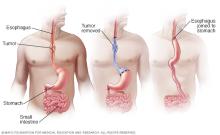
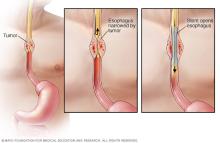
Treatment for small esophageal cancers usually begins with surgery to remove the cancer. If the cancer grows larger or spreads to other parts of the body, treatment might start with chemotherapy and radiation instead. Your healthcare team considers many factors when creating a treatment plan. These factors include your overall health, the type and stage of your cancer, and your preferences.
Surgery
For otherwise healthy people with localized or regional cancer that can be removed, surgery is an important part of treatment intended to cure the cancer. For more advanced cancers, surgery is often combined with chemotherapy, radiation therapy or both.
Procedures used for esophageal cancer may include:
- Removing the cancer from the inside of the esophagus. Endoscopic resection is a procedure to remove the cancer and some of the healthy tissue around it. The procedure is done through a long, flexible tube, called an endoscope. The tube goes down the throat and into the esophagus. Special tools are passed through the endoscope to remove the cancer. This procedure might be an option if the cancer is very small and hasn't spread beyond the inner lining of the esophagus.
-
Removing the cancer and part of the esophagus. Esophagectomy is surgery to remove part of the esophagus. During esophagectomy, the surgeon removes the part of the esophagus that contains the cancer and some nearby lymph nodes. The surgeon also may remove some of the upper part of the stomach.
When the surgery involves removing some of the esophagus and some of the stomach, it's called an esophagogastrectomy. The remaining esophagus is reconnected to the stomach. Usually this is done by pulling the stomach up to meet the remaining esophagus. If necessary, part of the colon or small intestine is used to help join the stomach and esophagus.
Surgery to remove the esophagus can be performed as an open procedure using large incisions. Surgery also may be done laparoscopically, where special surgical tools are inserted through several small incisions in the skin. How your surgery is performed depends on your individual situation and how your surgeon wants to approach it.
Recovery after esophagectomy happens in stages. Care after surgery typically focuses on pain control, breathing exercises, early movement, and gradually restoring nutrition and eating. The time needed to recover varies with the type of operation, complications and a person's health before surgery.
Esophageal cancer surgery carries a risk of serious complications. These complications may include infection and bleeding. There's also a risk of leakage from the area where the remaining esophagus is reattached to the stomach.
Chemotherapy
Chemotherapy treats cancer with strong medicines. Chemotherapy for esophageal cancer usually uses a combination of medicines. The exact medicines and schedule depend on the type and stage of the cancer and whether chemotherapy is being given with radiation therapy, before or after surgery, or for cancer that has spread.
Common chemotherapy combinations use two or three medicines. Examples include a fluoropyrimidine such as fluorouracil or capecitabine with a platinum-based medicine such as oxaliplatin or cisplatin. Carboplatin and paclitaxel also may be used with radiation therapy before surgery.
In people with advanced cancer that has spread beyond the esophagus, chemotherapy may be used alone to help relieve symptoms caused by the cancer.
Chemotherapy side effects depend on which medicines you receive. Common side effects include fatigue, nausea and vomiting, diarrhea, and loss of appetite.
Radiation therapy
Radiation therapy treats cancer with powerful energy beams. The energy can come from X-rays, protons or other sources. For esophageal cancer, radiation therapy is most often done with a procedure called external beam radiation or proton beam therapy. During this treatment, you lie on a table while a machine moves around you. The machine directs radiation to precise points on your body. Radiation also can be placed inside your body near the cancer. This kind of radiation therapy, called brachytherapy, is less common.
Radiation therapy is often combined with chemotherapy in people with esophageal cancer. Radiation therapy also is used to relieve complications of advanced esophageal cancer. This may include shrinking a cancer that grows large enough to stop food from passing to your stomach.
Side effects of radiation to the esophagus include skin reactions that are similar to sunburn, painful or difficult swallowing, and damage to nearby organs, such as the lungs and heart.
Combined chemotherapy and radiation
Combining chemotherapy and radiation therapy may enhance the effectiveness of each treatment. Combined chemotherapy and radiation may be the only treatment you receive, or combined therapy can be used before surgery. But combining chemotherapy and radiation treatments increases the likelihood and severity of side effects.
Targeted therapy
Targeted therapy for cancer is a treatment that uses medicines that attack specific chemicals in cancer cells. By blocking these chemicals, targeted treatments can cause cancer cells to die.
For esophageal cancer, targeted therapy may be combined with chemotherapy for advanced cancers that can't be removed with surgery or for cancers that come back after treatment.
Some targeted therapies work only when cancer cells have certain features, called biomarkers. Testing the cancer can help show whether these medicines might work.
Immunotherapy
Immunotherapy for cancer is a treatment with medicine that helps the body's immune system kill cancer cells. The immune system fights off diseases by attacking germs and other cells that shouldn't be in the body. Cancer cells survive by hiding from the immune system. Immunotherapy helps the immune system cells find and kill the cancer cells.
For esophageal cancer, immunotherapy is sometimes used before or after surgery. It also may be used for advanced cancers that can't be removed with surgery or for cancers that come back after treatment.
Newer treatment approaches may use tumor testing to help choose immunotherapy or targeted therapy for some advanced esophageal cancers. The testing looks for biomarkers, which are features of cancer cells that can help show whether certain treatments may work. Clinical trials continue to study new treatment combinations.
Treatments for complications
Esophageal cancer sometimes grows large enough to narrow the esophagus. This can cause difficulty swallowing. Treatments for this complication can include:
- Relieving esophageal obstruction. If your esophageal cancer has narrowed your esophagus, radiation therapy may be used to shrink the tumor. Alternatively, a surgeon may use an endoscope and special tools to place a metal tube called a stent. The stent holds the esophagus open. Other options include surgery, chemotherapy and cryotherapy.
- Providing nutrition. Your healthcare professional may recommend a feeding tube if you're having trouble swallowing or if you're having esophagus surgery. A feeding tube allows nutrition to be delivered directly to your stomach or small intestine. This gives your esophagus time to heal after cancer treatment.
Palliative care
Palliative care is a special type of healthcare to help you feel better when you have a serious illness. If you have cancer, palliative care can help relieve pain and other symptoms. A healthcare team that may include doctors, nurses and other specially trained health professionals provides palliative care. The care team's goal is to improve quality of life for you and your family.
Palliative care specialists work with you, your family and your care team. They provide an extra layer of support while you have cancer treatment. You can have palliative care at the same time you're getting strong cancer treatments, such as surgery, chemotherapy or radiation therapy.
As cancer advances, a person may become weaker and sleep more, eat and drink less, and have increasing trouble swallowing. In the last days or hours of life, breathing patterns and alertness also may change. These changes are not the same for everyone, and the healthcare team can explain what to expect and help manage symptoms and comfort.
Alternative medicine
Complementary and alternative esophageal cancer treatments can't cure esophageal cancer. But these treatments can be combined with your healthcare team's care to help relieve pain and other symptoms.
Options may include:
- Acupuncture.
- Meditation.
- Hypnosis.
- Massage.
- Relaxation techniques.
Ask your healthcare team whether these options are safe for you.
Coping and support
With time, you'll find what helps you cope with the uncertainty and distress of a cancer diagnosis. Until then, you may find that it helps to:
Learn enough about esophageal cancer to make decisions about your care
Ask your healthcare team about your cancer, including your test results, treatment options and, if you like, your prognosis. As you learn more about esophageal cancer, you may become more confident in making treatment decisions.
Keep friends and family close
Keeping your close relationships strong can help you deal with esophageal cancer. Friends and family can provide the practical support you may need, such as helping take care of your home if you're in the hospital. And they can serve as emotional support when you feel overwhelmed by having cancer.
Find someone to talk with
Find someone who is willing to listen to you talk about your hopes and fears. This may be a friend or family member. The concern and understanding of a counselor, medical social worker, clergy member or cancer support group also may be helpful.
Ask your healthcare team about support groups in your area. Other sources of information include the National Cancer Institute and the American Cancer Society.
Preparing for an appointment
Make an appointment with a doctor or other healthcare professional if you have any symptoms that worry you.
If your healthcare professional thinks you might have esophageal cancer, you may be referred to a doctor who specializes in treating diseases and conditions of the digestive system, called a gastroenterologist. If a cancer diagnosis is made, you also may be referred to a doctor who specializes in treating cancer, called an oncologist.
Because appointments can be brief, it's a good idea to be prepared. Here's some information to help you get ready.
What you can do
- Be aware of any restrictions before your appointment. At the time you make the appointment, be sure to ask if there's anything you need to do in advance, such as restrict your diet.
- Write down your symptoms, including any that may not seem related to the reason you scheduled the appointment.
- Write down key personal information, including major stresses or recent life changes.
- Make a list of all medicines, vitamins or supplements you're taking and the doses.
- Take a family member or friend along. Sometimes it can be very hard to remember all the information provided during an appointment. Someone who goes with you may remember something that you missed or forgot.
- Write down questions to ask your healthcare team.
Your time with your healthcare team is limited, so preparing a list of questions can help you make the most of your time together. List your questions from most important to least important in case time runs out. For esophageal cancer, some basic questions to ask include:
- Where is my esophageal cancer?
- How advanced is my cancer?
- Can you explain the pathology report to me?
- What other tests do I need?
- What are my treatment options?
- What are the potential side effects of each treatment option?
- Is there one treatment option you believe is the best?
- What would you recommend to a friend or family member in my situation?
- Should I see a specialist?
- Are there any brochures or other printed material that I can take with me? What websites do you recommend?
- What will determine whether I should plan for a follow-up visit?
Don't hesitate to ask other questions.
What to expect from your doctor
Be prepared to answer questions, such as:
- When did your symptoms begin?
- Have your symptoms been ongoing, or do they come and go?
- How severe are your symptoms?
- What, if anything, seems to improve your symptoms?
- What, if anything, appears to worsen your symptoms?
Stages
Esophageal cancer stages describe how far the cancer has grown and spread. Staging helps the healthcare team plan treatment and estimate prognosis. The prognosis is how likely it is that the cancer will be cured.
Esophageal cancer is usually staged from 0 to 4. The exact stage depends on several features, including how deeply the cancer has grown into the esophagus, whether nearby lymph nodes contain cancer, whether the cancer has grown into nearby structures, and whether it has spread to distant parts of the body. The stage groupings differ somewhat for adenocarcinoma and squamous cell carcinoma.
Stage 0
Stage 0 esophageal cancer is limited to the inner lining of the esophagus. It also may be called high-grade dysplasia.
Stage 1
Stage 1 esophageal cancer has grown into the inner layers of the esophagus and, in some cases, into the muscle layer. It has not spread to distant parts of the body. The exact stage 1 category depends on the cancer type, how deeply it has grown and the grade of the cancer cells.
Stage 2
Stage 2 cancer has generally grown more deeply into the wall of the esophagus. Some stage 2 cancers also involve one or two nearby lymph nodes. The exact definition depends on whether the cancer is adenocarcinoma or squamous cell carcinoma and on other tumor features.
Stage 3
Stage 3 cancer has grown more deeply through the esophagus, involves more nearby lymph nodes, or has grown into some nearby tissues or structures. It has not spread to distant parts of the body.
Stage 4
Stage 4 is the most advanced stage. Stage 4A cancer may have grown into nearby structures or spread to many nearby lymph nodes. Stage 4B cancer has spread to a distant part of the body, such as the liver or lungs.
Symptoms and stage
Symptoms do not reliably show which stage of esophageal cancer a person has. Early cancer may cause no symptoms, while symptoms such as trouble swallowing and weight loss are more likely after a tumor has grown larger. Tests are needed to determine the stage.
Stages in children
Esophageal cancer is extremely rare in children and adolescents. The U.S. National Cancer Institute does not have a separate childhood staging system for esophageal cancer. In children, prognosis depends in part on whether the cancer has spread and whether it can be completely removed with surgery. Treatment decisions should be made by a pediatric cancer team with experience treating rare childhood cancers.
Survival rates
Survival rates for esophageal cancer are estimates based on large groups of people. They cannot predict exactly what will happen to one person. Prognosis depends on factors such as the stage of the cancer, whether it can be completely removed, the type of cancer, overall health and how the cancer responds to treatment.
Survival statistics
Many people expect esophageal cancer survival rates to be reported by numbered stages, from 0 to 4. But the U.S. National Cancer Institute reports survival rates by how far the cancer has spread. This is called summary staging, and the categories include localized, regional and distant esophageal cancer. To understand survival rates, experts study many people being treated for esophageal cancer and then report how many are living 5 or 10 years after their diagnosis.
Localized esophageal cancer
Localized cancer is confined to the esophagus and has not spread to nearby lymph nodes or distant parts of the body.
Survival rate for people with localized esophageal cancer
| Age group | 5-year survival rate | 10-year survival rate |
|---|---|---|
| Under age 50 | 63% | 49.9% |
| Age 50 and older | 49.8% | 35.2% |
Regional esophageal cancer
Regional cancer means the cancer has spread beyond the esophageal wall to nearby tissues or lymph nodes but not to distant parts of the body.
Survival rate for people with regional esophageal cancer
| Age group | 5-year survival rate | 10-year survival rate |
|---|---|---|
| Under age 50 | 35.6% | 32.5% |
| Age 50 and older | 29.2% | 20.2% |
Distant esophageal cancer
Distant cancer has spread to other parts of the body. Common distant sites include the liver, lungs and adrenal glands. Adenocarcinoma more often spreads within the abdomen, while squamous cell carcinoma more often spreads to the lungs and regional lymph nodes.
Survival rate for people with distant esophageal cancer
| Age group | 5-year survival rate | 10-year survival rate |
|---|---|---|
| Under age 50 | 7.6% | 4.2% |
| Age 50 and older | 5.2% | 4.7% |
Life expectancy without treatment
Without treatment, esophageal cancer can continue to grow through the esophagus, spread through lymphatic channels or the blood, and cause issues such as worsening trouble swallowing, bleeding, pain and weight loss. How quickly this happens varies from person to person.
Prognosis in children
Survival has improved greatly for children and adolescents with cancer. From 1975 to 2020, deaths from childhood cancer fell by more than half.
Esophageal cancer is extremely rare in children and adolescents. Because so few cases occur, there is not enough data to give reliable childhood survival rates or predict outcomes as precisely as for many adult cancers.
Treatment may draw on information from adult esophageal cancer care, but decisions should be made by a pediatric cancer team experienced in treating rare cancers. Children and adolescents who survive cancer need ongoing follow-up because treatment side effects can continue or appear months or years later.
A full range of treatment options to consider
Mayo Clinic doctors work with you to review all of your treatment options and choose the treatment that best suits your needs and goals.
The range of treatments offered to people with esophageal cancer includes chemotherapy, radiation therapy, proton beam therapy, targeted therapy, immunotherapy, and minimally invasive and traditional operations, such as esophagectomy.
© 1998-2026 Mayo Foundation for Medical Education and Research(MFMER). All rights reserved. Terms of Use