
Flatfeet
Conditions
Overview
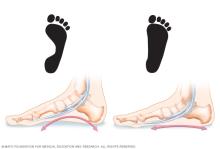
Flatfeet is a common condition in which the arches on the inside of the feet flatten when weight is put on them. This condition also is known as progressive collapsing foot deformity. When people with flatfeet stand up, the feet tend to point outward, and the arch of the foot falls and may touch the floor.
Flatfeet can occur when the arches do not develop during childhood. It also can develop later in life after an injury or from the wear-and-tear stresses of age.
Flatfeet usually is painless. If you do not have pain, no treatment is necessary. However, if flatfeet causes pain and limits activities, an evaluation from a specialist may be warranted.
Symptoms
Most people have no symptoms associated with flatfeet. But some people with flatfeet experience foot pain, particularly in the arch area or along the inside of the foot and ankle. Swelling may occur along the inside of the ankle.
Pain may worsen with activity. The foot may feel weak when attempting to push off or stand on the toes. Pain may be worse when wearing footwear with little support such as sandals or when walking barefoot.
When to see a doctor
Talk to your healthcare professional if you or your child has foot pain, particularly if it is limiting what you want to do.
Causes
Flatfeet is not unusual in infants and toddlers, because the foot's arch has not yet developed. Most people's arches develop throughout childhood, but some people never develop arches. People without arches may or may not have symptoms.
Some children have flexible flatfeet, often called flexible flatfoot, in which the arch is visible when the child is sitting or standing on tiptoes but disappears when the child stands. Most children outgrow flexible flatfeet.
People who have arches in childhood can develop flatfeet later in life. Arches can collapse abruptly after an injury or gradually over years of wear and tear. The ligaments, which are tough bands of tissue that connect bones, can become loose over time. Loose ligaments can lead to increased stress on the tendons, which connect muscle to bone. One of the tendons that runs along the inside of the ankle, the posterior tibialis tendon, helps support the arch and can weaken or tear over time.
Risk factors
Factors that can increase the risk of flatfeet include:
- Obesity.
- Injury to the foot or ankle.
- Rheumatoid arthritis.
- Aging.
- Diabetes.
- Family history of flatfeet.
- Genetic conditions.
Diagnosis
To view the mechanics of your feet, a healthcare professional observes your feet from the front and back and asks you to stand on your toes. You may do tests such as a heel rise or moving your foot side to side to test the strength and flexibility in the ankles and foot. The wear pattern on your shoes also may reveal information about your feet.
Tests
Imaging tests that can be helpful in diagnosing the cause of foot pain may include:
- X-rays. A simple X-ray uses a small amount of radiation to produce images of the bones and joints in the feet. It is particularly useful in evaluating alignment and detecting arthritis.
- CT scan. This test takes X-rays of the foot from different angles and provides much more detail than a standard X-ray.
- Ultrasound. Ultrasound uses sound waves to produce detailed images of soft tissues within the body, such as tendons.
- MRI. Using radio waves and a strong magnet, MRIs provide excellent detail of both bone and soft tissues.
Treatment
No treatment is necessary for flatfeet if it does not cause pain. Nonsurgical treatment options may help reduce symptoms, provide foot support and relieve pain. Surgery may be an option to treat the underlying issue causing flatfeet if nonsurgical treatment is not successful.
Therapies
For painful flatfeet, a healthcare professional might suggest:
- Arch supports. Nonprescription arch supports are orthotic devices that can help relieve the pain caused by flatfeet. Sometimes custom-designed arch supports that are molded to the contours of the feet are recommended. Arch supports will not cure flatfeet, but they often reduce symptoms and improve foot and ankle alignment.
- Shoe changes. Appropriate shoes can help ensure the foot is well supported.
- Stretching exercises. Some people with flatfeet have a shortened Achilles tendon. Exercises to stretch this tendon may help.
- Physical therapy. Flatfeet may contribute to overuse injuries. A physical therapist can provide exercises to strengthen the muscles and tendons in the feet. Physical therapy also can help improve gait.
Surgery
Surgery may be an option for people who still have pain that limits their activities after trying nonsurgical treatments. If the pain does not get better after several months of treatment, surgery to treat the bone, ligament and tendon issues causing symptoms may help. Surgery options include:
- Ligament repair.
- Tendon repair or transfer, usually the posterior tibial tendon.
- Achilles tendon lengthening.
- Bone cutting and shifting, called osteotomy.
- Joint fusion, called arthrodesis.
Lifestyle and home remedies
If flatfeet causes you minor pain, you might want to try:
- Rest. Avoid activities that aggravate the condition. Participate in low-impact activities such as walking, biking or swimming rather than jumping and running activities.
- Arch supports. Arch supports that are available without a prescription might increase your comfort.
- Bracing. Ankle braces can help better support the weakened or damaged tendons or ligaments.
- Medicines. Pain relievers that are available without a prescription, such as ibuprofen (Advil, Motrin IB, others) and naproxen sodium (Aleve) might help.
- Weight loss. Losing weight can reduce stress on the feet.
Preparing for an appointment
If your feet cause you significant pain, your healthcare professional may refer you to a doctor specializing in foot disorders, such as an orthopedic surgeon or a podiatrist.
What you can do
Wear your everyday shoes to your appointment so your healthcare team can look at the wear patterns on the soles. Also, bring any inserts, orthotics and bracing that you have been wearing or tried with you to the appointment.
Before the appointment, you might want to write answers to the following questions:
- When did you first notice problems with your feet?
- What other medical conditions do you have?
- Do your parents or siblings have flatfeet?
- Have you ever injured your foot or ankle?
- What medications and supplements do you take regularly?
- Have you noticed any changes in your arch height over the years?
What to expect from your doctor
Your healthcare professional may ask some of the following questions:
- Where exactly does it hurt?
- How would you describe the pain — dull, sharp, burning?
- Do you have any other symptoms such as swelling, numbness or skin color changes in your feet?
- What makes the pain worse? What makes the pain better?
- Does the type of shoe you wear affect the pain?
- Have you tried arch supports?
- How does foot pain affect your life?
© 1998-2026 Mayo Foundation for Medical Education and Research(MFMER). All rights reserved. Terms of Use