
Frozen shoulder
Conditions
Overview
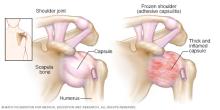
Frozen shoulder, also called adhesive capsulitis, involves stiffness and pain in the shoulder joint. Symptoms typically begin slowly, then get worse. Over time, symptoms get better, typically within 1 to 3 years.
Having to keep a shoulder still for a long period increases the risk of developing frozen shoulder. This might happen after having surgery or breaking an arm.
Treatment for frozen shoulder typically involves range-of-motion exercises. Sometimes corticosteroids and numbing medicines injected into the joint are part of treatment.
Rarely, surgery is needed to loosen connective tissue in the shoulder joint so that it can move more freely.
Symptoms
Frozen shoulder typically develops slowly in three stages.
- Freezing stage. Any movement of the shoulder causes pain, and your ability to move the shoulder becomes limited. This stage typically lasts 2 to 9 months.
- Frozen stage. Pain may lessen during this stage. However, the shoulder becomes stiffer. Using it becomes harder. This stage lasts 4 to 12 months.
- Thawing stage. Your ability to move the shoulder begins to improve. This stage typically lasts 5 to 24 months.
For some people, the pain worsens at night, sometimes disrupting sleep.
Causes
The shoulder joint is enclosed in a capsule of connective tissue. Frozen shoulder occurs when this capsule thickens and tightens around the shoulder joint, restricting its movement.
It's unclear why this happens to some people. But it's more likely to happen after keeping a shoulder still for a long period, such as after surgery or an arm fracture.
Risk factors
Certain factors may increase the risk of developing frozen shoulder. Frozen shoulder is more common in people who have diabetes, heart disease or thyroid conditions. Parkinson's disease also may increase the risk.
Age and sex assigned at birth
People 40 and older, particularly women, are more likely to have frozen shoulder.
Immobility or reduced mobility
People who've had to keep a shoulder still are at higher risk of developing frozen shoulder. Restricted movement can be the result of many factors, including:
- Rotator cuff injury.
- Broken arm.
- Stroke.
- Recovery from surgery.
Systemic diseases
People who have certain diseases may be likely to develop frozen shoulder. Diseases that may increase risk include:
- Diabetes.
- Overactive thyroid, also called hyperthyroidism.
- Underactive thyroid, also called hypothyroidism.
- Cardiovascular disease.
- Parkinson's disease.
Prevention
One of the most common causes of frozen shoulder is not moving a shoulder while recovering from a shoulder injury, broken arm or stroke. If you've had an injury that makes it difficult to move your shoulder, talk with your healthcare professional about exercises that can help you maintain your ability to move your shoulder joint. These are called range-of-motion exercises.
Diagnosis
During a physical exam, a healthcare professional may ask you to move your arm in certain ways. This is to check for pain and see how far you can move your arm. How far you can move your arm on your own is called active range of motion. Then you may be asked to relax your muscles while your healthcare professional moves your arm, called passive range of motion. Frozen shoulder affects both active and passive range of motion.
Frozen shoulder can usually be diagnosed with symptoms alone. But imaging tests, such as X-rays, ultrasound or MRI, can rule out other conditions.
Treatment
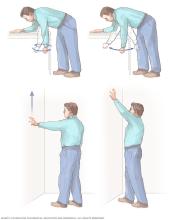
Most frozen shoulder treatment involves controlling shoulder pain and preserving as much range of motion in the shoulder as possible.
Medications
Pain relievers you can buy without a prescription, such as aspirin and ibuprofen (Advil, Motrin IB, others), can help reduce pain and inflammation associated with frozen shoulder. Sometimes, a healthcare professional may prescribe stronger pain-relieving and anti-inflammatory drugs.
Therapies
A physical therapist can teach you range-of-motion exercises to help you move your shoulder better. Doing these exercises regularly is important to help your shoulder get back to as much movement as possible.
Surgery and other procedures
Most frozen shoulders get better on their own over time. But if symptoms are serious or don't go away, other treatment options may help:
- Steroid shots, also called injections. Shots of corticosteroids in the shoulder joint may help lessen pain and improve shoulder movement, especially if given soon after frozen shoulder begins.
- Hydrodilatation. This procedure involves gently injecting sterile water into the shoulder joint to expand and stretch the shoulder joint capsule. This may help make it easier to move the joint. Sometimes, this is combined with a steroid shot.
- Shoulder manipulation under anesthesia. This procedure involves a medicine called a general anesthetic, so you'll be asleep and feel no pain. Then your healthcare professional moves the shoulder joint in different directions to help loosen the tightened tissue.
- Surgery. Surgery for frozen shoulder is rare. But if nothing else helps, surgery can remove scar tissue from inside the shoulder joint. This surgery usually involves making small incisions for instruments guided by a tiny camera inside the joint. This is called shoulder arthroscopy.
Alternative medicine
Acupuncture
Acupuncture uses hair-thin, flexible needles put into the skin at certain points on the body. Typically, the needles remain in place for 15 to 40 minutes. The needles typically are not put in very far. Most acupuncture treatments are painless.
Nerve stimulation
A transcutaneous electrical nerve stimulation unit, also called a TENS unit, delivers a tiny electrical current to key points on a path that a nerve follows. The current, delivered through electrodes taped to the skin, isn't painful or harmful. It's not known exactly how TENS works. It might block fibers that carry pain. Or it might cause the release of molecules that lessen pain, called endorphins.
Lifestyle and home remedies
Continue to use the shoulder and arm as much as possible given your pain and range-of-motion limits. Applying heat or cold to your shoulder can help relieve pain.
Preparing for an appointment
You may start by seeing your regular healthcare professional. Your healthcare professional may refer you to a doctor who specializes in treating bones, joints and muscles, called an orthopedist. Or you could be referred to a doctor who focuses on physical rehabilitation, called a physiatrist.
What you can do
Before your appointment, try to gather:
- A complete description of your symptoms and when they started.
- Information about any past heath issues you've had.
- Information about health issues in your blood relatives, such as your parents or siblings.
- A list of all the medicines and supplements you take.
- Questions to ask your healthcare professional.
What to expect from your doctor
To better understand your condition, your healthcare professional may ask:
- What makes your symptoms worse?
- Have you ever injured this shoulder? If so, how?
- Do you have diabetes?
- Have you had recent surgeries or times when you had to keep your shoulder still for a while?
© 1998-2026 Mayo Foundation for Medical Education and Research(MFMER). All rights reserved. Terms of Use