
Intraductal papillary mucinous neoplasm (IPMN)
Conditions
Overview
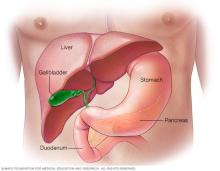
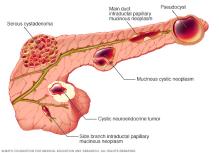
An intraductal papillary mucinous neoplasm (IPMN) is a tumor that forms in the pancreas. The pancreas is a large organ behind the stomach. It produces hormones to control blood sugar and enzymes that help digest food. IPMNs grow in the tubes, called ducts, that carry enzymes out of the pancreas and into the digestive system.
IPMNs are not cancer, but some higher risk lesions may become cancerous or have a small cancer growing in them. Some IPMNs may never cause health concerns. Your healthcare team can monitor an IPMN over time for changes that raise the risk of cancer or are precancerous.
IPMNs can be present in the pancreas long before being diagnosed. Many IPMNs are incidentally seen on imaging tests done for other reasons. Small, very low-risk IPMNs that do not cause symptoms often don't need any further care. Other low-risk IPMNs are often monitored with imaging.
If an IPMN has features linked to a higher risk of cancer, your care team may suggest more-frequent testing. This helps them watch for changes and decide whether treatment is needed. If an IPMN needs to be removed, surgery is the standard treatment.
There is no proven medicine, diet, supplement or other regimen that gets rid of an IPMN or prevents a high-risk IPMN from becoming cancer. Following your recommended surveillance plan helps your care team monitor the IPMN and suggest medical options for you. Ask your care team about any treatments or products you're considering.
Types
Intraductal papillary mucinous neoplasms (IPMNs) grow in saclike pockets of fluid called cysts. There are several types of cysts that can be found in the pancreas. Some never cause health concerns and some have a high risk of causing medical conditions.
IPMNs are called mucinous because they make a thick fluid called mucin. That thick fluid sometimes blocks the ducts in the pancreas, causing symptoms such as pain.
There are three main types of intraductal papillary mucinous neoplasm.
- Main-duct IPMN. This is a growth in the main pancreatic duct. These IPMNs may be watched closely for changes that could lead to cancer.
- Branch-duct IPMNs. These growths also may be called BD-IPMN or side-branch IPMN. They develop in the smaller ducts that come off the main duct in the pancreas. When there are multiple IPMNs in the smaller ducts, this is called multifocal IPMN. These tend to have lower risk of cancer.
- Mixed-type IPMN. This type of IPMN affects both the main pancreatic duct and branching ducts.
Main-duct and mixed-type IPMNs usually need closer monitoring because they may have a higher risk of cell changes that could lead to cancer. Branch-duct IPMNs are more common in younger people. Compared with main-duct IPMNs, branch-duct IPMNs have a lower risk of serious cell changes.
Symptoms
Intraductal papillary mucinous neoplasms (IPMNs) often cause no symptoms. Your healthcare team may see the growths on some imaging scans of the abdomen.
When symptoms happen, they may include:
- Not feeling hungry.
- Feeling sick to your stomach.
- Throwing up.
- Yellowing of the skin and eyes, called jaundice.
- Pain in the stomach or back.
IPMN-related pain may happen when the mucin made by the tumor blocks the duct in the pancreas. This can lead to swelling and irritation of the pancreas, called pancreatitis, and problems with digestion.
Causes
It is not clear what causes intraductal papillary mucinous neoplasms (IPMNs) to develop. Over time, the cells in the pancreas can develop changes in their DNA. These changes contribute to unusual cell growth and development of IPMNs.
The pancreas releases hormones, including insulin. These hormones help the body process the sugar in the foods you eat. The pancreas also makes digestive juices to help the body digest food and take in nutrients.
Risk factors
Intraductal papillary mucinous neoplasms (IPMNs) are more common as you age.
In addition to age, some research has linked IPMN development to:
- Cigarette smoking.
- Diabetes.
- Chronic pancreatitis.
- Family history.
A family history of pancreatic cancer may raise the risk of getting an IPMN or pancreatic cancer. But it does not seem to raise the risk that a specific IPMN will progress to cancer.
Complications
Intraductal papillary mucinous neoplasms (IPMNs) can cause pancreatitis. This happens if the fluid made by the tumor, called mucin, or the tissue itself blocks the main pancreatic duct. If this happens often, treatment may be needed.
A complication of some IPMNs is that they may develop serious cell changes or become pancreatic cancer over time. Regular follow-up helps your care team look for these changes and is based on the type of IPMN you have.
Diagnosis
Intraductal papillary mucinous neoplasms (IPMNs) are most often seen on imaging tests done for another reason. If an IPMN is found, your healthcare team may suggest other tests to learn about it. These tests can help show what type of IPMN you have and whether it has features that need close monitoring. Your healthcare professional may do a physical exam or suggest blood tests or imaging tests.
Imaging tests
Imaging tests used to learn more about an IPMN may include:
- MRI with magnetic resonance cholangiopancreatography (MRCP). This type of imaging is especially helpful for looking at pancreatic cysts and the pancreatic duct.
- CT scan. This imaging test can provide detailed information about the size and structure of a pancreatic cyst.
- Endoscopic ultrasound (EUS). This test, like an MRI, can provide a detailed image of the IPMN. Also, fluid and cells can be collected from the cyst for analysis in a laboratory for possible signs of cancer.
During EUS, a thin, flexible tube called an endoscope is placed in the digestive tract. An ultrasound device on the tip of the tube uses sound waves to create detailed images of the pancreas.
EUS may help find a mural node, which is a small growth on the inner wall of a cyst. If the nodule becomes more visible after contrast dye is given during imaging, it is called an enhancing mural nodule. An enhancing mural nodule is one feature your care team considers when determining your risk of more-advanced cell changes or cancer.
Biopsy
During endoscopic ultrasound (EUS), a small needle may be attached to the tube. This is used to collect fluid and cells from a cyst. The procedure is called EUS-guided fine-needle aspiration.
The material collected from the cyst can give the healthcare team important information. Tests may look for:
- Cell changes. These may show whether the IPMN has cells with more-serious changes or cancer cells.
- Carcinoembryonic antigen (CEA). This test can help show whether a cyst is the type that makes mucin, the thick fluid made by some pancreatic cysts.
- Amylase. This test can help determine if the cyst communicates with the ducts of the pancreas.
These tests also help tell an IPMN apart from other types of cystic growths in the pancreas.
Types of IPMNs
One way to group intraductal papillary mucinous neoplasms (IPMNs) is by the pattern their cells form when looked at under a microscope.
These patterns are:
- Gastric. This type often happens in the branch ducts. If it becomes cancer, it may become ductal adenocarcinoma.
- Intestinal. This type is often seen in the main duct. If it becomes cancer, it may become colloid carcinoma.
- Pancreatobiliary. This type is often found in the main duct. If it becomes cancer, it may become ductal adenocarcinoma.
IPMNs also are grouped based on how unusual the cells look. This is called dysplasia. The level of dysplasia helps show how advanced the cell changes are and guides monitoring or treatment.
IPMN cells are grouped into high-grade or low-grade dysplasia:
- Cells that have low levels of dysplasia are called low grade. They have less advanced changes and a lower risk of being linked to or progressing to invasive cancer.
- Cells that show a lot of dysplasia are called high grade. These cells have more-advanced changes. They are more likely than low-grade dysplasia to be found with invasive cancer or progress to it. High-grade dysplasia is sometimes called carcinoma in situ. But it is not the same thing as invasive cancer.
Invasive cancer is when cancer cells have grown beyond the IPMN into surrounding pancreatic tissue.
Imaging and tests on cells or cyst fluid can help determine whether an IPMN contains high-grade dysplasia or invasive cancer. Genetic or molecular testing of cyst fluid can sometimes provide more information.
Treatment
Some intraductal papillary mucinous neoplasms (IPMNs) are treated with surgery. But not all IPMNs need to be removed. Often, small IPMNs without high-risk features are monitored. This approach is called surveillance.
Surveillance helps your care team watch for changes while avoiding surgery when it is not needed. Repeated imaging and other tests track whether an IPMN changes over time or stays the same. The length of time an IPMN is under surveillance depends on your age, overall health and other medical factors. It also depends on the IPMN and whether it grows or develops high-risk features.
Your care team looks at certain features when deciding surveillance, including whether the IPMN:
- Causes symptoms such as jaundice or pancreatitis.
- Has an enhancing mural nodule 5 millimeters or larger in diameter or a solid component.
- Changes over time.
Swollen lymph nodes, worsening diabetes or a change in certain blood tests also may be part of the decision to treat an IPMN.
Surgery often is recommended if testing suggests that an IPMN has high-grade dysplasia or when invasive cancer is found within or alongside the IPMN. The type of surgery depends on where the IPMN is located and how much of the pancreas is involved.
Surgery to remove IPMNs may include:
- Removal of the pancreatic head (Whipple procedure). The Whipple procedure, also called pancreaticoduodenectomy, is an operation to remove the head of the pancreas. It also involves removing the first part of the small intestine and the bile duct. Sometimes the surgeon removes part of the stomach and nearby lymph nodes. The remaining organs are rejoined to allow food to move through the digestive system.
- Surgery for cancers in the body and tail of the pancreas. Surgery to remove the body and tail of the pancreas is called distal pancreatectomy. With this procedure, the surgeon also might need to remove the spleen.
- Surgery to remove the whole pancreas. This is called total pancreatectomy. This is often recommended if the IPMN involves the majority of the pancreas. After surgery, you'll need to take medicine for the rest of your life to replace the hormones and enzymes made by the pancreas.
Prognosis
Intraductal papillary mucinous neoplasms (IPMNs) are not the same as invasive cancer. Most IPMNs are managed based on their features and how they change over time. Others may develop high-grade dysplasia or invasive cancer. But for noninvasive IPMNs, the likelihood of this progression depends on the cyst size, duct size, growth, and high-risk or worrying features.
For some small, stable branch-duct IPMNs, the risk of high-grade dysplasia or invasive cancer is low. There is a 2% or less chance of progression to high-grade dysplasia or invasive cancer if the IPMN:
- Is in the branch duct.
- Is smaller than 2 centimeters.
- Has no concerning features.
- Has not changed after five years of monitoring.
For larger IPMNs that grow slowly and are in the branch duct, some estimates suggest that within five years of surveillance, about 1% to 3% become high-grade dysplasia or invasive cancer. The 10-year risk of high-grade dysplasia or invasive cancer is about 2% to 6.5%. The 15-year risk is about 7.5% to 15%.
Main duct IPMNs have risks that are higher than branch duct IPMNs and need closer surveillance.
IPMNs don't seem to shrink or disappear on their own. Your surveillance plan helps your care team follow the IPMN over time and change your care as needed.
Lifestyle and home remedies
There isn't a specific diet or lifestyle change known to prevent intraductal papillary mucinous neoplasms (IPMNs) or make them go away. But you can focus on lifestyle choices that lower the overall risk of cancer.
For overall cancer prevention:
- Don't use tobacco.
- Eat fruits and vegetables.
- Stay at a healthy weight and be physically active.
- Drink alcohol only in moderation if at all.
Other actions for overall cancer prevention are:
- Protect yourself from the sun.
- Get vaccinated, especially for infections that can lead to cancer, such as hepatitis B and human papillomavirus (HPV).
- Practice safe sex and do not share needles.
- Get regular medical care.
Part of your regular medical care may be to get the recommended surveillance for IPMNs. Following the schedule of scans and tests helps you and your care team monitor your IPMN.
Coping and support
Finding out you have an IPMN can feel stressful, especially because you may have questions about how this affects your risk of pancreatic cancer. It can take time to understand what this diagnosis means for you.
To help manage your concern over a diagnosis of an IPMN:
- Understand your pancreatic cancer risk from your IPMN. Cancer statistics are figured out by following many people with an IPMN. But they can't tell you about your own risk from an IPMN. Ask your care team to explain your individual risk.
- Go to all of your follow-up appointments. You may need more-frequent screening after diagnosis with an IPMN. It's common to feel worried before these tests. Do not let these feelings keep you from going to appointments.
- Talk with others in your situation. Connect in person or online with other people who are managing an IPMN diagnosis. Your care team may know of options that you could try.
If you feel overwhelmed by worry or anxiety, talk to your healthcare team.
Preparing for an appointment
If you have been diagnosed with an IPMN, write down any questions you may have to help focus on the information you need for follow-up and treatment.
What you can do
Some questions you can ask your care team include:
- What type of IPMN do I have?
- Is it in the main duct, branch duct or both?
- Does my IPMN have any worrying features or high-risk signs?
- What procedures do you recommend?
- How often will I need surveillance tests?
- Is surgery recommended?
- How does my age, health or family history affect my follow-up plan?
What to expect from your doctor
Your care team may ask about symptoms, such as jaundice, stomach or back pain, or weight loss. They also may ask about changes in your diabetes management or past pancreatic conditions.
© 1998-2026 Mayo Foundation for Medical Education and Research(MFMER). All rights reserved. Terms of Use