
Left bundle branch block
Conditions
Overview
Left bundle branch block (LBBB) is a delay in the pathways in the heart that carry heartbeat signals. It is a type of heart conduction disorder.
Heartbeat signals move through the heart along electrical pathways called bundle branches. The heart has two main bundle branches: one on the right side and one on the left side.
In left bundle branch block, the heart signals on the heart's left side are slowed or blocked. This makes the left lower chamber squeeze later than the lower right one.
The outlook for a person with left bundle branch block varies. The outlook depends on whether there is other heart disease and how well the heart pumps. Many people with left bundle branch block have no symptoms. When symptoms happen, they may include shortness of breath or chest pain. But the condition can be serious. Left bundle branch block is linked to a higher risk of heart failure.
A healthcare professional can look for specific patterns on a heart test called an electrocardiogram to help diagnose LBBB. Treatment depends on the cause of the heartbeat changes. Some people with left bundle branch block need cardiac resynchronization therapy or a heart device called a pacemaker.
Types
Bundle branch block can affect the left or right side of the heart. When it affects the lower left heart chamber, it's called left bundle branch block (LBBB). LBBB is not the same as right bundle branch block (RBBB). RBBB affects the lower right chamber of the heart. This article focuses on left bundle branch block.
There are different types of left bundle branch block (LBBB). The types are grouped based on how much the heart signals are delayed or blocked and how often the changes happen. A healthcare professional can learn the type by looking at the patterns of heart signals on an electrocardiogram.
- Complete left bundle branch block. The heart signals on the left side of the heart are greatly delayed or blocked.
- Incomplete left bundle branch block. Some heart signals are delayed, but some still get through.
- Intermittent or episodic left bundle branch block. The delay or blockage in heart signals happens only sometimes.
- Rate-dependent left bundle branch block. The change in heart signals depends on how fast the heart is beating.
The left bundle branch splits into smaller pathways called fascicles. Other related heart signaling changes can affect these smaller paths. A left anterior or left posterior fascicular block affects one of these pathways. A bifascicular block affects two parts of these pathways.
Symptoms
Many people with left bundle branch block (LBBB) do not have symptoms. The condition may be found when a heart test is done for another reason.
When symptoms occur, they may be related to another heart condition or to another change in the heart's electrical system. Symptoms can include:
- Shortness of breath.
- Trouble exercising.
If other heart signals are affected, you also may have these symptoms:
- Fainting, also called syncope.
- Feeling as if you're going to faint, called presyncope.
A rare condition called painful left bundle branch syndrome can cause chest discomfort that may feel like pain from coronary artery disease. But coronary artery disease is not the cause.
When to seek care
Contact your healthcare professional if you have symptoms of left bundle branch block (LBBB), including:
- Shortness of breath.
- Not being able to exercise as usual.
- Fainting or almost fainting.
Also call if you have been diagnosed with LBBB and your symptoms get worse.
When to seek emergency care
Always call 911 or your local emergency number if you have sudden chest pain that is not explained.
Also get medical help right away if you have:
- Trouble breathing.
- A very fast heartbeat that leads to fainting.
- A very slow heartbeat that leads to unconsciousness.
Causes
To understand the cause of left bundle branch block (LBBB), it may help to know how the heart typically beats.
Electrical signals in the heart muscle make the heart beat. These signals move along a pathway. The pathway has two branches, called the right and left bundles. If one or both of these bundles are damaged, the signals can slow down or be blocked. As a result, the heart doesn't beat as it should.
Health conditions that can damage the heart and cause LBBB include:
- A disease of the heart muscle called cardiomyopathy.
- Coronary artery disease.
- Heart attack.
- Heart valve disease.
- High blood pressure.
- Inflammation of the heart muscle, called myocarditis.
- Other changes in the heart's structure, called structural heart disease.
Sometimes, LBBB is found and there is no known structural heart disease.
Some heart procedures or surgeries also may cause heart damage that may lead to LBBB. These include some treatments for aortic valve disease.
Risk factors
A risk factor is something that makes you more likely to get a health condition. Risk factors for left bundle branch block include:
- Growing older. Bundle branch block is more common in older adults than in younger people.
- Some health conditions. High blood pressure, heart disease, heart valve disease and conditions that change the heart's structure may raise the risk of left bundle branch block.
- Some gene changes. Changes in genes that help the heart's electrical signals move quickly may raise the risk of LBBB. An example is the gene for a protein called connexin 43.
Complications
Possible complications of left bundle branch block (LBBB) include:
- Heart failure. In left bundle branch block, the heart's main pumping chamber may not pump blood as well as it should. The main pumping chamber is the left ventricle. This can cause heart failure or make heart failure worse.
- Cardiomyopathy. In some people, left bundle branch block may cause changes in the size and shape of the lower left heart chamber. This process is called left ventricular remodeling. Over time, this may lead to a type of heart muscle disease called LBBB-induced cardiomyopathy. Some types of cardiomyopathy also may cause LBBB. When it is not clear whether LBBB came before the cardiomyopathy, it may be called LBBB-associated cardiomyopathy.
Prevention
A healthy lifestyle may help prevent heart conditions that can lead to left bundle branch block (LBBB). Follow these tips to help keep the heart healthy.
- Don't smoke or use other tobacco products. If you smoke or use tobacco, stop. Talk with your healthcare team if you need help.
- Eat healthy foods. Choose whole grains, fruits, vegetables, and lean proteins such as fish and beans. Eat less salt, sugar, and saturated and trans fats.
- Ask about alcohol. Ask your healthcare professional if alcohol is safe for you. Drinking too much alcohol can weaken the heart and make heart failure worse. It also raises the risk of some irregular heartbeats.
- Get regular exercise and stay active. Regular exercise helps the heart work better and keeps blood flowing through the arteries. Try to get at least 150 minutes a week of moderate activity such as walking. Ask your healthcare team what's best for you.
- Keep a healthy weight. Extra body weight can strain the heart. Being overweight raises the risk of high cholesterol, high blood pressure and diabetes. These conditions are all risk factors for heart disease. Ask your healthcare team what a healthy weight is for you.
- Manage blood pressure, cholesterol and blood sugar. Get regular health checkups. Ask your healthcare team how often you need to have your blood pressure, blood sugar and cholesterol levels checked.
- Manage stress. Find ways to reduce emotional stress. Some ideas are to get more exercise, practice mindfulness, listen to music or connect with others in support groups.
- Practice good sleep habits. Poor sleep may raise the risk of heart disease. Adults should try to get 7 to 9 hours of sleep daily. If you have trouble sleeping, talk with your healthcare team about tips that might help.
Diagnosis
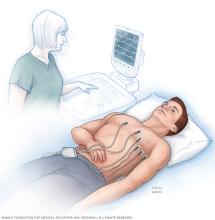
To diagnose bundle branch block, a healthcare professional examines you and listens to your heart using a tool called a stethoscope. Your healthcare professional may ask you about your lifestyle habits and personal and family health history.
If your healthcare professional thinks you might have left bundle branch block (LBBB), you have tests to check the heart and heartbeat. Tests also can look for conditions that may cause LBBB.
Electrocardiogram
An electrocardiogram (ECG or EKG) is the main test used to diagnose left bundle branch block. The test records the heart's electrical activity. It shows how your heart is beating. During an ECG, sticky patches with sensors on them go on the chest and sometimes the arms or legs. Wires connect the sensors to a computer, which prints or shows results. Your healthcare professional looks for patterns in the ECG results related to bundle branch block.
The ECG results show the heartbeat as lines. This is called a tracing. In left bundle branch block, the lines for the heartbeats in the lower chambers look wide. These wide lines are called wide QRS complexes or a widened QRS complex. Also in left bundle branch block, the ECG results have a specific wave pattern that shows that the left lower heart chamber is getting heartbeat signals later than usual.
If your ECG test result says sinus rhythm, it means the heartbeat starts in the usual area. You can have sinus rhythm and left bundle branch block at the same time.
The specific ECG findings used to diagnose LBBB can vary. Some healthcare professionals use strict rules to look for a pattern due to a true complete block in the left bundle branch. These strict rules are called the Strauss criteria. Your healthcare professional can look at the patterns in your ECG results to learn the type of left bundle branch block.
- Complete block. The ECG shows all the signs of complete LBBB. These signs include changes in the QRS complex.
- Incomplete block. The test shows signs of left bundle branch block but doesn't meet all the criteria for a complete block.
- Intermittent or episodic block. The pattern related to left bundle branch block can be seen only sometimes.
- Rate-dependent block. The LBBB pattern happens only at certain heart rates. It may not be seen when the heart rate changes.
If your healthcare professional says you have new-onset LBBB, it means the heart block was not seen on an earlier ECG.
Sometimes, symptoms may suggest a sudden drop in blood flow to the heart, called acute coronary syndrome (ACS). ACS can include a heart attack. If you have left bundle branch block, the changes it causes on the ECG can make some signs of a heart attack harder to spot. But LBBB itself does not mean that a heart attack is happening.
If left bundle branch block makes a heart attack harder to see on an ECG, healthcare professionals may look for special ECG patterns called the Sgarbossa criteria. These patterns can help show whether a heart attack is happening.
Your healthcare team considers all your symptoms along with ECG and blood test results to make a diagnosis. The diagnosis doesn't rely only on whether the left bundle branch block is new or has been there for a while.
Tests to look for causes
If an ECG shows you have left bundle branch block (LBBB), your healthcare professional usually does other tests to see how your heart is working. Tests also can help show changes to the structure of the heart.
An echocardiogram shows how blood moves through the heart and its valves. It also shows the shape and structure of the heart. The test can help find causes of left bundle branch block, including cardiomyopathy or heart valve disease.
Other tests depend on your symptoms and medical history. These may include imaging tests that look at blood flow or the arteries that supply blood to the heart. Some people may need a procedure called cardiac catheterization.
Treatment
Treatment for left bundle branch block (LBBB) depends on:
- Your symptoms.
- The cause of LBBB.
- How well your heart pumps.
- Whether you have another heart condition.
If another heart condition leads to LBBB, your healthcare professional usually monitors or treats that condition.
Heart procedures and devices
Some people with left bundle branch block need a procedure or device to help the heart pump better or beat as it should.
- Pacemaker. If you have left bundle branch block with another condition that causes a slow heartbeat called bradycardia, your healthcare professional might suggest a pacemaker. A healthcare professional places the device under the skin of the upper chest during a minor surgery. A pacemaker works only when needed. When the heart beats too slowly, the pacemaker sends electrical signals to the heart to speed up the beat. Not everyone with left bundle branch block needs a pacemaker.
- Cardiac resynchronization therapy (CRT). If you have left bundle branch block and your heart doesn't pump well, you may need this treatment. CRT uses a device called a biventricular pacemaker. It helps the heart chambers squeeze in a better and more organized way. This helps the heart pump blood better. Not everyone with LBBB needs CRT. Talk with your healthcare professional about whether it is right for you. Your healthcare professional considers your symptoms and results from an electrocardiogram and other tests when deciding whether you need CRT.
- Conduction system pacing. This treatment may be recommended for some people with LBBB and heart failure if CRT isn't an option or doesn't work well enough. A pacemaker is needed for this treatment. A healthcare professional places a pacemaker wire near an area of the heart where electrical signals travel. The device then sends small electrical signals through the wire to help the heart use its own heartbeat signal pathways. Two types of this treatment are His bundle pacing and left bundle branch area pacing. Pacing can help the lower heart chambers beat together better.
Prognosis means what may happen over time. It also may be called your outlook. Left bundle branch block (LBBB) can happen for many different reasons. Because of this, there is no single health outlook or life expectancy that applies to everyone with LBBB.
Your long-term outlook depends on factors such as:
- Whether structural heart disease is present.
- How well the lower left heart chamber pumps.
- Whether you have heart failure.
- Whether you have other heart conditions.
Studies show that people who have LBBB along with heart disease may have a higher risk of serious illness or death. But LBBB by itself doesn't tell exactly how long a person will live.
LBBB does not always go away. In some people, it may be long lasting, also called persistent LBBB. Intermittent or rate-dependent LBBB may come and go. If LBBB leads to cardiomyopathy, treatments such as cardiac resynchronization or pacing may help the heart work better. Treatment also may reverse some of the changes in the lower left heart chamber.
Lifestyle and home remedies
You can take an active part in your care. Follow the left bundle branch block treatment plan from your care team. Also try these steps:
- Ask about medicines. Some medicines can affect the heart's electrical signals and have been linked to left bundle branch block. Talk with your healthcare professional before starting or changing any medicines. These include medicines you buy without a prescription.
- Ask about alcohol and caffeine. These substances may cause changes in the heartbeat. Ask your healthcare team how much alcohol or caffeine, if any, is safe for you.
- Keep your follow-up visits. Your healthcare professional may do tests to check how well your heart is pumping or how any heart devices are working.
Preparing for an appointment
If you have symptoms of left bundle branch block (LBBB) or are worried about your risk of the condition, make an appointment with your healthcare professional. If you have LBBB, you may be sent to a doctor trained in heart disease, called a cardiologist. Some people also may see a heart rhythm specialist, called an electrophysiologist.
Appointments can be brief. Because there's often a lot to talk about, it's a good idea to be prepared for your appointment. Here's some information to help you get ready.
What you can do
When you make your appointment, ask if you need to do anything in advance. For example, you may be told not to eat or drink for a while before some tests.
Make a list of:
- Your symptoms. Include any that do not seem related to the heart or bundle branch block. Note when the symptoms started and how often they happen.
- Important personal information, including major stresses or recent life changes. Note any family history of heart disease.
- All medicines, vitamins and supplements you take. Include those you buy without a prescription. Also include the doses.
- Results from any heart tests you've had if your care team does not already have them. Make sure you include electrocardiogram (ECG or EKG) results.
- Questions you want to ask your healthcare professional.
Take someone with you to the appointment, if possible. Someone who goes with you can help you remember the information that you get.
If you recently learned that you have left bundle branch block (LBBB), preparing a few questions can help you understand what the diagnosis means for you. Questions you may want to ask include:
- What type of LBBB do I have?
- How serious is my condition?
- What is the most likely cause?
- Do I have another heart condition?
- How well is my lower left heart chamber pumping blood?
- What tests do I need?
- What treatments are available, and which do you recommend?
- What are the side effects of treatment?
- How often do I need health checkups or tests?
- Will bundle branch block happen again after treatment?
- Could I ever need a heart device such as a pacemaker?
- Do I need to make any changes to my activities, diet or medicines?
- I have other health conditions. How can I best manage them together?
- Do you have any printed information that I can take home with me? What websites do you recommend?
What to expect from your doctor
Your healthcare team is likely to ask you many questions, including:
- Do you have chest pain, shortness of breath, fainting or trouble exercising?
- Does anything make your symptoms better?
- What, if anything, makes your symptoms worse?
- Has a healthcare professional ever told you that you have bundle branch block or any type of heart disease?
- Have you been diagnosed with high blood pressure, coronary artery disease, cardiomyopathy, heart failure or heart valve disease?
- Have you had heart surgery, heart valve repair or heart valve replacement?
© 1998-2026 Mayo Foundation for Medical Education and Research(MFMER). All rights reserved. Terms of Use