
Mitral valve prolapse
Conditions
By Mayo Clinic Staff
Overview
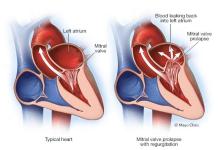
Mitral (MY-trul) valve prolapse is a common type of heart valve disease. It affects the valve between the two chambers on the left side of the heart. The mitral valve has flaps, called leaflets, that should open and close to keep blood flowing in the right direction. In mitral valve prolapse, one or both flaps are floppy. They puff out backward like a parachute each time the heart squeezes. This can change how blood flows through the heart.
Sometimes mitral valve prolapse causes blood to leak backward across the valve. When this happens, the condition is called mitral valve regurgitation.
Usually, mitral valve prolapse doesn't need treatment. But some people may need surgery, especially if the condition causes a major change in blood flow.
Other names for mitral valve prolapse are:
- Barlow syndrome.
- Billowing mitral valve syndrome.
- Floppy valve syndrome.
- Mitral prolapse.
- Myxomatous mitral valve disease.
Symptoms
Symptoms of mitral valve prolapse may happen when blood starts to leak backward through the valve. This is called regurgitation. Symptoms may be mild and start slowly. They may include:
- A racing or irregular heartbeat. This symptom may happen with or without mitral regurgitation.
- Trouble breathing.
- Shortness of breath, especially during exercise or when lying flat.
- Feeling very tired.
Symptoms can vary from person to person. Many people don't notice symptoms.
When to see a doctor
If you have symptoms of mitral valve prolapse, make an appointment for a health checkup. Many other conditions can cause similar symptoms. Your healthcare professional may refer you to a doctor trained in heart diseases, called a cardiologist.
Call 911 or your local emergency number if you have sudden or unusual chest pain or think you're having a heart attack.
Causes
To understand the causes of mitral valve disease, it may help to know how the heart works.
The mitral valve is one of four valves in the heart that keep blood flowing in the right direction. Each heart valve has flaps, called leaflets or cusps. The name of the flap depends on the valve. The mitral valve's flaps are called leaflets. The flaps open and close once during each heartbeat. If a valve flap doesn't open or close properly, less blood moves out of the heart to the rest of the body.
In mitral valve prolapse, the valve flaps are stretched out and floppy. They puff out backward like a parachute into the left upper heart chamber each time the heart squeezes.
Mitral valve prolapse falls into two general categories, depending on the cause.
- Primary mitral valve prolapse is a change or thickening in the tissue of the valve flaps. But the person doesn't have a connective tissue disease. Primary mitral prolapse may sometimes run in families.
- Secondary mitral valve prolapse is linked to another health condition, such as a connective tissue or heart condition present at birth.
Risk factors
Anyone can get mitral valve prolapse. Women are more likely than men to have mitral valve prolapse. But men with mitral valve prolapse are more likely to have a significant leaky valve that causes a condition called regurgitation. This leak may need surgery to fix.
Some medical conditions may raise the risk of mitral valve prolapse, including:
- Ebstein anomaly, a rare heart condition present at birth.
- Brittle bone disease, also called osteogenesis imperfecta.
- Graves' disease, a type of thyroid disease.
- Connective tissue conditions, including Ehlers-Danlos syndrome, Marfan syndrome and pseudoxanthoma elasticum.
- A sunken breastbone, called pectus excavatum.
- Duchenne muscular dystrophy.
- Eating disorders such as anorexia nervosa and bulimia.
Complications
Possible complications of mitral valve prolapse are:
- Mitral valve regurgitation. The mitral valve flaps don't close tightly. Blood flows backward when the valve is closed, making it harder for the heart to pump blood. Mitral valve prolapse is the main cause of mitral valve regurgitation.
- Irregular heartbeats, called arrhythmias. Irregular heartbeats can happen if you have mitral valve prolapse with or without mitral valve regurgitation.
Diagnosis
To diagnose mitral valve prolapse, your healthcare professional examines you and listens to your heart with a tool called a stethoscope.
If you have mitral valve prolapse, your healthcare professional may hear a clicking sound through the stethoscope. If blood leaks backward through the mitral valve, a whooshing sound also may be heard. This whooshing sound is called a heart murmur.
Tests
Tests are done to check the heart's health. Test results can help tell if you have mitral valve prolapse.
-
Echocardiogram. An echocardiogram uses sound waves to create pictures of the beating heart. It shows how blood flows through the heart and heart valves. A standard echocardiogram, also called a transthoracic echocardiogram (TTE), can tell if you have mitral valve prolapse. It also can tell how severe it is.
If a standard echocardiogram doesn't provide as many details as needed, you may need a transesophageal echocardiogram (TEE). This type of echocardiogram gives a detailed look at the heart from inside the body.
- Chest X-ray. A chest X-ray shows the condition of the heart and lungs. It can help show if the heart is enlarged.
- Electrocardiogram (ECG or EKG). This quick test shows how the heart is beating. Sticky patches with sensors on them attach to the chest and sometimes the legs. Wires connect the sensors to a computer that displays or prints results. An ECG can tell if there are irregular heartbeats.
- Exercise or stress tests. These tests often involve walking on a treadmill or riding a stationary bike while a healthcare professional watches your heart activity. Exercise tests show how the heart reacts to physical activity. These tests may be done if mitral valve prolapse symptoms happen during exercise.
- Cardiac catheterization. This test isn't often used to diagnose mitral valve prolapse. But it may be done if other tests can't diagnose a heart valve condition. Or it might be used to tell how serious heart valve disease is. A doctor inserts a long, thin flexible tube called a catheter in a blood vessel, usually in the groin or wrist, and guides it to the heart. Dye flows through the catheter into the arteries in the heart. The dye helps the arteries show up more clearly on X-ray images and video.
Heart valve disease stages
If testing shows you have mitral valve regurgitation due to mitral valve prolapse, your healthcare team may tell you the stage of disease. Staging helps your healthcare professional decide the most appropriate treatment for you.
The stage of heart valve disease depends on many things. These include symptoms, disease severity, the structure of the valve or valves, and blood flow through the heart and lungs.
Heart valve disease is staged into four basic groups:
- Stage A: At risk. Risk factors for heart valve disease are present.
- Stage B: Progressive. Valve disease is mild or moderate. There are no heart valve symptoms.
- Stage C: Asymptomatic severe. There are no heart valve symptoms, but the valve disease is severe.
- Stage D: Symptomatic severe. Heart valve disease is severe and is causing symptoms.
Treatment
Most people with mitral valve prolapse don't need treatment.
If mitral valve prolapse causes blood to move backward through the valve, a condition called mitral valve regurgitation, you need regular health checkups. You may need these checkups even if you don't have symptoms. If you have mitral valve prolapse, ask your healthcare team how often you need a checkup.
If you have symptoms, such as an irregular heartbeat, medicines may be used to treat them.
If mitral valve prolapse causes severe regurgitation, treatment may include surgery. You may need surgery even if you don't have symptoms.
Medications
You may need medicines to treat irregular heartbeats or other complications of mitral valve prolapse. Medicines may include:
- Beta blockers. These medicines relax blood vessels and slow the heartbeat. This helps lower blood pressure. High blood pressure makes mitral valve regurgitation worse.
- Water pills, also called diuretics. This medicine reduces or prevents fluid buildup in the lungs and other parts of the body.
- Heart rhythm medicines, called antiarrhythmics. Your healthcare professional may recommend medicines to control your heart rhythm.
- Blood thinners, also called anticoagulants. If mitral valve disease causes an irregular heartbeat called atrial fibrillation, your healthcare team may recommend these medicines to prevent blood clots.
- Antibiotics. The American Heart Association says antibiotics aren't usually needed for someone with mitral valve prolapse. But if you've had mitral valve repair or replacement, your healthcare professional may recommend that you take antibiotics before dental procedures. Antibiotics help prevent a heart infection called infective endocarditis.
Surgery and other procedures
Most people with mitral valve prolapse don't need surgery. But your healthcare professional may recommend surgery if mitral prolapse causes a lot of blood to leak backward through the valve, whether or not you have symptoms.
Surgery for mitral valve prolapse includes mitral valve repair and mitral valve replacement. Mitral valve repair is preferred because it saves the existing valve. Your healthcare team talks with you about the risks and benefits of each type of heart valve surgery to decide which one may be best for you.
Self-care
It's important to take steps to keep the heart healthy. The American Heart Association recommends these tips:
- Don't smoke or use tobacco. If you smoke, quit. Smoking is a major risk factor for heart disease. If you need help quitting, talk to your healthcare team about medicines and programs that can help.
- Eat healthy foods. Eat plenty of fruits, vegetables and whole grains. Limit sugar, salt and saturated fats.
- Get regular exercise. Most people with mitral valve prolapse can safely exercise without restrictions. Try to get about 30 minutes of physical activity, such as a brisk walk, every day. If mitral valve prolapse causes severe regurgitation, your healthcare professional may tell you to limit some exercises. Talk to your healthcare team about the amount and type of exercise that's best for you.
- Keep a healthy weight. Being overweight raises the risk of heart disease. Talk with your healthcare team to set realistic weight goals.
- Limit alcohol. If you choose to drink alcohol, do so in moderation. For healthy adults, that means up to 1 drink a day for women and up to 2 drinks a day for men.
- Manage stress. Find ways to help reduce emotional stress. Getting more exercise, practicing mindfulness and connecting with others in support groups are some ways to reduce and manage stress.
- Get good sleep. Poor sleep may raise the risk of heart disease and other chronic conditions. Adults should aim to get 7 to 9 hours of sleep daily.
- Manage blood pressure, blood sugar and cholesterol. Make lifestyle changes and take medicines as directed. Get regular health checkups.
Preparing for your appointment
Here's some information to help you get ready for your appointment.
What you can do
- Be aware of any restrictions before your appointment. When you make the appointment, ask if there's anything you need to do in advance, such as making a diet change. For example, your healthcare professional may tell you not to eat or drink for a few hours before a cholesterol test.
- Write down your symptoms, including any that may not seem related to mitral valve prolapse. Also write down when your symptoms began.
- Write down important personal information, including any family history of heart disease, congenital heart disease, diabetes, high blood pressure and stroke. Also note any major stresses or recent life changes.
- Make a list of all medicines, vitamins or other supplements you take, including doses.
- Take someone along, if possible. Someone who goes with you can help you remember information you're given.
- Write down questions to ask your healthcare team.
For mitral valve prolapse, some basic questions to ask your healthcare professional are:
- What is the likely cause of my symptoms?
- What are other possible causes?
- What tests do I need?
- Do I need treatment? What kind?
- What are other alternatives to the treatment you're suggesting?
- I have other health conditions. How can I best manage them together?
- Are there any restrictions that I need to follow?
- Should I see a specialist?
- If I need surgery, which surgeon do you recommend for mitral valve repair?
- Are there any brochures or other printed material that I can take home with me? What websites do you recommend I visit?
Don't hesitate to ask any other questions.
What to expect from your doctor
Your healthcare team is likely to ask you questions, such as:
- Do you always have symptoms, or do they come and go?
- On a scale of 1 to 10, 10 being the worst, how would you describe your symptoms?
- What makes your symptoms better?
- What makes your symptoms worse?
- Do you have a family history of heart disease?
© 1998-2026 Mayo Foundation for Medical Education and Research(MFMER). All rights reserved. Terms of Use