
Pinched nerve
Conditions
Overview
A pinched nerve refers to pressure on a nerve from nearby bones, cartilage, muscles or tendons. This pressure can result in pain, tingling, numbness or weakness.
Several conditions can cause pressure on a nerve. For example, the rubbery cushion between the bones of the spine can put pressure on a spinal nerve root, known as a herniated disk. A pinched nerve in the wrist can lead to pain and numbness in the hand and fingers, a condition called carpal tunnel syndrome. Tissue and bone also can put pressure on other nerves in the wrist, elbow and ankle.
With rest and other self-care treatments, most people recover from a pinched nerve within a few days or weeks. Sometimes surgery is needed to relieve pain from a pinched nerve.
Symptoms
Pinched nerve symptoms depend on which nerves are being affected. Pressure on a spinal nerve root is known as radiculopathy. Any spinal nerve root may be affected, from the lower neck to the lower back. Radiculopathy can happen when a disk between the spine bones puts pressure on a nerve, called a herniated disk, or from other changes in the spine. Symptoms affect one side of the body and may include:
- Pain that radiates down an arm or leg.
- Numbness or less feeling in the area supplied by the nerve.
- Tingling, or a pins and needles feeling.
- Weakness in your arm, hand, leg or foot. You might drop things or have trouble walking.
- Changes in bladder and bowel function.
A pinched nerve also can happen when surrounding tissue or bone compresses a peripheral nerve outside of the brain and spinal cord. This includes nerves in the wrists, elbow or ankle. Symptoms of these conditions may include:
- A numb or tingling feeling in the fingers, hand, ankle or bottom of your feet.
- Weakness in your hand or foot. You might have trouble holding objects or walking.
- A burning feeling in your foot or toes.
Symptoms related to a pinched nerve may be worse when you're sleeping.
When to see a doctor
Self-care measures such as rest and pain relievers available without a prescription may resolve the symptoms of a pinched nerve. See your healthcare professional if symptoms last for several days and don't respond to self-care.
Causes
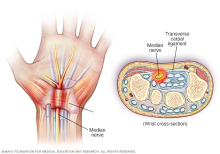
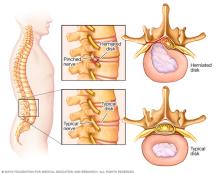
The cause of a pinched nerve is too much pressure from surrounding tissues, known as compression.
This tissue might be bone or cartilage, such as when a herniated spinal disk compresses a nerve root. This is called radiculopathy. When a nerve root in the lower back is compressed, it's known as lumbar radiculopathy. Sciatica is an older term for lumbar radiculopathy. Muscle or tendons also may compress a nerve.
In carpal tunnel syndrome, a variety of tissues may put pressure on the carpal tunnel's median nerve in the wrist. Swollen tendon sheaths within the tunnel, enlarged bone that narrows the tunnel, or a thickened and degenerated ligament can compress the nerve.
The ulnar nerve, which runs from your neck to your hand, can become compressed when it travels through tissues in the elbow. When this happens, it's called cubital tunnel syndrome. Less commonly, bone and cartilage in the wrist can put pressure on the nerve, called ulnar tunnel syndrome.
Tarsal tunnel syndrome can happen when the nerve in your leg, known as the tibial nerve, is compressed in the ankle.
Several conditions may cause tissue to compress a nerve or nerves, including:
- Injury.
- Rheumatoid or wrist arthritis.
- Stress from work that involves the same movements over and over.
- Hobbies or sports.
- Obesity.
If a nerve is pinched for only a short time, there's often no lasting damage. Once the pressure is relieved, nerve function returns. However, if the pressure continues, chronic pain and nerve damage can occur.
Risk factors
The following factors may increase your risk of experiencing a pinched nerve or a pinched nerve root:
- Sex assigned at birth. Women are more likely to have carpal tunnel syndrome, possibly due to having smaller carpal tunnels.
- Bone spurs. Trauma or a condition that causes bone thickening, such as osteoarthritis, can cause bone spurs. Bone spurs can stiffen the spine as well as narrow the space where your nerves travel, pinching nerves.
- Rheumatoid arthritis. Swelling caused by rheumatoid arthritis can compress nerves, especially in your joints.
- Thyroid disease. People with thyroid disease are at higher risk of carpal tunnel syndrome.
Other risk factors include:
- Diabetes. People with diabetes are at higher risk of nerve compression.
- Overuse. Jobs or hobbies that require doing the same hand, wrist or shoulder movements over and over increase the risk of a pinched nerve. This includes assembly line work.
- Obesity. Excess weight can add pressure to nerves.
- Pregnancy. Water and weight gain associated with pregnancy can swell nerve pathways, compressing your nerves.
- Prolonged bed rest. Long periods of lying down can increase the risk of nerve compression.
Prevention
These measures may help you prevent a pinched nerve or pinched nerve root:
- Maintain good positioning. Don't cross your legs or lie in any one position for a long time.
- Incorporate strength and flexibility exercises into your regular exercise program.
- Limit activities that involve doing the same movement over and over. Take frequent breaks when engaging in these activities.
- Maintain a healthy weight to put less pressure on nerves.
Diagnosis
To diagnose a pinched nerve or compression on a nerve root, your healthcare professional asks about your symptoms and conducts a physical exam.
If your healthcare professional suspects a pinched nerve, you may need some tests. These tests may include:
- Blood tests. You may need tests to measure your fasting blood glucose or thyroid levels.
- Spinal tap, also known as a lumbar puncture. This test collects a sample of cerebrospinal fluid (CSF) from the area surrounding your spinal cord. The CSF may be sent to a lab and examined for signs of inflammation or infection.
- X-rays. These images show how the bones are positioned. They can reveal if there is narrowing or damage that could cause a pinched nerve.
- Nerve conduction study. This test measures electrical nerve impulses and functioning in your muscles and nerves through electrodes placed on your skin. The study measures the electrical impulses in your nerve signals when a small current passes through the nerve. Test results can show whether you have a damaged nerve.
- Electromyography (EMG). During an EMG, a needle electrode is inserted through your skin into various muscles. The test evaluates the electrical activity of your muscles when they contract and when they're at rest. Test results tell your healthcare professional if there is damage to the nerves leading to the muscles.
- Magnetic resonance imaging (MRI). This test uses a powerful magnetic field and radio waves to produce detailed views of your body in multiple planes. This test may be used if your healthcare professional suspects you have nerve root compression.
- High-resolution ultrasound. Ultrasound uses high-frequency sound waves to produce images of structures within the body. It's helpful for diagnosing nerve compression syndromes, such as carpal tunnel syndrome.
Treatment
A common treatment for a pinched nerve is to rest the affected area for a short time. Stop any activities that cause the compression or make symptoms worse.
Depending on the location of the pinched nerve, you may need a splint, collar or brace to restrict movement of the area. If you have carpal tunnel syndrome, you may need to wear a splint during the day and at night. The wrists flex and extend often during sleep.
Other treatments for a pinched nerve or pinched nerve root include:
Physical therapy
A physical therapist can teach you exercises that strengthen and stretch the muscles to relieve pressure on the nerve. The physical therapist also may recommend that you modify activities that aggravate the nerve.
Medications
Nonsteroidal anti-inflammatory drugs (NSAIDs), such as ibuprofen (Advil, Motrin IB, others) or naproxen sodium (Aleve), can help relieve pain. Anti-seizure medicines such as gabapentin (Neurontin, Horizant, Gralise) may help some types of nerve-related pain. Tricyclic medicines such as nortriptyline and amitriptyline also may be used for some pinched nerves.
Corticosteroids, given by mouth or by injection, may help minimize pain and inflammation.
Surgery
If symptoms don't improve after several weeks to a few months of conservative treatments, you may need surgery. Surgery can take pressure off the nerve. The type of surgery varies depending on the location of the pinched nerve or pinched nerve root.
Surgery may involve removing bone spurs or a part of a herniated disk in the spine. For carpal tunnel syndrome, surgery involves cutting the carpal ligament to allow more room for the nerve to pass through the wrist. For cubital tunnel syndrome, tarsal tunnel syndrome and ulnar tunnel syndrome, removing tissue and bone can relieve pressure on the nerve.
Preparing for an appointment
You're likely to first see your healthcare professional. Here's some information to help you get ready for your appointment and know what to expect.
Prevention
What you can do
- Be aware of any pre-appointment restrictions. At the time you make the appointment, ask if there's anything you need to do in advance. You might ask if you need to restrict your diet or wear loose-fitting clothes if you need an imaging exam.
- Write down any symptoms you're experiencing. Include any that may not seem related to the reason for which you scheduled the appointment.
- Make a list of all medicines, vitamins or supplements that you're taking.
- Take a family member or friend along, if possible. Sometimes it can be hard to remember all of the information provided to you during an appointment. Someone who comes with you may remember something that you missed or forgot.
- Write down questions to ask during the appointment.
Preparing a list of questions will help you make the most of your time during your appointment. For a suspected pinched nerve, some basic questions to ask include:
- What's the most likely cause of my symptoms?
- What kinds of tests do I need?
- Is my condition likely short term or long-lasting?
- What treatment do you recommend?
- Are there other treatments in addition to the primary approach that you're suggesting?
- I have these other health conditions. How can I best manage these conditions together?
- Are there any activity restrictions that I need to follow?
- Are there any brochures or other printed material that I can take home with me? What websites do you recommend visiting?
In addition to the questions that you've prepared, don't hesitate to ask others during your appointment.
Preparing for an appointment
What to expect from your doctor
Your healthcare professional is likely to ask you several questions. They may include:
- What are your symptoms? Do you feel pain, numbness, tingling or weakness?
- Where, specifically, are you feeling these symptoms?
- How long have you been having these symptoms?
- Do your symptoms occur all the time or only sometimes?
- Is there an activity or a position that triggers your symptoms?
- Is there an activity or a position that relieves your symptoms?
- Do you have a job or hobby that requires you to make the same motions over and over?
© 1998-2026 Mayo Foundation for Medical Education and Research(MFMER). All rights reserved. Terms of Use