
Progressive supranuclear palsy
Conditions
Overview
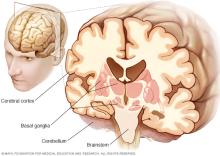
Progressive supranuclear palsy (PSP) is a rare brain disease that affects movement, balance, vision, and swallowing. It happens when certain brain cells that control body movement, thinking, and coordination become damaged. PSP can make it hard to walk, keep your balance, move your eyes and swallow. The condition happens because certain brain cells that control body movement, thinking and coordination get damaged.
Progressive supranuclear palsy is one of the most common types of atypical parkinsonism. Atypical parkinsonism is a group of conditions that share some symptoms with Parkinson's disease. PSP also is called Steele-Richardson-Olszewski syndrome.
Progressive supranuclear palsy gets worse over time and can lead to dangerous complications, such as pneumonia and trouble swallowing. There's no cure for PSP, so treatment focuses on managing the symptoms.
Symptoms
Symptoms of progressive supranuclear palsy (PSP) include:
- Changes in movement and balance. People with PSP may have trouble walking or balancing. Your walk may be stiff, and your steps may be uneven or wide. Sudden movements, such as jumping out of a chair, also can happen. Falling — especially backward — is another key symptom. Your body's natural reflexes that help you stay upright might not work as well. This can make it hard to catch yourself if you lose balance. People with the condition may fall backward stiffly, like a tree.
- Eye and vision issues. Vision changes are common for many people with PSP. The condition can make it difficult to move your eyes up or down or aim your eyes properly. People with PSP may not be able to look downward. Or they may experience blurring and double vision. Not being able to focus the eyes can make it more difficult to read or walk down a flight of stairs. Some people may have a hard time making eye contact during conversation. Some people may be sensitive to bright light and need to wear sunglasses.
Other symptoms of progressive supranuclear palsy can be different for each person. Some symptoms are similar to Parkinson's disease and dementia. Symptoms can change and get worse over time and may include:
- Stiffness, especially of the neck, and awkward movements.
- Falling, especially falling backward.
- Slow or slurred speech or strained voice.
- Trouble swallowing, which may cause gagging or choking.
- Being sensitive to bright light.
- Trouble with sleep.
- Loss of interest in pleasurable activities.
- Impulsive behavior or laughing or crying for no reason.
- Trouble with reasoning, problem-solving and decision-making.
- Depression, anxiety or obsessive-compulsive disorder.
- A surprised or frightened facial expression, resulting from rigid facial muscles.
- Dizziness.
When to see a doctor
Make an appointment with your healthcare professional if you have any symptoms of progressive supranuclear palsy.
Causes
The exact cause of progressive supranuclear palsy (PSP) isn't known. Symptoms of PSP are caused by damage to cells in certain areas of the brain that help you control body movements and thinking
Researchers have found that the damaged brain cells of peopl.e with PSP have too much of a protein called tau. Clumps of tau also are found in other brain diseases, such as Alzheimer's disease.
Rarely, progressive supranuclear palsy occurs within a family. But a genetic link isn't clear. Research suggests that changes in a gene called MAPT may cause PSP, but more research is needed. Most people with the condition don't inherit it from a family member.
Risk factors
Age is the only proven risk factor for progressive supranuclear palsy (PSP). The condition usually shows up when someone is in their 60s or 70s. It's uncommon in people under the age of 50.
Complications
Complications of progressive supranuclear palsy (PSP) are usually caused by slow and difficult muscle movements. Complications may include:
- Falling, which could lead to head injuries, fractures and other injuries.
- Trouble focusing your eyes, which also can lead to injuries.
- Trouble sleeping, which can lead to feeling tired and sleeping a lot during the day.
- Not being able to look at bright lights.
- Trouble swallowing, which can lead to choking or inhaling food or liquid into the airway, called aspiration.
- Pneumonia, which can be caused by aspiration. Pneumonia is the most common cause of death in people with PSP.
- Impulsive behaviors. For example, standing up without waiting for help, which can lead to falls.
Your healthcare professional may recommend a swallowing evaluation and possibly a feeding tube to help you avoid choking hazards. To avoid falling injuries, you might use walking aids such as a weighted walker.
Diagnosis
Progressive supranuclear palsy (PSP) can be hard to diagnose because symptoms are similar to those of Parkinson's disease. But PSP isn't the same condition as Parkinson's disease. Your healthcare professional may suspect that you have PSP rather than Parkinson's disease if you:
- Don't have tremors.
- Are having a lot of unexplained falls.
- Have trouble with speech or swallowing, which is often more serious in people with PSP than in those with Parkinson's.
- Don't benefit from Parkinson's medicines.
- Have trouble moving your eyes, especially downward.
- Have impulsive, spontaneous movements, such as jumping out of a chair.
- Freeze when starting to walk or when turning.
You may need an MRI to see if areas of your brain associated with PSP have shrunk. An MRI also can help rule out conditions that may mimic progressive supranuclear palsy, such as a stroke.
To help confirm your diagnosis, your healthcare professional may order additional imaging tests. These tests may include a positron emission tomography (PET) scan or striatal dopamine transporter imaging (DaTscan). PET and DaTscan can show early signs of changes in the brain that may not appear on an MRI.
Treatment
Progressive supranuclear palsy (PSP) treatment does not cure the disease, but it can ease symptoms and support daily function. Treatment options for PSP include:
- Parkinson's disease medicines, which increase levels of a brain chemical that helps with smooth, controlled muscle movements. These medicines may offer some benefits for a short time, lasting about 2 to 3 years in most people.
- OnabotulinumtoxinA (Botox), which may be injected in small doses into the muscles around your eyes. Botox stops the muscles from contracting, which can help with eyelid spasms.
- Antidepressants. Some antidepressant medicines may have a slight effect on symptoms such as impulsive behavior.
- Eyeglasses with bifocal or prism lenses, which may help with difficulty looking down. Prism lenses allow people with PSP to see downward without moving their eyes down.
- Speech therapy and swallowing evaluations, to help you learn other ways to communicate and safer swallowing techniques.
- Physical therapy and occupational therapy, to improve balance and other physical symptoms. Facial exercises, talking keyboards, and gait and balance training also can help with many of the symptoms of PSP.
- Dark sunglasses with side shading, which can help with sensitivity to bright light.
Researchers are working to develop treatments for progressive supranuclear palsy, including therapies that may block the formation of tau or help to destroy it. Other studies are looking at ways to improve brain activity in PSP without surgery or use stem cell-based therapies to help with PSP symptoms.
Lifestyle and home remedies
There are things you can do to help make your daily life safer and more comfortable while living with progressive supranuclear palsy (PSP), including:
- Use eye drops often throughout the day. This can help with dry eyes, which can happen if you have trouble blinking or have watery eyes.
- Install grab bars in hallways and bathrooms to help you avoid falls.
- Use a walker that is weighted to help prevent falling backward.
- Remove small area rugs or other items that are hard to see without looking down.
- Don't climb stairs.
Coping and support
Living with any chronic illness can be challenging. Some people may feel angry, depressed or discouraged at times. Progressive supranuclear palsy (PSP) can cause changes in your brain that make you feel anxious or cause you to laugh or cry for no reason. PSP also can become frustrating as walking, talking and eating become harder.
To manage the stress of living with PSP, consider these suggestions:
- Maintain a strong support system of friends and family.
- Find a support group, for yourself or for family members.
- Seek emotional support. Talk to your healthcare professional or a counselor about your feelings and concerns about living with PSP.
For caregivers
Caring for someone with progressive supranuclear palsy (PSP) can be physically and emotionally demanding. It can be hard to keep up with the frequently changing moods and physical needs of someone with PSP. Remember that these moods and physical abilities may change from hour to hour and are not under the person's control.
Preparing for an appointment
You may be referred to a doctor who specializes in conditions that affect the brain and nervous system. This doctor is called a neurologist.
What you can do
- Write down your symptoms, including any that may seem unrelated to the reason for the appointment.
- Make a list of all your medicines, vitamins and supplements, including the doses.
- Write down your key health information, including other conditions.
- Write down key personal information, including any recent changes or stressors in your life.
- Write down questions to ask your healthcare professional.
- Ask a relative or friend to come with you to help you remember what the healthcare professional says.
Questions to ask your doctor
- What do you think is causing my symptoms?
- What kinds of tests do I need?
- Does progressive supranuclear palsy get worse? What can I expect?
- What treatments options are there, and what are the side effects?
- I have other health conditions. How can I best manage these conditions together?
- Should I limit my activities?
In addition to the questions that you've prepared, don't hesitate to ask other questions during your appointment.
What to expect from your doctor
Your healthcare professional is likely to ask you many questions. Thinking about your answers ahead of time may give you more time to talk about your concerns. You may be asked:
- Have you had problems with balance or walking?
- Do you find it hard to see items below you, such as the plate when you are eating?
- Do you have trouble speaking or swallowing?
- Have your movements felt stiff or shaky?
- Have you had any troubling mood changes?
- When did you start having these symptoms? Have they been happening all the time or only sometimes?
- Does anything seem to improve or worsen these symptoms?
© 1998-2026 Mayo Foundation for Medical Education and Research(MFMER). All rights reserved. Terms of Use