
Spinal cord injury
Conditions
Overview
A spinal cord injury involves damage to any part of the spinal cord. The spinal cord sends and receives signals between the brain and the rest of the body. A spinal cord injury often causes permanent changes in strength, sensation and other body functions below the site of the injury. It also may lead to loss of strength, called paralysis.
People who have had a spinal cord injury also may have mental, emotional and social side effects from the injury.
Many scientists are optimistic that advances in research someday will make repair of spinal cord injuries possible. Research into spinal cord injuries is going on around the world. In the meantime, treatments and rehabilitation allow many people with spinal cord injuries to lead productive, independent lives.
Symptoms
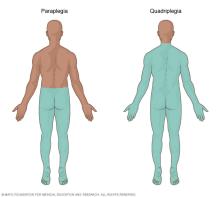
Spinal cord injuries can cause the following symptoms:
- Loss of strength, called paralysis.
- Loss of or a change in sensation. This includes a change in the ability to feel heat, cold and touch. It also may affect balance.
- Loss of bowel or bladder control.
- Spasms or strong reflex movements.
- Changes in sexual function and sexual sensitivity.
- Pain or an intense stinging sensation caused by damage to the nerve fibers in the spinal cord.
- Trouble breathing, coughing or clearing the lungs.
Emergency symptoms
Emergency symptoms of a spinal cord injury after an accident include:
- Serious back pain or pressure in the neck, head or back.
- Weakness, loss of coordination or loss of control in any part of the body.
- Numbness, tingling or loss of feeling in the hands, fingers, feet or toes.
- Loss of bladder or bowel control.
- Trouble with balance and walking.
- Trouble breathing after the injury.
- A twisted neck or back.
Movement and feeling after a spinal cord injury
The ability to control the arms or legs after a spinal cord injury depends on two factors. The first factor is where the injury happened on the spinal cord. The second factor is how bad the injury is.
The lowest part of the spinal cord not damaged after an injury is known as the neurological level of the injury. Completeness of the injury is classified as:
- Complete. If all feeling and all ability to control movement are lost below the spinal cord injury, the injury is called complete.
- Incomplete. If some feeling and control of movement remain below the injury, the injury is called incomplete. There are varying degrees of incomplete injury.
A loss of muscle strength that leads to loss of movement is called paralysis. Paralysis from a spinal cord injury can be referred to as:
- Quadriplegia, also known as tetraplegia. This means that the arms, hands, trunk, legs and pelvic organs are all affected by the spinal cord injury.
- Paraplegia. This paralysis affects all or part of the trunk, legs and pelvic organs. But it doesn't affect the arms.
The healthcare team does a series of tests to find the neurological level and completeness of a spinal cord injury.
When to see a doctor
Anyone who has an injury to the head or neck needs medical attention right away. It is safest to assume that the person has a spinal injury until proven otherwise. This is important because:
- A serious spinal injury is not always easy to see right away. If a spinal injury happens but it is not cared for, worse injury may happen.
- Numbness or paralysis can happen quickly or come on slowly.
- The time between injury and treatment can be critical. Learning the level of the injury can help determine the possible recovery.
If you think that someone has a back or neck injury:
- Do not move the injured person. Permanent paralysis and other serious health issues can result.
- Call 911 or local emergency medical help.
- Keep the person still.
- Place heavy towels on both sides of the neck. Or hold the head and neck to keep them from moving until emergency medical help arrives.
- Provide basic first aid, such as stopping bleeding and making the person comfortable, without moving the head or neck.
Causes
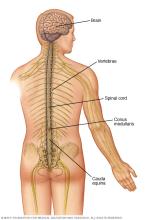
Spinal cord injuries can be caused by damage to the spinal cord itself or damage to the bones that surround the spinal cord, called the vertebrae. Injuries also may happen because of damage to the ligaments or disks of the spinal column.
A sudden blow to the spine can break, dislocate, crush or compress one or more of the vertebrae. A gunshot or knife wound that is at or near the spinal cord also can cause a spinal cord injury.
Common causes of spinal cord injuries include:
- Motor vehicle accidents. Auto and motorcycle accidents cause many spinal cord injuries each year.
- Falls. A spinal cord injury after age 65 often is caused by a fall.
- Acts of violence. Spinal cord injuries can result from violent encounters, typically from gunshot wounds. Knife wounds also can cause spinal cord injuries.
- Sports and recreation injuries. Athletic activities, such as impact sports and diving in shallow water, can lead to spinal cord injuries.
- Medical conditions. Arthritis, cancer, inflammation, infection and osteoporosis of the spinal cord can cause spinal cord injuries. Breakdown of disks in the spinal column, called disk degeneration, also can damage the spinal cord.
In the days and weeks after a spinal cord injury, more damage can happen. That damage may be due to bleeding, swelling and fluid buildup in and around the spinal cord after an injury.
The central nervous system
The body's central nervous system includes the brain and spinal cord. The spinal cord is made of soft tissue. Bones called vertebrae surround it. The spinal cord goes from the base of the brain to an area just above the waist called the conus medullaris. Below that area is a group of nerve roots called the cauda equina. Nerve roots are bundles of nerve fibers that come out of the spinal cord and join to form nerves.
The spinal cord has nerve cells and groups of nerves called tracts. The tracts go to different parts of the body and carry messages to and from the brain. Motor tracts carry signals from the brain that control muscle movement. Sensory tracts carry signals from the body to the brain focused on heat, cold, pressure, pain, and the position of the arms and legs.
Damage to nerve fibers
A spinal cord injury damages the nerve fibers that pass through the injured area. That nerve fiber damage can make it hard for part of or all of the muscles and nerves below the injury to work correctly.
An injury to the spine at the chest level or in the lower back can affect the trunk, legs, bowel, bladder and sexual function. A neck injury affects the same areas plus movements of the arms and possibly the ability to breathe.
Risk factors
The following factors can raise the risk of a spinal cord injury:
- Being male. Many more men than women have spinal cord injuries.
- Being between the ages of 15 and 29. More than half of spinal cord injuries happen in people in this age range.
- Being 65 and older. People older than 65 also are at higher risk. Falls cause most spinal cord injuries in older adults.
- Driving. Motor vehicle crashes are the leading cause of spinal cord injuries for people younger than 65.
- Using alcohol. Alcohol use is involved in many spinal cord injuries.
- Engaging in unsafe behavior. Any behavior that puts the head or neck in danger raises the risk of a spinal cord injury. Examples include diving into shallow water and playing sports without wearing safety gear or without taking other safety measures.
- Having certain medical conditions. A minor injury can cause spinal cord damage in people who have conditions that affect the joints or bones, such as osteoporosis. Other medical conditions also can raise the risk of spinal cord injuries, including arthritis, cancer, inflammation, infection and breakdown of disks in the spinal column, called disk degeneration.
Complications
A spinal cord injury can lead to many other health concerns, called complications. Complications can fall into several categories.
Breathing
If the injury affects the nerves to the stomach and chest muscles, it may be hard to breathe and cough. The neurological level of injury determines what kind of breathing problems a person with a spinal cord injury may have. If the injury affects the neck and chest, that could raise the risk of pneumonia or other lung conditions.
Blood flow
A spinal cord injury may lead to low blood pressure when a person gets up from sitting or lying down. This condition is called orthostatic hypotension. It also can cause swelling in the arms and legs. This can raise the risk of developing blood clots, such as deep vein thrombosis or a pulmonary embolus. Another issue with blood flow is a potentially life-threatening rise in blood pressure, known as autonomic dysreflexia.
Bladder
The bladder continues to store urine from the kidneys after a spinal cord injury. But the injury may make it hard for the brain to get the messages it needs to control the bladder. Changes in bladder control raise the risk of urinary tract infections. The changes also may cause kidney infections and kidney or bladder stones.
Bowels
The stomach and intestines work much like they did before the injury, but control of bowel movements often changes.
Skin
Below the neurological level of a spinal cord injury, some or all skin sensations may be lost. If that happens, the skin can't send a message to the brain when it's injured by certain things such as too much pressure. This can raise the risk of getting pressure sores.
Bones
A spinal cord injury raises the risk of osteoporosis and broken bones below the level of injury.
Muscles
Some people with spinal cord injuries have a tightening of muscles or motion in the muscles, called spasticity.
Fitness and wellness
Muscle loss, called atrophy, and weight loss are common soon after a spinal cord injury. Because limited mobility can lead to a less active lifestyle, there also is a risk of weight gain, heart disease and diabetes.
Sexual health
A spinal cord injury may lead to issues with sexual health. This may include changes in erection and ejaculation or changes in lubrication.
Pain
After a spinal cord injury, some people have pain, such as muscle or joint pain, from using certain muscle groups too much. Nerve pain also can happen after a spinal cord injury, especially in someone with an incomplete injury.
Depression
Pain and the changes a spinal cord injury brings may be linked to depression in some people.
Prevention
The following steps may help prevent a spinal cord injury:
-
Drive safely. Motor vehicle crashes are one of the most common causes of spinal cord injuries. Wear a seat belt every time you are in a moving vehicle.
Make sure children wear seat belts or use child safety seats that are made for their age and weight. To protect them from air bag injuries, children younger than 12 should always ride in the back seat.
- Check water depth before diving. Don't dive into a pool unless it's at least 9 feet (about 2.74 meters) deep and clearly marked safe for diving. Competition diving requires greater water depth. Don't dive into a pool that's above ground or into water if you don't know how deep it is.
- Prevent falls. Use a step stool with a grab bar to reach objects on high shelves. Add handrails along stairways. Put mats that won't slip on tile floors and in the bathtub or shower. For young children, use safety gates to block stairs and think about putting in window guards.
- Play sports safely. Always wear safety gear recommended for your sport. Don't lead with your head in sports. For example, don't slide headfirst in baseball. In American football, don't tackle using the top of your helmet. Use a spotter for new moves in gymnastics.
- Don't drink and drive. Don't drive after drinking alcohol or while under the influence of drugs. Don't ride with a driver who has been drinking or using drugs.
Diagnosis
To diagnose a spinal cord injury, healthcare professionals in a hospital emergency room do a physical exam, test for loss of feeling and movement, and ask questions about what happened. They may be able to rule out a spinal cord injury based on this evaluation.
But more testing may be needed. Tests typically are done when the injured person has neck pain, isn't fully awake, or clearly has weakness or a neurological injury. Testing also may be needed in other situations.
The tests can include:
- X-rays. X-rays can show damage to the bone that's around the spinal cord, called the vertebrae. X-rays also can find tumors, broken bones or changes in the spine.
- CT scan. A CT scan can show a clearer image compared with an X-ray. This scan uses computers to form a series of cross-sectional images that can show changes to bones and disks, along with other changes.
- MRI. MRI uses a strong magnetic field and radio waves to produce computer-generated images. This test is helpful for looking at the spinal cord to find herniated disks, blood clots or other masses that might compress the spinal cord.
A few days after the injury, when some of the swelling has gone down, a more comprehensive neurological exam may be done. The exam looks at the level and completeness of the injury. This involves testing muscle strength and the ability to sense light touch and pinprick sensations.
Treatment
Damage to the spinal cord can't be reversed. So treatment for a spinal cord injury focuses on preventing more injury and helping people with these injuries return to an active and productive life.
Emergency actions
Urgent medical attention is critical to lessen the effects of a head or neck injury. That means treatment for a possible spinal cord injury often begins right away.
As quickly and gently as possible, emergency personnel make it so the spine cannot move. This is done using a rigid neck collar and a rigid carrying board when the person with the injury is being brought to the hospital.
Emergency room care
In the emergency room, medical care focuses on:
- Maintaining the ability to breathe.
- Preventing shock.
- Making sure the neck cannot move. This helps prevent more spinal cord damage.
- Preventing other health issues that can happen due to a spinal cord injury. Those issues include:
- Trouble with breathing.
- Conditions that affect the heart and blood vessels, called cardiovascular conditions.
- Blood clots that form in deep veins, called deep vein thrombosis (DVT).
- The ability to keep stool or urine in the body.
Other early care in the hospital
People with spinal cord injuries often need to be in a hospital's intensive care unit. Or they may be transferred to hospital that has a spine injury center. Spine injury centers have a team of specialists trained in spinal cord injuries. The team may include neurosurgeons, orthopedic surgeons, neurologists, physical medicine and rehabilitation specialists, psychologists, nurses, therapists and social workers, among others.
Care in the hospital or a spine injury center soon after a spinal cord injury may include:
- Immobilization. You might need traction to stabilize or align your spine. Traction involves gently pulling the head to create the proper alignment of the spine. Traction may be done using a soft neck collar or a brace.
- Surgery. Often surgery is necessary to remove fragments of bones, foreign objects, herniated disks or broken vertebrae. Surgery also can stabilize the spine and prevent future pain or other health concerns.
- Experimental treatments. To improve treatment of spinal cord injuries, researchers are looking into ways to stop cell death, control inflammation and help nerves regenerate. For example, lowering body temperature significantly, a condition called hypothermia, for 24 to 48 hours might help prevent inflammation that damages the spinal cord. More study is needed.
In the past, the medicine methylprednisolone (Solu-Medrol) was used as a treatment after a spinal cord injury. But research has shown that it has potential side effects such as blood clots and pneumonia that outweigh the benefits.
Ongoing care
As a spinal cord injury stabilizes, medical care focuses on preventing other medical conditions that may happen due to the injury. A spinal cord injury can lead to a decline in physical functioning, known as deconditioning. Or it can lead to stiff muscles due to lack of use, known as muscle contractures. People with spinal cord injuries also may have breathing issues, pressure ulcers, bowel and bladder issues, lung infections, and blood clots.
The length of a hospital stay after a spinal cord injury depends on a person's condition and medical issues. Once you're well enough to take part in therapies and treatment, you might transfer to a rehabilitation facility.
Rehabilitation
Rehabilitation team members begin to work with you while you're in the early stages of recovery. Your team might include a physical therapist, an occupational therapist, a rehabilitation nurse, a rehabilitation psychologist and a social worker. The team also may include a doctor who specializes in physical medicine and rehabilitation, known as a physiatrist, or a doctor who specializes in spinal cord injuries. And you may work with a dietitian and a recreation therapist.
During the early stages of rehabilitation, therapists work on keeping and strengthening muscle function and restoring fine motor skills. They also help you learn new ways to do day-to-day tasks.
You may learn about the effects of a spinal cord injury and how to prevent other health concerns. The team also works to build your quality of life and independence.
You're taught many new skills, often using equipment and technologies that can help you live on your own as much as possible. You can learn how to enjoy hobbies, take part in social and fitness activities, and return to school or work.
Medicines
Medicines can manage some of the side effects of a spinal cord injury. These include medicines to control pain and tightening of muscles or motion in the muscles, called muscle spasticity. Medicines also can help improve bladder control, bowel control and sexual function.
Technology
Medical devices can help people with spinal cord injuries become more independent and more mobile. These include:
- Modern wheelchairs. Lightweight wheelchairs are making people with spinal cord injuries more mobile and more comfortable. Some people use an electric wheelchair. And some wheelchairs can even climb stairs, travel over rough ground and raise a user to reach high places without help.
- Computer adaptations. Computers can be hard to use if you have limited hand function. Computer adaptations range from simple to complex, such as key guards and voice recognition.
- Electronic aids to daily living. Any device that uses electricity can be controlled with an electronic aid to daily living. Devices can be turned on or off by switch or voice-controlled and computer-based remotes.
- Electrical stimulation devices. Often called functional electrical stimulation systems, these devices use electrical stimulators. The stimulators help control arm and leg muscles to allow people with spinal cord injuries to stand, walk, reach and grip.
Future treatments
Researchers are working on new treatments for spinal cord injuries. Those treatments include medicines that could help nerve cells regrow or help improve the function of nerves that remain after a spinal cord injury. Devices called prostheses also are being developed that can do the work of a body part that no longer functions.
Recovery
The amount of recovery a person has after a spinal cord injury typically relates to how many nerve fibers are damaged at the site of the injury. Recovery often happens fastest during the first six months after an injury. But some people make small improvements for up to 1 to 2 years.
Coping and support
A spinal cord injury often is a life-changing event, and adapting to it can be hard. Recovery takes time, but many people who have a spinal cord injury go on to lead productive and fulfilling lives.
Grieving
After a spinal cord injury, you and those close to you may go through a period of mourning. The grieving process is a healthy part of recovery. It's natural and important to grieve.
You may have concerns about how the injury will affect your lifestyle, finances and relationships. It's common to feel grief and emotional stress in response to these concerns.
Finding support
If grief affects your medical care, causes you to distance yourself from friends, family and other people who care about you, or leads you to misuse alcohol or drugs, talk to someone. Reach out to a member of your healthcare team or a mental health professional. A counselor, medical social worker or clergy member also may be able to offer helpful guidance and care.
Some people find it helpful to join a support group with others who have spinal cord injuries. Talking with people who understand what you're going through can be encouraging. Members of a support group also may be able to offer advice on adapting areas of your home or workspace to better meet your needs. Ask your healthcare professional or rehabilitation specialist for information about support groups in your area or online.
Taking control
One of the best ways to regain control of your life is to educate yourself about your injury and ways you can develop more independence.
For example, a range of driving equipment and vehicle modifications are available. There also are many products that can help you in your home. Ramps, wider doors, special sinks, grab bars and easy-to-turn doorknobs make it possible for many people with spinal cord injuries to live on their own.
You might have access to financial assistance or support services from the government or from charitable organizations. Ask a member of your rehabilitation team about resources in your area.
Talking about your disability
Some friends and family members may not be sure how to help you. Learning more about your spinal cord injury often can make a difference. Explain the effects of your injury and talk about what others can do to help. Be sure to tell others when you can do things on your own too. Talking about your injury can help strengthen your relationships with family and friends.
Dealing with intimacy and sexual activity
A spinal cord injury can affect how the body responds sexually. A fulfilling emotional and physical relationship is possible. But it often requires communication, experimentation and patience.
A professional counselor can help you and your partner communicate your needs and feelings. Your healthcare professional can provide medical information about sexual health. Many people with spinal cord injuries enjoy intimacy and sexual pleasure.
Looking ahead
It's important to set goals and find ways to move forward. As you learn more about your injury and treatment options, you might be surprised by all you can do. For example, thanks to technology, treatment and medical devices, people with spinal cord injuries play basketball and take part in track meets. They paint and take photographs. They get married, have children and have rewarding jobs.
Advances in stem cell research and nerve cell regeneration give hope for greater recovery for people with spinal cord injuries. And new treatments are being investigated for people with long-standing spinal cord injuries.
No one knows when new treatments will be available, but you can remain hopeful about the future of spinal cord research while living your life to the fullest today.
Preparing for an appointment
Spinal cord injuries are emergencies. People who are injured might not be able to take part in their care at first.
A number of specialists may be involved in stabilizing a person with a spinal cord injury. They may include a doctor who specializes in nervous system conditions, called a neurologist. They also may include a surgeon who specializes in spinal cord injuries and other nervous system conditions, called a neurosurgeon.
A rehabilitation team typically is led by a doctor who specializes in spinal cord injuries and includes a variety of specialists.
Here's what you can do if you or someone you're with may have a spinal cord injury.
What you can do
- Be prepared to provide information about the event that caused the injury, including anything that may not seem related to the injury itself.
- Have another family member or friend join you when you speak with healthcare professionals, if possible. Someone who is with you can help you remember the information you're given.
- Write down questions to ask the healthcare team.
For a spinal cord injury, some basic questions to ask your healthcare professional include:
- What is the outlook for my condition?
- What will happen in the short term? What will happen over the long term?
- What treatments are available, and which do you recommend?
- Could surgery help?
- What type of rehabilitation might help?
- What research is being done to help this condition?
- Do you have brochures or other printed material? What websites do you recommend?
Be sure to ask any other questions you may have.
What to expect from the doctor
You'll likely be asked questions that may include:
- What led to your injury?
- When did it happen?
- What do you do for work and hobbies?
- Do you live with anyone else?
- Do you live in a house or apartment? How many stairs does your home have?
- Do you or anyone in your family have a history of blood clots?
- Do you have any other medical conditions?
© 1998-2026 Mayo Foundation for Medical Education and Research(MFMER). All rights reserved. Terms of Use