
Temporal lobe epilepsy (TLE)
Conditions
By Mayo Clinic Staff
Overview
Temporal lobe epilepsy (TLE) is a type of focal epilepsy. In focal epilepsy, seizures start in one area of the brain. With TLE, seizures start in one of the temporal lobes. The temporal lobes help with emotions, memory, language and information from the senses. TLE is one of the most common types of focal epilepsy.
A temporal lobe seizure is a seizure that starts in a temporal lobe. Epilepsy means a person has an ongoing tendency to have seizures that are not caused by a temporary medical issue. During a temporal lobe seizure, a person may be aware of what is happening or may have reduced awareness.
Older terms you may hear to describe a temporal lobe seizure include partial seizure and complex partial seizure. Focal seizure with impaired awareness is a current medical term for some temporal lobe seizures.
Temporal lobe seizures can cause unusual emotions or sensations, memory changes, staring, or repeated movements that a person does without being aware of them. Some seizures spread to both sides of the brain. These are called focal to bilateral tonic-clonic seizures.
Treatment can control seizures for many people. If medicines do not control the seizures, surgery or treatment with a medical device may be an option.
Temporal lobe epilepsy can start in different parts of the temporal lobe. The two main types are mesial temporal lobe epilepsy, which starts in the inner part of the temporal lobe, and neocortical temporal lobe epilepsy, which starts in the outer part of the lobe.
Mesial temporal lobe epilepsy
Mesial temporal lobe epilepsy starts in the inner part of the temporal lobe. This area includes the hippocampus and amygdala, parts of the brain that help with memory and emotions. Mesial TLE is the most common type of temporal lobe epilepsy.
Hippocampal sclerosis, also called mesial temporal sclerosis, is scarring and loss of nerve cells in the hippocampus. It is commonly seen in people with mesial TLE, especially those being evaluated for epilepsy surgery. Mesial temporal lobe epilepsy and mesial temporal sclerosis are related, but they do not mean the same thing. Mesial TLE describes the epilepsy. Mesial temporal sclerosis describes a change in the structure of the brain.
Neocortical temporal lobe epilepsy
Neocortical temporal lobe epilepsy starts in the outer part of the temporal lobe. Its symptoms can be similar to those of mesial temporal lobe epilepsy. Some seizures that start in the outer part of the temporal lobe can affect hearing. For example, a person may hear a sound that is not there or hear a sound differently than usual.
Temporal lobe epilepsy and frontal lobe epilepsy
Temporal lobe epilepsy and frontal lobe epilepsy both cause focal seizures, and their symptoms can be similar.
Temporal lobe seizures often include an aura, a pause in activity, repeated automatic movements and confusion after the seizure. Frontal lobe seizures tend to be shorter. They often happen during sleep and may cause strong or repeated movements.
Symptoms alone may not show exactly where a seizure starts. Tests such as an electroencephalogram (EEG) and brain imaging may be needed to help find the starting point.
Symptoms
Some temporal lobe seizures begin with an odd feeling called an aura. An aura can serve as a warning that a seizure is starting. Not everyone who has temporal lobe seizures has an aura. And not everyone who has an aura remembers it.
An aura is part of a focal seizure. It may occur by itself or before awareness becomes impaired.
Examples of auras include:
- A sudden feeling of fear or joy.
- A feeling that something has happened before, called deja vu.
- A sudden or unusual smell or taste.
- A rising feeling in the stomach, similar to the feeling of being on a roller coaster.
Deja vu also can occur as part of a temporal lobe seizure without aura.
Some temporal lobe seizures make it hard for a person to respond to others. These seizures most often last 30 seconds to 2 minutes.
Symptoms of a temporal lobe seizure may include:
- Not being aware of people or things around you.
- Staring.
- Smacking the lips.
- Swallowing or chewing repeatedly.
- Repeated finger movements, such as picking at clothing or other objects.
Left and right temporal lobe seizures
Some symptoms can give the care team clues about which temporal lobe is involved. But symptoms alone cannot show this for certain.
Issues with language during or after a seizure may help the care team find out which side of the brain is involved. Confusion about time and place that lasts after a seizure has been linked with seizures that start on the right side.
Tests such as an electroencephalogram (EEG), magnetic resonance imaging (MRI) and sometimes other tests can help the care team find where seizures start.
Memory problems can differ depending on which temporal lobe is affected and which side of the brain controls language. Neuropsychological testing can measure verbal memory, visual memory and other thinking skills as part of an epilepsy evaluation.
After a temporal lobe seizure, you may:
- Feel confused or have trouble speaking for a while.
- Not remember what happened during the seizure.
- Not realize that you had a seizure.
- Feel very sleepy.
Sometimes a temporal lobe seizure spreads to both sides of the brain and becomes a focal to bilateral tonic-clonic seizure. This type of seizure can cause stiffening, shaking and loss of consciousness.
When to see a doctor
See a healthcare professional if:
- You think you or your child has had a seizure.
- Seizures happen more often or become more intense.
- You or your child has new seizure symptoms.
When to seek emergency care
Call 911 or your local emergency number if:
- You have a seizure but never had a seizure before.
- A seizure lasts more than 5 minutes.
- Breathing or consciousness does not return after the seizure stops.
- Another seizure happens soon after the first.
- You're pregnant and have a seizure.
- You have diabetes and faint during a seizure.
- An injury happens during a seizure.
Causes
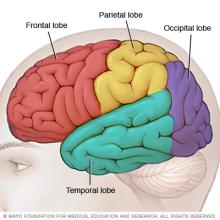
Often, experts don't know what causes temporal lobe seizures. When a cause is known, it may include:
- A brain injury caused by trauma.
- A brain infection, such as encephalitis or meningitis, or a history of one of these infections.
- Scarring in a part of the temporal lobe called the hippocampus. This scarring is called hippocampal sclerosis. The cause is not always known. In some people, it has been linked with factors such as prolonged seizures caused by fever early in life.
- Blood vessels in the brain that did not form as expected. These are called vascular malformations.
- Stroke.
- A brain tumor.
- A genetic syndrome.
Brain cells use electrical signals when you are awake and asleep. A sudden burst of electrical activity in many brain cells can cause a seizure.
When this burst starts in one area of the brain, it causes a focal seizure. A temporal lobe seizure is a focal seizure that starts in one of the temporal lobes.
Seizure triggers
Seizure triggers are different from the causes of epilepsy. A trigger can make a seizure more likely in someone who has a seizure condition. It does not cause epilepsy.
Common triggers include stress, not getting enough sleep and missing a dose of antiseizure medicine. They also may include illness, alcohol or alcohol withdrawal, and hormonal changes. Triggers are different for each person.
Risk factors
Several factors can raise the risk of temporal lobe seizures. The risk may be greater when these factors happen early in life. They include:
- A brain injury.
- A brain infection, such as encephalitis or meningitis.
- A seizure caused by a fever. This is called a febrile seizure.
Complications
Temporal lobe epilepsy can cause the hippocampus to become smaller and lose some of its nerve cells. The hippocampus is a part of the brain that helps with learning and memory. Loss of brain cells in this area may lead to memory issues.
Temporal lobe epilepsy also can affect thinking, mood and behavior. Issues with memory and thinking may be related to the cause of the epilepsy, repeated seizures and seizure-related brain activity between seizures. They also may be related to mood symptoms or side effects from medicines. Anxiety and depression are common in people with epilepsy, especially when seizures are hard to control.
Researchers once believed that people with temporal lobe epilepsy had certain personality traits and that these traits differed depending on whether the epilepsy affected the right or left temporal lobe. These ideas are disputed. Current evidence does not support using personality or behavior to tell which temporal lobe is affected.
Diagnosis
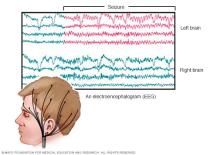
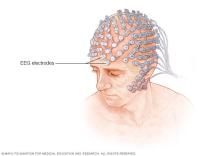
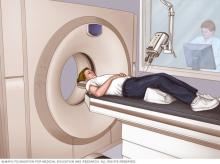
To diagnose temporal lobe epilepsy (TLE), your healthcare professional asks about your symptoms and medical history and may do physical and neurological exams. You also may have tests to look for signs of epilepsy, find where seizures start and look for a possible cause. Knowing the cause can help show how likely it is that you'll have another seizure.
Tests to diagnose TLE may include:
- Neurological exam. Your healthcare professional may check your movement, behavior and thinking skills. This helps show how well your brain and nervous system are working.
- Blood tests. A blood sample may be tested for signs of infection, genetic conditions, blood sugar levels and changes in electrolytes.
- Electroencephalogram (EEG). Small, flat metal discs called electrodes are attached to your scalp. They record the electrical activity in your brain. The activity appears as wavy lines on the EEG recording. An EEG may show patterns that suggest epilepsy and help show where seizures start. It also can help identify other conditions that may look like epilepsy. A high-density EEG uses more closely spaced electrodes and may help locate the area of the brain where seizures start.
-
Intracranial EEG. If a scalp EEG and brain imaging do not clearly show where seizures start, or if seizures may be starting in more than one area, the care team may recommend intracranial EEG. One type is stereo EEG, also called SEEG.
During SEEG, doctors place thin electrodes in specific areas of the brain with the help of imaging. The electrodes record seizure activity and can help show exactly where seizures begin. This information can help the care team decide whether surgery to remove the area causing seizures or responsive neurostimulation may be an option.
- Computed tomography (CT). A CT scan uses X-rays to create detailed pictures of the brain. It can show possible causes of seizures, such as tumors, bleeding or cysts.
- Magnetic resonance imaging (MRI). An MRI uses a magnetic field and radio waves to create detailed pictures of the brain. It can show possible causes of seizures and changes in the brain, such as hippocampal sclerosis.
- Positron emission tomography (PET). A PET scan uses a small amount of low-dose radioactive material placed into a vein. The scan shows areas of brain activity and may help show where a seizure started.
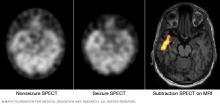
- Single-photon emission computed tomography (SPECT). A SPECT scan uses a small amount of low-dose radioactive material called a tracer. The tracer is placed into a vein. The scan creates a detailed 3D picture of blood flow in the brain during a seizure. A specialized type of SPECT scan called subtraction ictal SPECT coregistered to magnetic resonance imaging (SISCOM) may provide even more detailed information.
If seizures are hard to control and surgery is being considered, you may have more tests to identify where seizures start. This may include video EEG monitoring and specialized imaging.
Treatment
Treatment for temporal lobe epilepsy (TLE) aims to stop temporal lobe seizures with the fewest possible side effects.
Not everyone who has a first seizure will have another one. Depending on your risk of another seizure, your healthcare professional may decide not to start treatment after a first seizure.
Medicines
Many medicines can treat temporal lobe seizures. But medicines do not fully control seizures for everyone. Side effects may include tiredness, weight gain and dizziness.
Talk with your healthcare professional about possible side effects. Also ask whether your antiseizure medicine could affect other medicines you take. For example, some antiseizure medicines can make birth control pills less effective.
Drug-resistant temporal lobe epilepsy
Epilepsy is called drug-resistant when seizures continue after a person has tried two antiseizure medicines that were appropriate, well tolerated and given at the right dose. The medicines may have been used alone or together.
People with drug-resistant TLE should be evaluated by an epilepsy specialist. The specialist can confirm the diagnosis and discuss other treatment options, such as epilepsy surgery or neurostimulation.
Dietary therapy
A ketogenic diet may help manage temporal lobe seizures. This diet is high in fat and very low in carbohydrates. Experts do not fully understand how the diet helps ease seizures. The diet can be hard to follow because it limits many foods.
Other high-fat, low-carbohydrate diets also may help, although they may not work as well. These include the low glycemic index diet and the Atkins diet. Experts are still studying these diets for seizure management.
Surgical or other procedures
If antiseizure medicines do not control temporal lobe seizures, other treatments may be options.
-
Surgery. Surgery for temporal lobe epilepsy aims to reduce seizures and improve quality of life. Surgeons may remove the area of the brain where the seizures start. Surgery is most likely to be an option when seizures consistently start in one area of the brain.
Surgery may not be an option if the care team cannot find where the seizures start, if seizures start in more than one area, or if they begin in an area involved in speech, thinking, movement, memory or other important functions.
- MRI-guided laser therapy. In some cases, the care team may use MRI-guided laser therapy instead of removing brain tissue with traditional surgery. This less invasive procedure uses heat to destroy the brain tissue where seizures start.
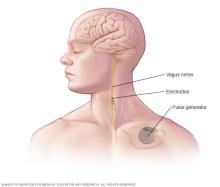
- Vagus nerve stimulation. A device placed under the skin of the chest sends signals through the vagus nerve in the neck to help ease seizures.
- Responsive neurostimulation. Surgeons place a device on the brain or in the brain. The device detects seizure activity and sends electrical stimulation to stop the seizure.
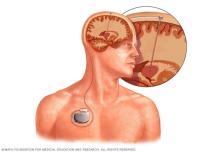
- Deep brain stimulation. Surgeons place thin wires called electrodes in specific areas of the brain. The electrodes send electrical impulses that help control seizure-related brain activity. The electrodes connect to device similar to a pacemaker that is placed under the skin of the chest. The device controls how much stimulation is given.
Pregnancy and seizures
Most people who have seizures can have healthy pregnancies. But some antiseizure medicines can increase the risk of health conditions that are present at birth.
Valproic acid is a medicine used to treat generalized seizures. When used during pregnancy, it has been linked to issues with thinking and development and with neural tube defects, such as spina bifida, in babies.
Talk with your healthcare professional about the risks of antiseizure medicines before you become pregnant. Together, you can make a treatment plan. Pregnancy can change how your body handles seizure medicine, so your treatment may need to change.
Some people may need a different dose of seizure medicine before or during pregnancy. The goal is to use the lowest effective dose of the safest medicine that controls seizures.
Birth control and antiseizure medicines
Some antiseizure medicines can make birth control less effective. Ask your healthcare professional whether your medicine affects your birth control. You may need to use a different form of birth control.
The outlook for temporal lobe epilepsy varies from person to person. Some people become seizure-free with medicine. Others continue to have seizures and may need surgery or another treatment.
Seizures related to hippocampal sclerosis can be hard to control with medicine. For some people with drug-resistant temporal lobe epilepsy, epilepsy surgery may help.
People with epilepsy have a higher risk of injury and of a rare condition called sudden unexpected death in epilepsy (SUDEP). Each year, SUDEP affects about 1 in 1,000 people with epilepsy. The risk is higher in people who have frequent bilateral tonic-clonic seizures or have tonic-clonic seizures at night.
Epilepsy sometimes can go into remission. This means seizures stop for a long time. Whether antiseizure medicine can be reduced or stopped depends on the person's situation. Do not stop taking seizure medicine without guidance from a healthcare professional because seizures can return.
Self-care
These steps may help you manage seizures and avoid common triggers:
- Take medicine as you are told. Do not change the dose without first talking with your healthcare professional. If you think that your medicine needs to be changed, contact your healthcare professional.
- Get enough sleep. Not getting enough sleep can trigger seizures. Try to get enough rest each night.
- Wear a medical alert bracelet. This helps emergency responders know that you have a seizure condition.
- Ask about driving. If you have seizures, you may need to be seizure-free for a certain amount of time before you can drive. Driving rules vary by location. Ask your healthcare professional about when it may be safe and legal for you to drive.
Learn your triggers
Keep a record of your seizures and possible triggers. Triggers may include not getting enough sleep, stress, missed medicine, illness, alcohol use or withdrawal, and hormonal changes. Triggers are different for each person.
Protect your sleep
Seizures can happen during sleep, and not getting enough sleep can make seizures more likely. Try to keep a regular sleep schedule. Tell your healthcare professional if your seizures happen mostly at night or around the time you wake up.
Personal safety
Most seizures do not cause serious injury. But injuries can happen, especially if you have repeated seizures. These steps may help lower your risk of injury:
- Be careful around water. Do not swim alone or ride in a boat without someone nearby.
- Wear a helmet. Use a helmet for activities such as bike riding or sports.
- Take showers instead of baths. Do not take a bath unless someone is nearby.
- Make your home safer. Pad sharp corners, choose furniture with rounded edges and use chairs with arms to help prevent falls. Thick carpet padding also may help protect you if you fall.
- Keep seizure first-aid information where others can see it. Include important phone numbers that someone may need if you have a seizure.
Seizure first aid
It helps to know what to do if you see someone having a seizure. If you may have seizures in the future, share this information with family, friends and co-workers so they know how to help.
To help someone during a seizure:
- Carefully turn the person onto one side.
- Put something soft under the person's head.
- Loosen tight clothing around the neck.
- Do not put your fingers or anything else in the person's mouth.
- Do not try to hold the person down.
- Move dangerous objects out of the way.
- Stay with the person until the seizure ends and the person is alert.
- Watch closely so you can tell medical helpers what happened.
- Time the seizure.
- Stay calm.
Coping and support
Living with a seizure condition can be stressful and may affect your mental health. Talk with your healthcare professional about how you are feeling and ask about ways to get support.
At home
Family and friends can be an important source of support. Tell them what you know about your seizures and what you may need from them. Invite them to ask questions and share any concerns they have.
At work
Talk with your supervisor about your seizures and how they may affect you at work. Discuss what your supervisor or co-workers should do if you have a seizure. Sharing basic information about seizures can help co-workers understand how to support you.
You're not alone
Reach out to family and friends for support. Ask your healthcare professional about local support groups or consider joining an online support community. Ask for help when you need it. A strong support system can make it easier to live with a medical condition.
Preparing for your appointment
Some seizures need medical care right away, so there may not always be time to prepare for an appointment.
If you do have an appointment, you may first see your main healthcare professional. You may be referred to a neurologist, a doctor who specializes in conditions of the brain and nervous system. You may see an epileptologist, a neurologist who specializes in epilepsy.
Here are some ways to prepare for your appointment.
What you can do
- Write down what you remember about the seizure. Include when and where it happened, what symptoms you had, and how long it lasted, if you know. Ask anyone who saw the seizure to help fill in details.
- Ask about any steps you need to take before the appointment. When you make the appointment, ask whether you need to do anything to prepare for tests or exams.
- Write down important personal information. Include major stresses or recent life changes.
- Make a list of your medicines. Include all medicines, vitamins and supplements you take, along with the doses.
- Consider bringing a family member or friend. This person can help you remember information from the visit. If they saw the seizure, they also may be able to describe what happened.
- Write down your questions. A list of questions can help you make the most of your appointment.
Questions you may want to ask include:
- What do you think caused my seizure?
- What tests do I need?
- What treatment do you recommend?
- How likely am I to have another seizure?
- What can I do to lower my risk of injury if I have another seizure?
- I have other health conditions. How should I manage them together?
- Are there any restrictions I need to follow?
- Are there printed materials or websites you recommend?
What to expect from your doctor
Your healthcare professional may ask questions such as:
- Can you describe what happened during the seizure?
- Did anyone see what happened?
- What did you feel just before the seizure? What did you feel afterward?
- Have you had a seizure or another neurological condition before?
- Does anyone in your family have a seizure condition or epilepsy?
- Have you recently traveled outside the country?
© 1998-2026 Mayo Foundation for Medical Education and Research(MFMER). All rights reserved. Terms of Use