
Vaginal atrophy
Conditions
Overview
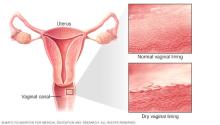
Vaginal atrophy used to be a medical term for thinning and drying of the vagina's inner lining, often after menopause. Another name for it was atrophic vaginitis. These terms are no longer used. The physical changes they described are now considered to be part of a group of symptoms that affect the genitals and lower urinary tract, called genitourinary syndrome of menopause (GSM).
GSM happens when the body has less of the hormone estrogen. It can involve painful sex, a frequent or urgent need to urinate, and other distressing symptoms.
Having less estrogen doesn't mean you have to put up with the discomfort of GSM. Treatment can bring you relief.
Symptoms
Genitourinary syndrome of menopause symptoms can include:
- Dryness, burning or itching in the vagina.
- Thin, watery, sticky, yellow or gray fluid that comes out of the vagina.
- Frequent or urgent need to urinate, or a burning feeling during urination.
- Losing control of the bladder, also called urinary incontinence.
- More-frequent infections of the urinary tract and vagina.
- Pain during sex due to less lubrication, or light bleeding after sex.
- Shortening and tightening of the vaginal canal.
When to see a doctor
Many people have GSM after they go through menopause, yet few seek treatment. Some people might feel embarrassed to talk with their healthcare professional about their symptoms. But it's important to get the help that you deserve.
Make an appointment with your doctor or other healthcare professional if you have:
- Light spotting or bleeding for no clear reason.
- Unusual fluid that comes out of the vagina.
- Burning or soreness.
Also make an appointment if you have painful sex that doesn't get better after you use a vaginal moisturizer (K-Y Liquibeads, Replens, Sliquid, others), water-based lubricant (Astroglide, K-Y Jelly, Sliquid, others) or silicone-based lubricant (ID Millennium, Pink, Pjur, others).
Causes
Genitourinary syndrome of menopause happens when the body makes less estrogen. Lower estrogen causes the tissues in the vagina to become thinner, drier, less elastic and more fragile.
A drop in estrogen levels may happen for reasons such as:
- After menopause.
- During the years leading up to menopause, called perimenopause.
- After surgery to remove both ovaries, which leads to early menopause.
- During breastfeeding.
- While taking medicines that can affect estrogen levels, such as some birth control pills.
- After chemotherapy or pelvic radiation therapy for cancer.
- As a side effect of hormonal treatment for breast cancer.
GSM symptoms might begin to bother you during the years leading up to menopause. Or they might not become a problem until a few years into menopause. Although the condition is common, not everyone who goes through menopause gets GSM. Regular sexual activity or masturbation can help keep the tissues in the vagina healthy.
Risk factors
Certain factors may play a role in GSM, such as:
- Smoking. Cigarette smoking affects blood flow. Less blood and oxygen may reach the vagina and other nearby areas. Smoking also reduces the effects of the estrogen your body makes.
- No vaginal births. People who have never given birth through the vagina may be more likely to develop GSM symptoms than those who have had vaginal births.
- No sexual activity. Sex or masturbation boosts blood flow and makes tissues in the vagina more elastic.
Complications
Genitourinary syndrome of menopause raises your risk of:
- Vaginal infections. Changes in the acid balance of your vagina make vaginal infections more likely.
- Urinary problems. Changes in the urinary tract linked with GSM can play a role in these problems. You might need to urinate more often or urgently, and it might burn when you go. Some people with GSM also leak urine or have more urinary tract infections or urine leakage.
Prevention
Regular sexual activity, either with or without a partner, may help prevent genitourinary syndrome of menopause. Sexual activity increases blood flow to the vagina, which helps keep tissues in the vagina healthy.
Diagnosis
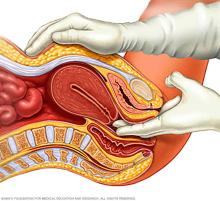
Diagnosis of genitourinary syndrome of menopause may involve:
- Pelvic exam. A healthcare professional feels your pelvic organs and does a visual exam of your vulva, vagina and cervix.
- Urine test. Your urine is collected and tested if you have urinary symptoms.
- Acid balance test. This involves taking a sample of fluids from your vagina, or placing a paper indicator strip in your vagina to test its acid balance.
Treatment
To treat genitourinary syndrome of menopause, your healthcare professional might recommend that you first try a remedy you can buy without a prescription. If that doesn't help ease your symptoms, you may opt for a hormone treatment, other prescription medicine or a device to stimulate and stretch vaginal tissues, called a vaginal dilator.
Vaginal moisturizers or lubricants
As a first step, you might try one of these products to ease symptoms:
- Vaginal moisturizers. These products (K-Y Liquibeads, Replens, Sliquid, others) can help restore some moisture to your vagina. You may have to use the moisturizer every few days. Its effects tend to last a bit longer than those of a lubricant.
- Water- or silicone-based lubricants. You can use water-based (Astroglide, K-Y Jelly, Sliquid, others) or silicone-based lubricants (ID Millennium, Pink, Pjur, others) just before sex to ease pain and friction. Choose lubricants that don't contain glycerin or warming ingredients such as capsaicin. Your vagina may get irritated if you're sensitive to these. Stay away from petroleum jelly or other oil-based products for lubrication if you're also using condoms. These can break down latex condoms on contact.
Topical estrogen
This is also called vaginal estrogen. It's a lab-made version of the hormone that goes directly into the tissues of the vagina. Compared to estrogen taken by mouth, vaginal estrogen works at lower doses and limits your overall exposure to estrogen. That's because less of the hormone reaches the bloodstream. It also may provide better direct relief of symptoms.
Vaginal estrogen therapy comes in various forms. Because they all seem to work equally well, you and your healthcare professional can decide which one is best for you.
- Vaginal estrogen cream (Estrace, Premarin). You insert this cream into your vagina with a device called an applicator, usually at bedtime. Most often, you use it daily for 1 to 3 weeks, and then 1 to 3 times a week after that. But ask your healthcare professional how much cream to use and how often to insert it.
- Vaginal estrogen suppositories (Imvexxy). You place these low-dose estrogen treatments about 2 inches into the vagina daily for two weeks. After that, you insert them twice a week.
- Vaginal estrogen ring (Estring). You or your healthcare professional inserts a soft, flexible ring into the upper part of the vagina. The ring releases a steady dose of estrogen. It needs to be replaced about every three months. Many people like the convenience this offers. A different, higher-dose ring called Femring is considered a system-wide treatment rather than a topical one.
- Vaginal estrogen tablet (Vagifem, Yuvafem). You use an applicator to place this treatment in your vagina. Ask your healthcare professional how often to insert the tablet. For instance, you might use it daily for the first two weeks, and then twice a week after that.
Ospemifene (Osphena)
Taken daily, this pill can help relieve painful sex symptoms in those with moderate to severe GSM. Ospemifene is an option for women who have had a history of estrogen-dependent breast cancer.
Prasterone (Intrarosa)
These vaginal inserts deliver the hormone DHEA directly to the vagina to help ease painful sex. DHEA is a hormone that helps the body make other hormones, including estrogen. Prasterone is used nightly for moderate to severe vaginal atrophy.
Systemic estrogen therapy
Sometimes, vaginal dryness is linked with other symptoms of menopause, such as moderate or severe hot flashes. If you have all of these symptoms, your healthcare professional may recommend estrogen pills, patches or gel, or a higher-dose estrogen ring. Estrogen taken by mouth, or as a patch or gel onto the skin, enters your entire system. Ask your healthcare professional to talk with you about the risks and benefits of systemic estrogen. If you still have your uterus, you will need another hormone called progestin along with estrogen.
Vaginal dilators
These devices stimulate and stretch the vaginal tissues and underlying muscles to reverse narrowing of the vagina. You can use them along with estrogen therapy.
If painful sex is a concern, vaginal dilators may relieve discomfort by stretching the vagina. You can buy them without a prescription. But if your symptoms are very painful, pelvic floor physical therapy also may help. Your provider or a pelvic physical therapist can teach you how to use dilators.
Topical lidocaine
This prescription ointment or gel can ease pain from sex. You put it on the opening of the vagina 5 to 10 minutes before sex.
If you've had breast cancer
If you have a history of breast cancer, tell your healthcare professional and think about these options:
- Nonhormonal treatments. Try moisturizers and lubricants as a first choice.
- Vaginal dilators. These devices stimulate and stretch the tissues and muscles of the vagina. They don't add hormones to the body.
- Vaginal estrogen. Your cancer specialist, called an oncologist, can talk with your main healthcare professional about whether low-dose vaginal estrogen might help you. It may be an option if hormone-free treatments — such as moisturizes, lubricants and dilators — don't ease your symptoms. For most women, there's minimal risk with low-dose estrogen of breast cancer coming back.
- Systemic estrogen therapy. Systemic estrogen treatment generally isn't recommended, especially if your breast cancer was sensitive to hormones.
Alternative medicine
Some alternative medicines are used to treat vaginal dryness and irritation linked with menopause. But more research is needed to find out if they work well.
Talk with your doctor or other healthcare professional before you take any herbal or dietary supplements. Some may affect other medicines you take, putting your health at risk.
Self care
If your vagina feels dry or irritated, you may get relief if you:
- Try a moisturizer. Examples include K-Y Liquibeads, Replens and Sliquid. This can restore some moisture to your vagina.
- Use a water- or silicone-based lubricant. A lubricant can reduce pain during sex. Water-based products include Astroglide, K-Y Jelly and Sliquid. Silicone-based products include ID Millennium, Pink and Pjur.
- Give yourself time to become aroused during sex. The natural lubrication that happens when you get aroused can help reduce symptoms of dryness or burning.
Preparing for your appointment
You'll probably start by talking about your symptoms with your primary doctor or other healthcare professional. If you aren't already seeing a specialist in women's health, such as a gynecologist, you may be referred to one.
What you can do
To prepare for your appointment:
- Make a list of your symptoms. Include those that may not seem related to the reason for your appointment.
- Make a note of key personal information. Include any major stresses or recent life changes.
- Make a list of all medicines that you take. Include prescription and nonprescription drugs, vitamins, and supplements. Note the amount that you take of each, called the dose.
- Think about taking a family member or friend along. Sometimes it can be tough to remember all the information you get during an appointment. Someone who goes with you may remember something that you missed or forgot.
- Prepare questions. Write a list of questions so that you don't forget to ask something you want to talk about during your appointment.
Some basic questions to ask include:
- What's the most likely cause of my symptoms?
- What kinds of tests do I need?
- How long might my condition last?
- What treatments are available? What do you recommend for me?
- I have other health conditions. How can I best manage these conditions together?
- Should I see a specialist?
- Where can I find out more information? What websites do you recommend?
What to expect from your doctor
You may be asked about your symptoms. Be ready to answer questions such as:
- What symptoms have you noticed, and how painful or distressing are they?
- Are you still having periods?
- Are you having any spotting in menopause?
- Are you sexually active?
- Have you been treated for cancer?
- Do you use scented soap, bubble bath products, a douche or hygiene spray?
- What medicines, vitamins or other supplements do you take?
© 1998-2026 Mayo Foundation for Medical Education and Research(MFMER). All rights reserved. Terms of Use