
Living-donor liver transplant
Procedures
Overview
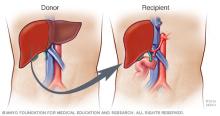
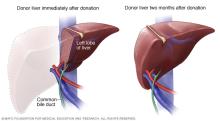
Overview
A living-donor liver transplant is a surgery in which a part of the liver from a healthy living person is removed and placed into someone whose liver is no longer working properly.
The donor's remaining liver usually regrows and returns to its typical size, volume and capacity within a couple of months after the surgery. At the same time, the transplanted liver portion grows and restores regular liver function in the recipient.
Why it's done
The number of people waiting for a liver transplant greatly exceeds the number of available livers from deceased donors. Living-donor liver transplant offers an alternative to waiting for a liver from a deceased donor.
Receiving a liver from a living donor can shorten your wait time. This may help you avoid health complications that could develop during a long wait. People who get a liver from a living donor have similar or slightly better long-term survival rates compared with those who receive a liver from a deceased donor. The risks are different, though. People who receive a liver from a living donor are more likely to have bile duct complications, which sometimes need treatment. Your care team will talk with you about your personal risks and benefits.
Living-donor liver transplants are more common among children who need a liver transplant than among adults because it is harder to find a deceased-donor liver for children.
Most living liver donors are close family members or friends of the liver transplant candidates.
What you can expect
Before the procedure
To be considered for a living-donor liver transplant, both the donor and recipient must go through a thorough health and psychological evaluation at a transplant center. During the evaluation process, separate transplant teams work with the donor and recipient. These teams discuss the potential benefits and risks of the living-donor liver transplant in detail.
For example, while the transplant can save the recipient's life, donating part of a liver is major surgery and comes with serious risks for the donor.
When matching a living-donor liver with someone who needs it, healthcare professionals consider age, blood type, organ size and other factors.
During the procedure
On the day of the transplant, surgeons remove a part of the donor's liver for transplant through an opening in the abdomen. The specific part of the liver donated depends on the donor's liver size and the recipient's needs.
Surgeons remove the recipient's unhealthy liver and place the donated liver portion in the recipient's body. They connect the blood vessels and bile ducts to the new liver.
The part of the liver placed in the recipient and the part left behind in the donor both regrow rapidly. Within a couple of months, each liver usually returns to its typical volume and works as it should.
People who receive a liver from a living donor often have better short-term survival rates than those who receive a liver from a deceased donor. Comparing long-term results is difficult. This is because people with living donors usually have a shorter wait for a transplant and aren't as sick as those who receive a liver from a deceased donor.
© 1998-2026 Mayo Foundation for Medical Education and Research(MFMER). All rights reserved. Terms of Use