
Massage therapy
Procedures
Overview
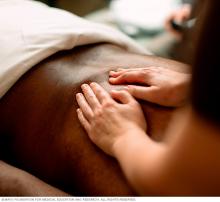
Massage therapy is a hands-on treatment in which a massage therapist uses touch to assess and work on the body's soft tissues. Massage therapy focuses on the skin, muscles, tendons, ligaments and fascia to support a therapeutic goal. The therapist may use different strokes and pressure based on your needs.
Massage therapy is a complementary approach often included in integrative medicine programs, including in some hospital settings. Integrative medicine combines well-researched conventional medicine with evidence-based complementary therapies to achieve the right care for each person. Massage therapy may be used as a treatment along with standard care to treat many concerns such as stress, pain, digestive conditions, fibromyalgia, cancer-related symptoms and recovery after surgery. Research on massage therapy after surgery has been linked with less pain after surgery, both in the shorter term and longer term.
Research suggests massage therapy may have these benefits:
- Reduce stress levels.
- Ease pain and muscle stiffness and tension.
- Support relaxation.
- Support stronger immune system response.
Massage therapy benefits vary, depending on the condition or concern, and more research is needed.
Why it's done
Massage therapy is used to help ease pain and support stress relief and relaxation. It also may help with anxiety and may be used an option for pain relief.
People may choose massage therapy for common pain conditions, including chronic low back pain and fibromyalgia. Research also supports its use for both short-term and long-term pain relief after surgery. Massage therapy is also studied as a self-care treatment for muscle and joint pain, chronic conditions such as neck and back pain, and stress and anxiety.
Massage therapy is considered a physical complementary health approach. It is among complementary approaches that have been studied for stress, anxiety or sleep problems.
Risks
Massage therapy is generally safe when it's done properly by a trained professional. Serious side effects are rare. Your safety can depend on your health history and current conditions, including pregnancy. Talk with a member of your healthcare team and the massage therapist before you schedule a session.
Talk with your healthcare team before getting a massage if you have recently had a heart attack, have a bleeding disorder, take blood-thinning medicine, recently had a recent blood clot in your leg, or have burns, broken bones or severe osteoporosis.
Massage generally is not done directly on tumors. Pressure also should be avoided in areas with healing wounds or nerve damage.
You should not feel severe pain during a massage. Some soreness can happen the next day, depending on the type of massage. Ask for lighter pressure if anything feels too strong.
Research shows that serious side effects are rare, but more studies are needed as evidence is limited.
How you prepare
Before you schedule a massage therapy session, think about your main goals, such as relaxation or relief in a specific part of your body. Be ready to share your goals and any health conditions you have. Your massage therapist may ask questions to help plan the session.
If you are not sure whether massage therapy is right for you, talk with a member of your healthcare team first. When choosing a massage therapist, ask about training, experience and credentials. You also can ask how many sessions you may need, what each session costs and whether your insurance may help cover it.
Plan to be comfortable during the massage. You may undress or wear loose-fitting clothing. Only undress to the point that feels right for you. You typically lie on a table and are covered with a sheet. A chair massage may be an option if you want to stay fully clothed.
Tell the massage therapist if you have allergies or are sensitive to scents. Oil or lotion may be used during the session. Speak up if the pressure feels too strong. Massage should not cause severe pain.
What you can expect
Before massage therapy
Before your massage therapy session, your massage therapist will likely ask you a few questions about your goals and your health history. This helps plan your care. You may wear loose-fitting clothing or undress to the point that feels right for you. You generally lie on a table and are covered with a sheet.
During massage therapy
You will usually start your massage therapy session by lying on your stomach. About halfway through, you may turn onto your back. If lying face down isn't comfortable, you can lie on your side. Pillows or other supports can help position your body.
Your massage therapist may use oil or lotion to reduce friction on the skin. Tell your therapist if you have allergies or are sensitive to some scents. Your therapist will use touch to find tense or painful areas and adjust pressure based on your needs.
After massage therapy
A massage may last 15 to 90 minutes, depending on the type and how much time you have. You should feel calm and relaxed during and after the massage. Massage should not cause major pain, so ask for lighter pressure if needed. A tender spot can feel uncomfortable while the therapist is working on it, but tell your therapist if it becomes painful.
© 1998-2026 Mayo Foundation for Medical Education and Research(MFMER). All rights reserved. Terms of Use